2026 Home Energy Improvement Tax Credits: What Qualifies and What’s Changing

Energy tax credits are often described as “free money.” They aren’t.
They are partial reimbursements designed to push homeowners toward more efficient systems—but only if you understand the rules.
In 2026, U.S. home energy improvement credits continue to reward:
- Efficient appliances
- Electrification upgrades
- Renewable energy installations
But the details matter. This guide explains what qualifies in 2026, what’s changed, and how to tell whether an upgrade actually saves you money long-term.
What Are These Credits?
These credits reduce the amount of federal income tax you owe when you install qualifying improvements. Unlike deductions (which just lower your taxable income), credits apply dollar-for-dollar against your tax bill.
Two categories matter most:
- Energy Efficient Home Improvement Credit: (Appliances, windows, insulation)
- Residential Clean Energy Credit: (Solar panels, batteries)
Appliances and Upgrades That Qualify in 2026
Not every “energy-saving” appliance qualifies. The IRS looks for verified efficiency improvements, not marketing claims—this standard applies to everything from large HVAC systems to small countertop high-efficiency kitchen appliances like air fryers and compact cookers (lower-energy cooking appliances that align with the IRS’s efficiency goals).
🥘 Induction & Electric Ranges
Induction cooking converts electricity directly into heat in the cookware. Very little energy is wasted heating surrounding air.
- Faster cooking times
- Higher energy transfer efficiency
- Eliminates gas combustion pollutants
🌡️ Heat Pumps (HVAC)
These replace gas furnaces or resistive electric heaters. By moving heat instead of generating it, they offer massive efficiency gains.
- Often the largest single energy reduction
- Both heating and cooling in one unit
⚡ Electrical Panels
You can't electrify a home on an outdated panel. Upgrades needed to support new efficient appliances often qualify.
- Necessary for EV chargers
- Required for induction/heat pump transitions
☀️ Solar & Batteries
Covered under the separate Residential Clean Energy Credit. These projects have higher upfront costs but offer long-term independence.
- 30% credit (uncapped)
- Battery storage now qualifies independently
Why Induction Stoves Get So Much Attention
Induction cooking is often misunderstood. Compared to gas stoves (which lose heat to the air) or traditional electric coils (which heat slowly), induction is about precision—and it eliminates the key limitations of gas stoves, including wasted energy, indoor air pollution, and critical gas cooking risks during outages that leave many homeowners without a cooking option when the grid fails.
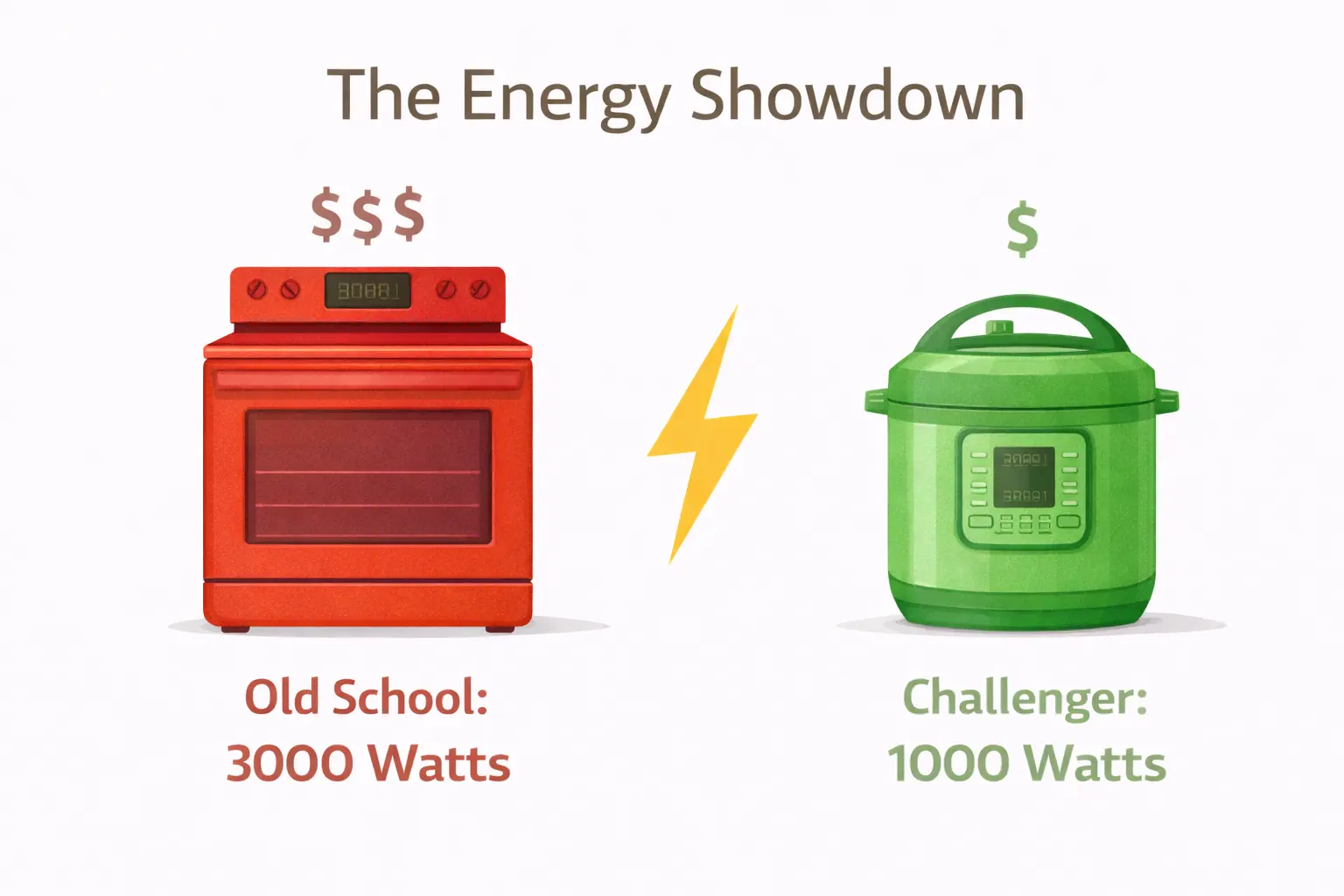
If you’re considering an induction upgrade, the real question isn’t "Is it efficient?" It’s "How much does it save in my house?"
Tax Credits vs. Real Savings (They Are Not the Same)
This is where many homeowners get tripped up. A tax credit lowers your upfront cost, but real savings come from lower monthly bills.
Think of tax credits as a multiplier.
💰 The "Stacked Savings" Example
Ignoring energy use means ignoring most of the value.
Common Mistakes That Disqualify Credits
Energy credits are paperwork-sensitive. Don't leave money on the table by making these errors:
- Missing Certifications: Not all "efficient" models qualify. Look for specific CEE tiers or Energy Star ratings required by the IRS.
- Incomplete Documentation: Save the receipt and the manufacturer's certification statement.
- Cap Limits: Some credits have an annual cap (e.g., $1,200 or $2,000 per year). Staging upgrades over two years can maximize your return.
The Takeaway
2026 home energy improvement tax credits reward measured efficiency, not trends.
Induction stoves, heat pumps, and solar systems qualify because they reduce waste—not because they’re fashionable.
The real win comes when credits reduce your upfront cost AND efficient appliances lower your long-term energy use. If you’re planning upgrades, start with the numbers. Incentives make sense only when the math does.