Basmati vs Jasmine vs Short-Grain: Why Water Ratios Are Never the Same

If you’ve ever wondered why one recipe works perfectly for Basmati but turns Jasmine rice into a solid block of mush—or why short-grain rice seems impossible to get fluffy—the problem isn’t your stove.
It’s the rice itself.
Most "rice to water ratio" advice online treats rice as a single ingredient. In reality, Basmati, Jasmine, and Short-Grain rice behave like completely different foods once heat and water are involved.
Understanding why they cook differently is the key to better texture and never guessing ratios again.
The Hidden Reason Rice Types Behave So Differently
All rice contains starch, but not the same kind or amount. There are two main starch components:
- Amylose: Creates structure, firmness, and separation.
- Amylopectin: Creates stickiness, gel, and cohesion.
Different rice varieties contain very different ratios of these starches. This directly controls how much water they absorb and whether they stay fluffy or clump together.
Quick Comparison: The Three Giants
| Rice Type | Grain Length | Starch Profile | Typical Texture |
|---|---|---|---|
| Basmati | Long | High Amylose | Fluffy, Separate |
| Jasmine | Long | Medium Amylose | Soft, Clinging |
| Short-Grain | Short | High Amylopectin | Sticky, Chewy |
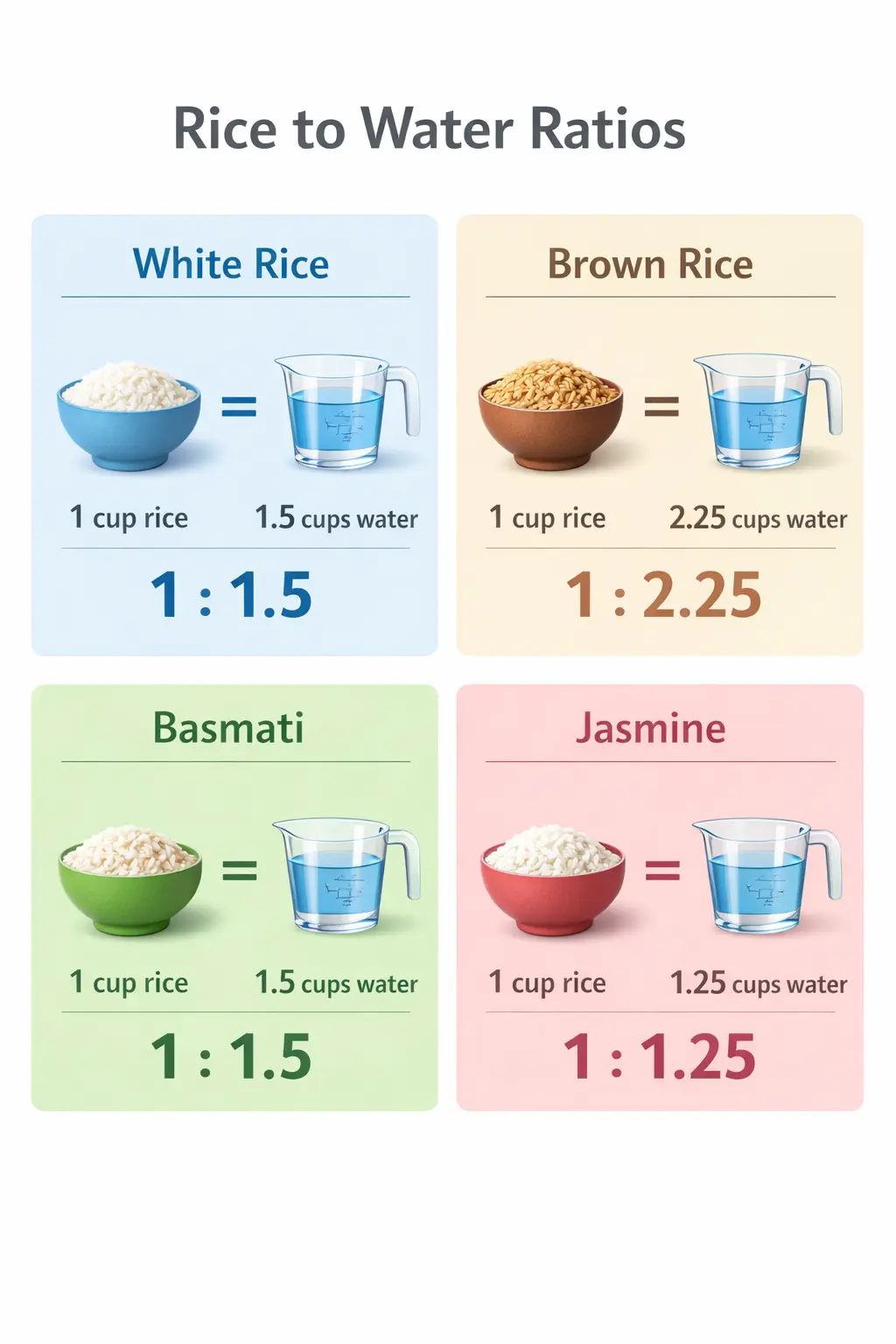
1. Basmati Rice: The Fluffiest (and Most Sensitive)
Why Basmati Needs Less Water: Basmati rice contains more Amylose than almost any other common rice. Amylose strengthens the grain structure and limits swelling. This is why Basmati elongates as it cooks rather than plumping out sideways.
What Goes Wrong: Because it holds its shape well, people tend to add too much water thinking it needs to "soften" more.
- Too much water: Causes grains to split down the middle and curl.
- Pressure Cooking: Exaggerates over-hydration because no steam escapes.
👉 The Fix: Basmati almost always needs less water than charts suggest. (Check the Basmati setting on our calculator).
2. Jasmine Rice: Softer, Stickier, Less Forgiving
Why Jasmine is Different: Jasmine rice has slightly lower amylose and a softer grain structure. This gives it that tender bite and aromatic finish, but it also means Jasmine rice absorbs water faster.
Common Mistakes:
- Using Basmati ratios (1:2) for Jasmine.
- Skipping the rinse (Jasmine has lots of surface starch).
- Overcooking in sealed environments.
The result is often rice that looks done—but collapses into a soft, gummy block once fluffed.
3. Short-Grain Rice: Sticky on Purpose
Short-grain rice is not "badly cooked" when it sticks. It’s doing exactly what it’s designed to do.
The Science: Short-grain rice contains very high Amylopectin. When heated, this forms a gel that binds grains together and traps moisture. This is why it's perfect for Sushi and Risotto.
Trying to make short-grain rice fluffy is fighting physics.
Why One Ratio Can’t Possibly Work
Most online recipes assume:
- Stovetop cooking.
- Generic "Long Grain" rice.
- Uncovered evaporation.
But real kitchens use Rice Cookers, Instant Pots, and specific brands. Once evaporation changes, water ratios must change too.
🧮 Charts Break. Calculators Don't.
Our tool adjusts for Rice Type, Cooking Method, and Batch Size automatically.
Use Rice Ratio Calculator →Water Ratios by Rice Type (General Guidance)
⚠️ Note: These are starting points. Use the calculator for precision.
| Rice Type | Stovetop | Rice Cooker | Pressure Cooker |
|---|---|---|---|
| Basmati | 1 : 1.5 | 1 : 1.25 | 1 : 1 |
| Jasmine | 1 : 1.5 | 1 : 1.2 | 1 : 1 |
| Short-Grain | 1 : 1.25 | 1 : 1.1 | 1 : 1 |
Pressure cooking amplifies mistakes. Because there is zero evaporation, even a small amount of extra water stays in the pot and ruins the texture. (See our Instant Pot vs Oven Energy Guide for more on pressure cooking physics).
Why Rinsing Matters More for Some Rice
Rinsing removes surface starch, not nutrients.
- Basmati: ✅ Rinse. Prevents splitting and foam.
- Jasmine: ✅ Rinse. Reduces gumminess.
- Short-Grain: ⚠️ Sometimes. Rinse for sushi; do NOT rinse for risotto/porridge.
Skipping the rinse with Jasmine or Basmati often leads to gluey rice—even if the ratio is correct. (Read more about why rice turns gluey here).
Why Brown Versions Complicate Everything
Brown rice keeps its bran layer. This layer:
- Slows water absorption.
- Increases cook time.
- Tempts people to add too much water.
The result is often a mushy outside (overcooked starch) and a chalky center (undercooked bran). Brown rice needs time, not just excess water.
Final Takeaway
Basmati, Jasmine, and Short-Grain rice are not interchangeable. They differ in starch structure, water absorption, and tolerance for error.
Once you respect those differences:
- Mushy rice disappears.
- Gummy rice becomes intentional (like risotto).
- Consistency becomes effortless.
Stop forcing one ratio to work everywhere. Use the right rice. Use the right method. Use the right math.