Why Most Rice Recipes Fail
Most failures come from blindly following fixed ratios like "1 cup rice to 2 cups water." In reality, rice cooking is governed by starch structure, surface evaporation, and absorption. Most recipes give you a static ratio but don't account for your specific Device (Stovetop vs Aroma vs Instant Pot) or the specific Grain Variety.
Why Stovetop Rice Fails
Rice cookers are great, but the stovetop method (Absorption Method) is a necessary survival skill. The two biggest mistakes people make are:
- Peeking: Lifting the lid releases the steam pressure needed to cook the top layer of grains. Trust the timer!
- Skipping the Rest: The "Rest Step" allows the moisture to redistribute. Without it, the bottom is soggy and the top is dry.
Why Ratios Differ Between Rice Varieties
The starch composition of each rice type determines how much water it absorbs. Long-grain rice (basmati, jasmine) contains higher amylose — a starch molecule that stays firm and separate when cooked. Short-grain and medium-grain rice (sushi, arborio) contain more amylopectin, which is stickier and absorbs water differently.
Basmati rice typically needs 1:1.5 water on the stovetop, while jasmine needs about 1:1.25. Short-grain white rice, like sushi rice, needs even less — roughly 1:1.1 to 1:1.2 — because its higher amylopectin content causes grains to release more surface starch that binds moisture. Brown rice, with its intact bran layer, needs substantially more water and a longer cooking time — roughly 1:2 on the stovetop — because the bran acts as a moisture barrier.
Why Your Cooking Method Changes the Water Ratio
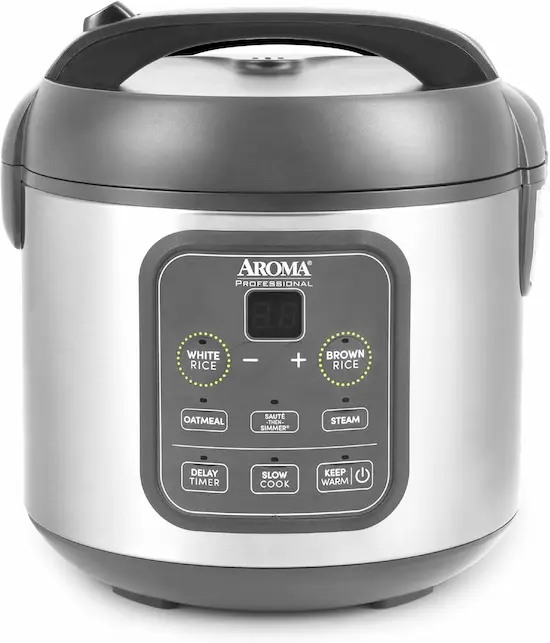
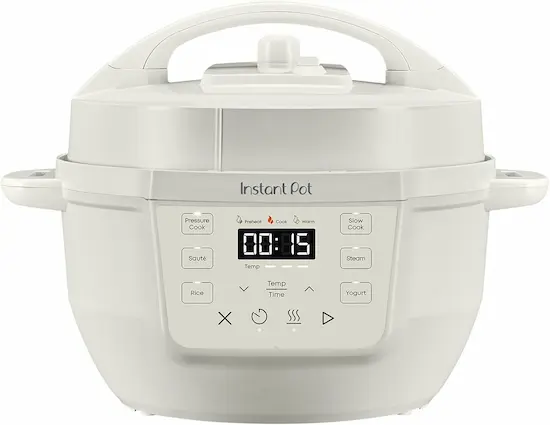
A rice cooker like the Aroma 8-Cup creates a sealed, pressurized environment that traps steam. Less water evaporates during cooking, so the ratio drops to roughly 1:1.25 for white rice. The Instant Pot is even more efficient — because it reaches pressure quickly and releases almost no steam during cooking, white rice needs only 1:1 water in most cases. Stovetop cooking is the least efficient: open evaporation means you lose more water to steam, so you start with about 1:1.5 for white long-grain.
This is why following a universal "2 cups water to 1 cup rice" rule guarantees inconsistent results. The same rice variety needs three different ratios depending on how you cook it.
Fresh Rice vs Aged Rice: Why Expiration Dates Matter
New-crop rice (harvested within the past 3–6 months) contains more internal moisture. If you use the standard ratio with fresh rice, the grains absorb too much water and turn mushy. Aged rice (stored for 12 months or more) has lost internal moisture and needs roughly 15–25% more water to rehydrate fully. This is why opening a new bag of rice and using the same ratio that worked with the last bag sometimes produces dramatically different results.
The calculator above includes a fresh-versus-aged adjustment for exactly this reason — select your rice's age profile and the ratio updates automatically.
Frequently Asked Questions
What is the rice to water ratio for 1 cup of rice? ▼
For 1 cup of white long-grain rice, use 1.5 cups of water on stovetop. For Aroma rice cooker with standard measuring cup, use 1.33 cups water. For Instant Pot, use 1 cup water. Brown rice requires 2.25 cups on stovetop.
How much water for 2 cups of rice? ▼
For 2 cups white rice: Use 3 cups water on stovetop. For Aroma rice cooker: 2.66 cups water. For Instant Pot: 2 cups water. Always rinse rice first to remove excess starch.
What is the Aroma rice cooker water ratio? ▼
If using the Aroma plastic cup (180ml): Fill water to the numbered line inside the pot matching your cups of rice. If using standard US cup: Use 1.33 cups water per 1 cup white rice, or 1.75 cups water per 1 cup brown rice.
How to fix mushy rice? ▼
Drain excess water immediately. Spread rice out in pan, cook on low heat 1-2 minutes to evaporate moisture. Turn off heat, place paper towel under lid, rest 10 minutes. The paper towel absorbs steam. Prevention: Use correct water ratio and never stir while cooking.
How to fix undercooked rice? ▼
Add ¼ cup boiling water evenly over top. Cover tightly with lid (add foil if lid is loose). Cook on low heat or 'Keep Warm' for 5-8 minutes. Do not stir—stirring releases starch and makes rice mushy.
What is the brown rice to water ratio? ▼
Stovetop: 1 cup brown rice to 2.25 cups water. Aroma rice cooker: 1:1.75 ratio. Instant Pot: 1:1.25 ratio. Brown rice takes 35-45 minutes to cook (vs 15-18 for white rice) due to intact bran layer.
What is the sushi rice water ratio? ▼
Sushi rice (short grain) needs less water than long grain: 1:1.25 ratio on stovetop, 1:1.2 in Aroma, 1:1 in Instant Pot. Short grain rice releases more starch, so less water prevents mushiness while maintaining stickiness.
Should I rinse rice before cooking? ▼
Yes, always rinse rice 2-3 times until water runs clear. This removes excess surface starch that causes mushiness and clumping. Exception: Arborio rice for risotto (needs starch for creaminess).
Why does my Instant Pot rice burn? ▼
"Burn" signal means insufficient liquid at bottom or starch buildup. Solutions: (1) Use the correct shared baseline ratio for your grain, (2) Never stir after adding water, (3) Make sure sealing ring is clean, (4) Use Manual / Pressure Cook mode for precise control, (5) Follow the recommended release method for your grain.
How do I use my Aroma Rice Cooker without the cup? ▼
The Aroma cup is usually 180ml (0.75 of a standard US cup). If you lost it, use a standard measuring cup and our calculator above (select "Aroma"). For 1 standard cup of white rice, start with 1.33 cups of water.
What's the difference between the Aroma cup and a standard cup? ▼
The clear plastic cup included with Aroma cookers is 180ml (0.75 of a US standard cup). This is why the inner pot lines don't match standard measurements. If you lost the Aroma cup, use our calculator above with "Standard Cups" selected.
Why does brown rice need more water? ▼
Brown rice still has its bran and germ intact. These outer layers are tough and require more water and a significantly longer cooking time to soften.
How much water do I need for 1kg of rice? ▼
For most white rice, use about 2 liters of water for 1kg of rice. Brown rice requires closer to 2.25 liters.
Does short-grain rice need less water? ▼
Yes. Short-grain (Sushi) rice releases more surface starch. It typically needs less water (around 1:1.1 or 1:1.2) than long-grain rice to keep the grains distinct.