Quick Answer: Rice to Water Ratios
Stovetop Ratios:
- • White rice: 1:1.5 (1 cup rice : 1.5 cups water)
- • Brown rice: 1:2.25
- • Basmati: 1:1.5
- • Jasmine: 1:1.25
- • Sushi rice: 1:1.25
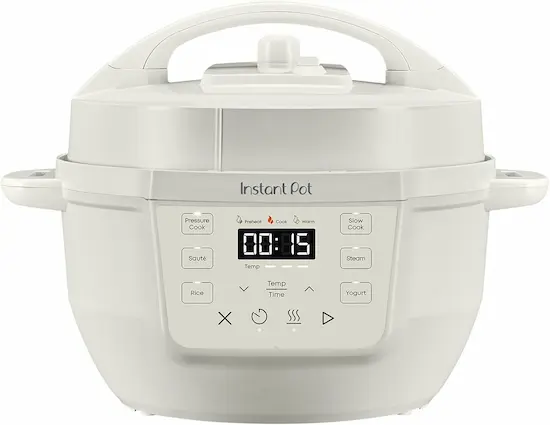
Pressure Cooker/Instant Pot:
- • White rice: 1:1
- • Jasmine: 1:1
- • Brown rice: 1:1.25
- • Basmati: 1:1
⚠️ Ratios vary by rice age and pot type. Use our calculator for precision.
🍚 Not sure which ratio applies to you?
Enter your rice type, cooking method, and amount — get the exact measurement in seconds.

Suzanne Williamson, RD
Registered dietitian and founder of Frugal Organic Mama. I've spent years cooking rice for families on tight budgets in community nutrition programs — and testing what actually works at home versus what package instructions get wrong.
If you've ever Googled "rice to water ratio" only to end up with mushy, burnt, or undercooked rice, you're not alone.
I've been there. When I first started cooking brown rice for a community meal program — fifty pounds of it — I followed the package exactly: 2 cups water per cup of rice. Half of it came out gummy. The other half was still crunchy in the center. That's when I started actually testing ratios instead of trusting what was printed on the bag.
Here's what I found after years of cooking rice across a dozen varieties, three cooking methods, and two continents' worth of grain sources: the ratio on the package is almost always wrong for your specific situation. Not because the manufacturer is lying — but because they're writing for the median pot, the median stove, the median rice age. Your kitchen isn't the median.
The problem isn't your cooking skills. It's that there is no single universal rice-to-water ratio.
Different rice types absorb different amounts of water. Different cooking methods have different evaporation rates. Even the age of your rice changes how much water it needs — and this is the variable that trips up experienced cooks most often.
This guide gives you the tested ratios for every rice type and method, explains the science behind why they work, and tells you the sensory signals that matter more than any timer.

Why Generic Rice Ratios Fail (The Science)
The famous "2 cups water for 1 cup rice" rule fails because rice cooking is controlled by three variables, not one:
1. Rice Grain Structure
Different rice types have different starch compositions:
- Long-grain (basmati, jasmine): Less starch, stays fluffy and separate
- Medium-grain (calrose): Moderate starch, slightly sticky
- Short-grain (sushi): High starch, very sticky and clingy
- Brown rice: Has bran layer that slows water absorption
As a dietitian, I'll add something the recipe sites don't: the starch structure also affects how the rice behaves nutritionally. Short-grain rice with higher amylopectin content digests faster than long-grain basmati with its slower-digesting amylose structure. The ratio isn't just about texture — it's about how the grain behaves physically and metabolically.
2. Absorption vs. Evaporation
Rice doesn't just absorb water — water also evaporates during cooking. This is the variable most home cooks don't account for:
- Open pot (no lid): High evaporation → Needs MORE water
- Covered pot (stovetop): Moderate evaporation → Standard ratios
- Pressure cooker/Instant Pot: Almost ZERO evaporation → Needs significantly LESS water
- Rice cooker: Low evaporation → Slightly less than stovetop
The signal I watch for: when the steam coming from under the lid drops from a steady stream to an occasional wisp, and you start to hear a faint crackling instead of simmering bubbling, the water is almost gone. That's your 2-minute warning — not your timer.
This is why rice that works perfectly on the stovetop turns mushy in a pressure cooker using the same ratio.
3. Rice Age (The Variable Nobody Mentions)
Fresh rice (< 3 months old): Higher moisture content, needs less water
Aged rice (6+ months old): Drier, absorbs more water, needs 10-25% more water
I cook a lot of organic rice bought in bulk — from co-ops, Asian grocery stores, restaurant supply shops. Bulk rice is almost always older than the sealed supermarket bags. I've learned to add an extra tablespoon per cup when cooking bulk-bin rice, and it makes a consistent difference.
This is why the same bag of rice can produce different results 6 months later. (Read more about rice aging)

Complete Rice Water Ratio Chart by Type
Stovetop Cooking (Covered Pot)
This chart assumes stovetop cooking in a standard covered pot on low simmer after bringing to a boil.
📝 A note from my testing
I've cooked these ratios in a heavy-bottomed stainless steel pot on a gas stove, a thin-bottomed pot on electric, and an enameled cast iron Dutch oven. The heavy pot consistently needs 2–3 tablespoons less water — it holds heat more evenly and loses less to evaporation. If your stovetop rice consistently comes out wet, your pot is probably part of the answer. Start with these ratios, then adjust ¼ cup at a time based on your equipment.
| Rice Type | Water Ratio | Cooking Time | Notes |
|---|---|---|---|
| White Long-Grain | 1 : 1.5 | 15-18 min | Standard white rice |
| Basmati Rice | 1 : 1.5 | 15-18 min | Rinse 3-4 times, aged is best |
| Jasmine Rice | 1 : 1.25 | 15-18 min | Rinse 1-2 times only |
| Medium-Grain (Calrose) | 1 : 1.75 | 15-18 min | Slightly sticky texture |
| Short-Grain / Sushi Rice | 1 : 1.25 | 15-18 min | Too much water = gummy |
| Brown Long-Grain | 1 : 2.25 | 40-45 min | Needs longer cooking time |
| Brown Short-Grain | 1 : 2.25 | 40-45 min | Very absorbent bran layer |
| Wild Rice | 1 : 3 | 45-55 min | Hard shell needs extra water |
| Arborio (Risotto) | 1 : 3-4 | 20-25 min | Add water gradually |
| Parboiled Rice | 1 : 2 | 20-25 min | Pre-steamed, harder texture |
💡 Pro Tip: These ratios assume fresh-to-medium aged rice. If your rice is over 1 year old, add 10-20% more water. If it's very fresh (less than 1 month), reduce water by 10%.
These ratios are a starting point.
Your rice age, pot type, and serving size all shift the number. The calculator adjusts for all of them.
Use the calculator if any of these are true:
- • You're cooking more or less than 1 cup of rice
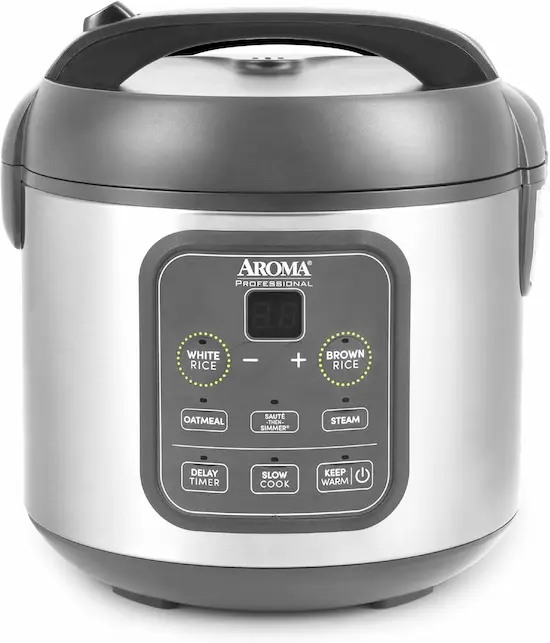
- • You're using an Instant Pot, rice cooker, or Aroma cooker
- • Your rice is old, bulk-bin, or inconsistently drying out
- • You're trying to fix mushy or undercooked rice without wasting the batch
Pressure Cooker & Instant Pot Ratios
This is where most people mess up. Pressure cookers have almost zero evaporation, so using stovetop ratios creates mushy rice.
The first time I used an Instant Pot for rice I used my usual stovetop ratio — 1:1.5 for white long-grain. What came out was closer to congee. The second attempt at 1:1 was nearly perfect. With basmati, I now treat 1:1 as my baseline and only edge lower when the rice is especially dry and aromatic. The physics still makes sense: every drop of water you add is staying in that sealed pot.
| Rice Type | Water Ratio | Pressure Time | Release Method |
|---|---|---|---|
| White Rice (Any) | 1 : 1 | 3-4 min | 10 min natural release |
| Basmati Rice | 1 : 1 | 4 min | 10 min natural release |
| Brown Rice | 1 : 1.25 | 22-24 min | 10 min natural release |
| Jasmine Rice | 1 : 1 | 3 min | 10 min natural release |
| Sushi Rice | 1 : 1 | 4 min | 10 min natural release |
⚠️ Critical: Even ¼ cup extra water in a pressure cooker can turn rice mushy. These ratios are NOT approximations—they're precision measurements. When in doubt, err on the side of LESS water.
Rice Cooker Ratios
Most rice cookers come with a measuring cup and marked water lines. However, if your rice cooker doesn't have markings or you're using a different rice type:
General Rice Cooker Ratios:
- White rice: 1 : 1.5
- Brown rice: 1 : 2.25
- Basmati: 1 : 1.25
- Jasmine: 1 : 1.25
Rice cookers typically need slightly less water than stovetop because they have tight seals and low evaporation.
The Sensory Signals That Matter More Than Timers
Timers tell you when to check. These signals tell you what's actually happening:
The steam shift: When your rice is cooking, watch the steam coming from the lid vent or edge. A steady column of steam = active boiling, water still present. When it drops to occasional wisps and you hear a subtle crackling or hissing (not bubbling), you're within 2 minutes of the water being fully absorbed. Don't lift the lid — just note it and start your rest timer.
The surface pitting: If you do lift the lid briefly to check (do this at most once, quickly), look for small craters or pits across the surface of the rice. These form when all the water has been absorbed and steam channels are pushing up through the grains. Surface pitting = water is gone, time to take off heat and rest.
The smell test: Properly cooking rice has a clean, starchy, slightly sweet smell. If you smell anything toasty or nutty before the cooking time is up, your heat is too high or you're out of water — lift the lid immediately. That toasty smell is the bottom layer starting to crust. In small amounts this is actually desirable (Persian tahdig, Korean nurungji) but unintentional burning is 30 seconds away.
The rest period: This is the most skipped step and the one that matters most for texture. After removing from heat, leave the lid on and don't touch it for 10 full minutes. The residual steam continues cooking the top layer while the bottom layer dries slightly. Skipping this step is why rice that seems done comes out wet and dense when served.
Brown Rice vs. White Rice: Why the Ratio Changes
Brown rice isn't just "healthier white rice" — it's structurally different:
The Bran Layer Changes Everything
- Slows water penetration: Water must seep through the bran to reach the starchy endosperm
- Requires longer cooking: 40-45 minutes vs. 15-18 minutes for white rice
- Needs more water: 1:2 ratio vs. 1:1.5 for white rice
- Benefits from resting: 10-15 minute steam rest after cooking
From a dietitian's perspective: Brown rice's bran layer is where most of its nutritional value lives — fiber, B vitamins, magnesium. It's also where phytic acid lives, which can reduce mineral absorption. Soaking brown rice for 30 minutes before cooking reduces phytic acid and, practically, shortens cooking time by about 10 minutes. I soak it whenever I have the time, not just for nutrition but because it produces more even texture.
Why Adding More Water Doesn't Always Fix Crunchy Brown Rice
If your brown rice is crunchy after 45 minutes, the problem is usually time, not water. Brown rice needs:
- Full 40-45 minutes of simmering
- 10-15 minute rest period off heat (still covered)
- Heavy-bottomed pot for even heat distribution
Common brown rice mistake: Opening the lid to check = steam loss = crunchy rice even with correct water ratio.
Does Rice Age Matter? (The Factor Everyone Ignores)
Yes, rice age dramatically affects water absorption.
When I worked in community nutrition, we received a lot of donated bulk rice — sometimes from restaurant supply donations that had been sitting in storage. The same recipe would fail batch after batch until I figured out that the rice was significantly older than what the ratios assumed. Adding 20% more water fixed it immediately.
Fresh Rice (< 3 months old)
- Higher moisture content (12-14%)
- Needs 10-15% LESS water
- Cooks faster
- Slightly stickier texture
Medium-Aged Rice (3-12 months)
- Standard moisture (11-12%)
- Use chart ratios as-is
- Optimal for most cooking
Aged Rice (1+ years old)
- Very dry (9-10% moisture)
- Needs 15-25% MORE water
- Cooks slightly faster
- Produces fluffier, more separate grains
- Preferred for biryani and pilaf
Pro tip: Aged basmati (1-2 years old) is considered superior and commands higher prices in specialty stores because it produces the fluffiest, most aromatic rice.
Want to learn more? Read our full guide: Does Rice Age Matter?
Step-by-Step: How to Cook Perfect Rice Every Time

Step 1: Rinse the Rice (Critical for Most Types)
Why rinse? Removes excess surface starch that causes gummy, clumpy rice.
How much to rinse:
- Basmati: Rinse 3-4 times until water runs completely clear
- Jasmine: Rinse 1-2 times (slight stickiness is desired)
- Sushi rice: Rinse 2-3 times until water is mostly clear
- Brown rice: Rinse 1-2 times (bran layer already limits starch)
Don't rinse: Arborio (risotto rice) - you WANT the starch for creaminess
Step 2: Measure the Correct Ratio
Use the charts above based on:
- Your rice type (white long-grain, brown, basmati, etc.)
- Your cooking method (stovetop, pressure cooker, rice cooker)
- Your rice age (if known)
Precision matters: Use actual measuring cups, not random cups from your cabinet. A 10% error in water = the difference between perfect and mushy rice.
Step 3: Bring to a Boil, Then Simmer
- Combine rice and water in pot
- Bring to a rolling boil over high heat (uncovered is fine)
- Immediately reduce to lowest simmer and cover with tight-fitting lid
- Do NOT lift the lid during cooking (steam loss ruins the ratio)
Heat level: The lowest simmer your stove can achieve. You should barely see any bubbles.
Step 4: Cook for the Correct Time
White rice: 15-18 minutes
Brown rice: 40-45 minutes
Wild rice: 45-55 minutes
Set a timer. Don't guess.
Step 5: Rest Off Heat (The Secret Step)
- Turn off heat when timer ends
- Keep lid on (don't peek!)
- Let rest for 10 minutes (white rice) or 15 minutes (brown rice)
Why this matters: Rice finishes cooking with residual steam during the rest period. This makes the difference between good and amazing rice.
Step 6: Fluff and Serve
Remove lid, fluff rice gently with a fork (not a spoon—spoons mash the grains), and serve immediately.
Common Rice Cooking Mistakes (That No Ratio Can Fix)
Mistake #1: Not Rinsing Rice
Result: Gummy, sticky clumps even with correct water ratio
Fix: Rinse until water runs clear (except arborio for risotto)
Mistake #2: Lifting the Lid During Cooking
Result: Steam escapes, water evaporates unevenly, rice cooks inconsistently
Fix: Trust the process. Set a timer and walk away. Resist the urge to check.
Mistake #3: Heat Too High
Result: Bottom burns while top stays undercooked, or rice boils over
Fix: After initial boil, reduce to LOWEST possible simmer. Rice needs gentle, even heat.
Mistake #4: Skipping the Rest Period
Result: Wet, sticky rice that hasn't finished cooking
Fix: Always rest covered for 10-15 minutes after cooking. This isn't optional.
Mistake #5: Using Stovetop Ratios in Pressure Cooker
Result: Mushy, overcooked rice pudding
Fix: Pressure cooker needs 30-50% LESS water than stovetop. See pressure cooker chart above.
Rice Serving Sizes: How Much Per Person?
Planning rice for a crowd? Here's the math:
Dry Rice to Cooked Rice Conversion
- White rice: Roughly 3x volume (1 cup dry = 3 cups cooked)
- Brown rice: Roughly 2.5x volume (1 cup dry = 2.5 cups cooked)
Per Person Servings
Side dish:
- ¼ cup (60g) dry rice per person
- Yields ~¾ cup cooked rice
Main dish / Rice bowl:
- ½ cup (120g) dry rice per person
- Yields ~1.5 cups cooked rice
Party portions:
- Add 20% extra to account for varying appetites
- Brown rice is more filling than white rice
Example: For 10 people (rice as side dish):
- 10 people × ¼ cup = 2.5 cups dry rice
- Add 20% buffer = 3 cups dry rice total
- Will yield approximately 9 cups cooked rice
Planning a taco bar? Check our Taco Bar Calculator to calculate all your party portions.
Troubleshooting: Why Is My Rice...

If your rice keeps failing, get the full Rice Troubleshooting guide — troubleshoot a sticky, mushy, burnt, or overflowing pot symptom by symptom, with the exact per-device fix.
...Mushy / Overcooked?
Causes:
- Too much water (most common)
- Using stovetop ratio in pressure cooker
- Rice is very fresh (high moisture content)
- Lifted lid during cooking (extra moisture)
Solutions:
- Reduce water by 10-15%
- Use pressure cooker ratios for pressure cooking
- Account for rice age
...Burnt on Bottom?
Causes:
- Heat too high
- Not enough water
- Pot too thin (uneven heat distribution)
Solutions:
- Use lowest possible simmer after boiling
- Heavy-bottomed pot distributes heat better
- Check water ratio for your rice type
...Crunchy / Undercooked?
Causes:
- Not enough water
- Rice is very old/dry
- Didn't simmer long enough
- Skipped rest period
Solutions:
- Add 10-20% more water for aged rice
- Ensure full cooking time (40-45 min for brown)
- Always rest 10-15 minutes after cooking
...Sticky / Gummy?
Causes:
- Didn't rinse rice (excess surface starch)
- Too much water
- Stirred during cooking
- Wrong rice type for desired texture
Solutions:
- Rinse rice 2-4 times before cooking
- Use slightly less water (reduce by 10%)
- Never stir rice during cooking
- For fluffy rice, use long-grain varieties
Regional Rice Varieties: Special Cases
Seeraga Samba Rice (South Indian)
Stovetop: 1 : 1.75
Pressure cooker: 1 : 1.25
Notes: Small, fragrant grain. Rinse 2-3 times. Highly aromatic.
Arborio Rice (Italian Risotto)
Stovetop: 1 : 3-4 (added gradually)
Notes: Do NOT rinse. Starch creates creamy texture. Add liquid ½ cup at a time while stirring.
Black Rice (Forbidden Rice)
Stovetop: 1 : 2
Cooking time: 30-35 minutes
Notes: High in anthocyanins. Similar to brown rice cooking method.
Sticky Rice / Glutinous Rice
Method: Soak 4-8 hours, then steam (not boil)
Notes: Used for Thai desserts and dim sum. Cannot be cooked using water ratios.
Quick Reference: Rice Ratio Cheat Sheet
Print & Keep in Your Kitchen
Stovetop
- White: 1:1.5
- Brown: 1:2.25
- Basmati: 1:1.5
- Jasmine: 1:1.25
- Sushi: 1:1.25
Pressure Cooker
- White: 1:1
- Brown: 1:1.25
- Basmati: 1:1
Rice Cooker
- White: 1:1.5
- Brown: 1:2.25
- Use marked lines
When to Stop Memorizing and Use a Calculator
If you're thinking "This is more complicated than I expected"—you're right.
Rice cooking involves:
- Rice type (10+ varieties)
- Rice age (fresh vs. aged)
- Cooking method (stovetop, rice cooker, pressure cooker)
- Pot type (heavy vs. thin bottom)
- Altitude (high altitude needs adjustments)
That's a lot of variables to remember.
Better solution: Use our Rice Water Ratio Calculator which accounts for all these factors and gives you an exact measurement in seconds.
🍚 Never Burn or Undercook Rice Again
Our free calculator gives you exact water ratios for any rice type and cooking method. Select your rice, choose stovetop/rice cooker/pressure cooker, and get precise measurements instantly.
Open Free Rice Calculator →Related Resources
Device & Timing Guides:
- Aroma Rice Cooker Instructions — Water lines, settings, and why the Aroma cup doesn't match standard US cups
- Rice Cooker Water Lines vs Measuring Cups — Why the markings inside your cooker don't match standard measuring cups
- How Long to Cook Rice in a Rice Cooker — Timing chart for all rice types including jasmine, basmati, and brown rice
- Pressure Cooker Rice Ratios — Why Instant Pot needs 30% less water than stovetop
- Zojirushi Rice Cooker Instructions — The brand-model entry for the cooker family: settings and the 180 ml cup
- Cuckoo Rice Cooker Instructions — The Korean pressure-cooker sibling: programs, release, and texture
- Rice Cooking Methods Compared — Rice cooker vs stovetop vs Instant Pot vs microwave — which method fits your kitchen
Rice Type Guides:
- Brown Rice Water Ratio — Why the bran layer requires more water and a longer cook time than white rice
- Jasmine Rice Water Ratio — Why 1:1.25 works better than the standard ratio for fragrant jasmine rice
- Basmati vs Jasmine vs Short-Grain — Starch science explains why each rice variety needs a different water ratio
- Seeraga Samba Rice Water Ratio — The specialty Indian short-grain rice with its own ratio rules
- Does Rice Age Matter? — Why older rice absorbs 15–25% more water than fresh crop rice
Rice Science & Troubleshooting:
- The Science of Perfect Rice — Starch gelatinization, evaporation rates, and why most recipes give the wrong ratio
- Ultimate Rice Water Ratio Guide — Master chart covering every grain variety across stovetop and pressure cooker methods
- Why Rice Turns Mushy, Gummy, or Gluey — The amylose and amylopectin explanation behind over-hydration
- Should You Wash or Soak Rice? — When rinsing helps and when it changes the water ratio
- Why Rice Sticks to the Pot — Wrong water ratio is the cause, not the pot — plus three rescue methods
The Bottom Line
There is no universal rice-to-water ratio — and that's not a flaw in your cooking. It's physics.
Different rice types, different cooking methods, different evaporation rates, and different rice ages all change the optimal water amount.
I've watched families throw out pot after pot of rice because the package ratio didn't account for their stove, their pot, or their rice's age. That's real food waste and real money. Once you understand the variables, the solution becomes simple: use the chart as a baseline, then adjust a tablespoon at a time based on what you observe.
The sensory signals — the steam shift, the surface pitting, the smell — matter more than any timer. A timer tells you when to look. Your senses tell you what's actually happening.
Perfect rice isn't about luck or intuition. It's about understanding the variables and adjusting precisely. The calculator does the math; you watch the pot.
Cook Perfect Rice Every Time
Stop wasting rice with guesswork. Get exact water ratios for your rice type, cooking method, and pot—calculated in seconds.
Use Free Rice Calculator →