
Suzanne Williamson, RD
Registered dietitian and founder of Frugal Organic Mama. I buy jasmine rice in 25-pound bags from an Asian grocery store and have cooked it on the stovetop, in three different rice cookers, and in an Instant Pot. Each method required testing — the package instructions were wrong for every single one.
🍚 What's the exact ratio for your jasmine rice and pot?
The rice calculator adjusts for jasmine rice specifically — stovetop, rice cooker, or Instant Pot.
Jasmine rice packaging is almost universally misleading about water ratios. Most packages say 1:1.5 (one cup rice to one and a half cups water) or even 1:2. Both produce jasmine rice that is softer and stickier than it should be — edible but not right.
The reason isn't that the manufacturers are wrong about what their rice does. It's that they're optimizing for a specific texture — very soft, very sticky, easy to clump — that appeals to a broad consumer market. If you want jasmine rice that has distinct grains with a slight chew, the package will lead you astray.
I've tested jasmine rice at 1:1, 1:1.1, 1:1.25, 1:1.5, and 1:2 across three brands. Here's what I found.
Why Jasmine Rice Behaves Differently
All rice is primarily starch, but the ratio of two specific starches — amylose and amylopectin — varies significantly between varieties.
Amylose forms long, straight chains. It absorbs water more slowly, gelatinizes at higher temperatures, and produces firmer, more separate grains. Basmati rice is high in amylose — that's why basmati grains stay so distinct and fluffy.
Amylopectin forms branched chains. It absorbs water quickly, gelatinizes at lower temperatures, and produces softer, stickier results. Short-grain sushi rice is extremely high in amylopectin — that's why it clumps so readily.
Jasmine rice sits in the middle, but closer to the amylopectin end than standard American long-grain white rice. This means:
- It absorbs water faster
- It needs less total water to reach full hydration
- It produces naturally softer, slightly cohesive grains even at lower water ratios
Using long-grain white rice ratios (1:1.5 to 1:2) on jasmine rice over-hydrates it. The result is the mushy, overly sticky jasmine rice that gives the variety an undeserved reputation for being hard to cook well.
Stovetop Ratios: The Testing Results
I tested with Three Ladies brand jasmine rice (one of the most widely available Thai jasmine rices in the US) in a heavy-bottomed stainless steel saucepan on a gas stove.
| Ratio | Result (unrinsed) | Best for |
|---|---|---|
| 1:1 | Slightly undercooked center, dry surface. Too firm. | Not recommended stovetop |
| 1:1.25 ⭐ | Fully cooked, slightly sticky, grains hold shape, fragrance comes through clearly | Daily use, Thai dishes, rice bowls |
| 1:1.5 | Soft, cohesive, clumps easily. What most packages produce. | Congee starting point, very young children |
| 1:2 | Mushy, wet, grains lose shape. Fragrance muted by excess moisture. | Avoid for jasmine rice |
If you rinse first: Add ¼ cup more water per cup of rice. Rinsed rice has less surface starch, which changes the absorption rate slightly. Rinsed jasmine at 1:1.5 produces the same result as unrinsed jasmine at 1:1.25.
The feel I watch for when the ratio is right: when I lift the lid at the end of cooking time, the surface of the rice looks dry and slightly pitted — small steam holes where the water evaporated. If there's still visible liquid pooling, it needed less water. If the surface looks cracked and slightly scorched, it needed more.
Complete Ratio Reference
| Method | Ratio (unrinsed) | Ratio (rinsed) | Time |
|---|---|---|---|
| Stovetop | 1 : 1.25 | 1 : 1.5 | 15 min simmer + 10 min rest |
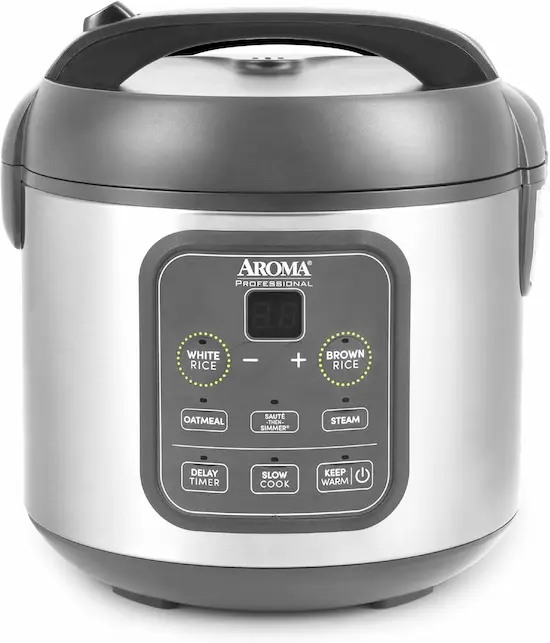
| Rice cooker (basic) | Use white/jasmine line | Fill slightly below line | Machine cycle (~25 min) |
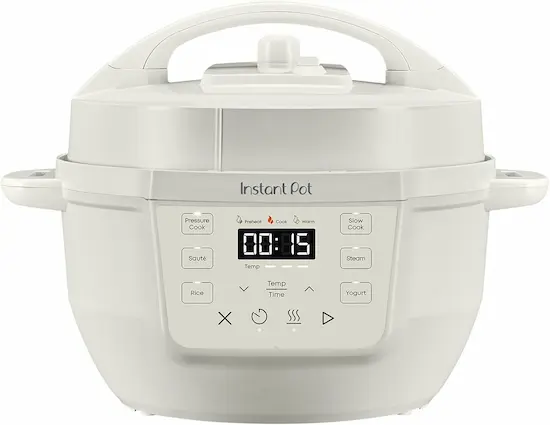
| Instant Pot | 1 : 1 | 1 : 1 | 3 min HP + 10 min NR |
| Microwave | 1 : 1.5 | 1 : 1.75 | 10 min at 70% power, covered |
The Rice Cooker Confusion
Most rice cookers come with a small plastic cup that holds 180ml — not 240ml like a standard US measuring cup. The water lines inside the cooker are calibrated to that 180ml cup, not to a standard measuring cup.
If you measure your jasmine rice with a standard measuring cup but fill water to the rice cooker's line, you're using too much water — the line assumes a smaller unit of rice went in. This is one of the most common jasmine rice problems and it produces exactly the mushy result people blame on the rice or the ratio.
The two ways to use a rice cooker correctly:
- Use the rice cooker's own cup to measure rice, and fill water to the line (reliable, intended method)
- Use a standard measuring cup for both rice and water, and use the 1:1.25 stovetop ratio — ignore the water lines entirely
I switched to method 2 after years of confusion and my rice improved immediately. The lines in the cooker assume their cup. If I'm using my own measuring cup, I need my own ratio.
For a full explanation of why rice cooker lines and measuring cups don't match, see Rice Cooker Water Lines vs Measuring Cups.
The Instant Pot: Less Water Than You'd Expect
The sealed Instant Pot environment eliminates evaporation almost completely. Every drop of water you add stays in the pot and is available for the rice to absorb.
Jasmine rice in the Instant Pot: 1:1 ratio, 3 minutes on High Pressure, 10 minutes natural release.
The 10-minute natural release is not optional — quick-releasing the pressure causes the rice to continue boiling rapidly in the residual steam, which produces mushy grains and blows starch everywhere. The natural release lets pressure drop gradually while the rice finishes absorbing remaining moisture.
When I first made jasmine rice in the Instant Pot I used 1:1.25 (my stovetop ratio) and got soft, slightly wet rice. Dropping to 1:1 produced the texture I wanted. The zero-evaporation environment is the key difference.
Not sure which ratio fits your specific situation?
The rice calculator adjusts for jasmine rice, your cooking method, and whether you rinse — gives you the exact number, not a range.
Rinsing: When It Helps and When It Doesn't
The rinse debate is real. Here's the honest answer:
Rinse for:
- Fried rice — rinsed rice has less surface starch and fries more crisply
- Any dish where you want distinct, separate grains
- Reducing slightly gummy texture in the final dish
Don't rinse for:
- Thai-style rice meant to be eaten with saucy dishes — the slight stickiness helps the rice hold together and pick up sauce
- Congee or rice porridge — you want that starch
- When you're in a hurry — the texture difference is real but subtle
The nutrient question: Rinsing does remove some B vitamins from enriched white rice — the enrichment coating is on the grain's surface. From an RD's perspective, if you're relying on the rice for significant B vitamin intake, skip the rinse or ensure you're getting those vitamins from other sources. For most balanced diets, this is a negligible difference.
Buying Jasmine Rice: Brand and Freshness Matter
Jasmine rice varies more by brand and crop than most people realize. I've cooked jasmine rice from:
- Three Ladies (Thai, widely available in Asian grocery stores): consistently fragrant, good texture at 1:1.25
- Mahatma Jasmine (American market, Walmart, Target): slightly less fragrant, slightly higher moisture content, needs closer to 1:1.35 in my kitchen
- Elephant (Thai, Asian grocery stores): similar to Three Ladies, excellent fragrance
- Store brand / generic: variable — some are labeled jasmine but are blends, test with 1:1.5 first and adjust
The freshest jasmine rice has the strongest floral fragrance — it fades with age. If your jasmine rice doesn't smell notably different from regular white rice when cooked, it's either a lower-quality variety or old stock. Bulk bins at Asian grocery stores often turn over more frequently than packaged rice at mainstream supermarkets, which means fresher, more fragrant rice.
For the full explanation of how rice age affects water absorption, see Does Rice Age Matter?.
The Stovetop Method Step by Step
- Measure rice with whatever cup you'll use to measure water — consistency matters
- Optional: rinse until water runs mostly clear, 2–3 times
- Combine rice and cold water in a heavy-bottomed pot with a tight-fitting lid — 1:1.25 unrinsed, 1:1.5 rinsed
- Bring to a boil over medium-high heat, uncovered, watching carefully
- The moment it boils: reduce to lowest possible heat and cover tightly
- Cook 15 minutes — do not lift the lid
- Remove from heat, rest 10 minutes covered — this finishes the cooking with residual steam and makes the grains fluffy
- Fluff with a fork, not a spoon — a fork separates grains without breaking them
The rest period is the step most often skipped and it genuinely matters. Rice that goes directly from heat to plate is wetter and stickier than rice rested for 10 minutes. The steam redistributes, the starches set, and the grains separate more cleanly.
Related Reading
- Rice Water Ratio Chart — Every rice type and method in one reference, including jasmine, basmati, brown rice, and sushi rice
- Rice Cooker Water Lines vs Measuring Cups — Why the lines in your rice cooker don't match standard measuring cups
- Does Rice Age Matter? — How rice freshness changes water absorption — particularly relevant for bulk jasmine rice
- Why Rice Turns Mushy — The starch science behind over-hydration, specific to high-amylopectin rice like jasmine
- Should You Wash or Soak Rice? — When rinsing helps and when it changes the ratio