Quick answer: best way to reheat rice
Add 1 tablespoon of water per cup of rice, cover tightly, and reheat until steaming hot. The microwave is best for one serving, a rice cooker is best for family portions, and rice should be reheated only once.
🍚 Need the exact water and reheat adjustment for your rice?
Get the right rice ratio, device setting, and rescue fix for mushy, dry, or undercooked rice.
The best way to reheat rice: add moisture, trap steam, and heat gently.
Rice becomes dry after refrigeration because cooked starch recrystallizes — not because the rice actually lost water. Proper reheating reverses part of this process. If you simply microwave rice uncovered, you evaporate remaining moisture and permanently damage texture.
Why Rice Gets Hard After Refrigeration (The Real Science)
Rice texture changes due to starch retrogradation.
When rice cooks, starch granules absorb water and heat causes gelatinization — grains soften and expand. After cooling, amylose molecules realign, water migrates outward from the starch structures, and crystalline structures reform.
The result is firm grains and dry mouthfeel — but the rice is not actually dry. Its water has become locked inside reformed starch structures.
| Stage | What Happens |
|---|---|
| Cooking | Starch gelatinizes, grains soften |
| Cooling | Retrogradation begins |
| Refrigeration | Crystallization accelerates |
| Reheating with steam | Partial reversal of retrogradation |
Reheating must unlock that locked water using steam — which is why covering rice during reheating is not optional. For a deeper look at how amylose and amylopectin ratios determine rice texture across different grain types, see our Science of Perfect Rice guide.
Food Safety First: The Bacillus Cereus Risk
Cooked rice carries higher bacterial risk than most leftovers due to Bacillus cereus, a heat-resistant bacterium whose spores survive cooking. If rice cools slowly at room temperature, bacteria multiply and produce toxins that reheating cannot destroy.
| Step | Rule | |---|---|---| | Cooling | Refrigerate within 1 hour of cooking | | Storage | No more than 4 days | | Reheating temperature | Reach 165°F throughout | | Reheating count | Once only |
This is why buffet rice causes frequent food poisoning incidents — it spends hours in the danger zone between cooking and serving. For the full explanation of temperature safety, see our Food Safety Danger Zone Guide.
The Core Principle: Steam Rehydration
All successful reheating methods share one mechanism: steam transfer.
Steam distributes heat evenly and rehydrates starch. Dry heat causes surface dehydration, hardened grains, and uneven warming.
The universal rule: 1 tablespoon of water per cup of rice, covered tightly.
Method 1: Microwave (Best Everyday Method)
- Place rice in bowl and break clumps lightly
- Add 1 tbsp water per cup of rice
- Cover tightly with microwave-safe lid or plate
- Microwave 60 seconds
- Stir
- Heat additional 30–60 seconds
Why covering matters: Without a cover, steam escapes and rice dries further. With a cover, steam circulates and moisture redistributes throughout the rice.
| Setup | Result |
|---|---|
| Uncovered, no water | Dry and hard |
| Covered, no water | Uneven |
| Water + covered | Fluffy and restored |
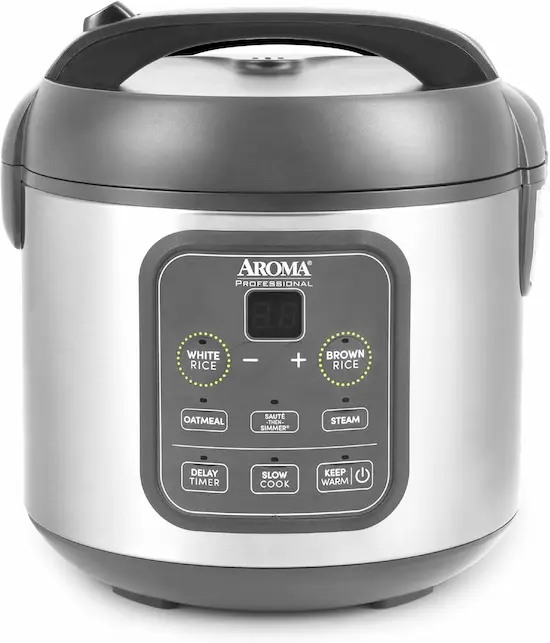
Method 2: Rice Cooker Reheat (Most Reliable)
Rice cookers are designed for moisture equilibrium — they detect the temperature plateau caused by steam saturation, mimicking fresh cooking conditions.
- Add leftover rice
- Sprinkle 1 tbsp water per cup
- Press Cook/Reheat
The cycle ends automatically when moisture stabilizes. This is the method described in our Aroma Rice Cooker Instructions — it works on any rice cooker brand. For a side-by-side comparison of how the rice cooker, stovetop, Instant Pot, and microwave handle moisture differently, see our Rice Cooking Methods Compared guide.
Frugal benefit: Rice cooker reheating avoids running a full stove or oven cycle for a small portion — significantly lower energy use.
Method 3: Stovetop Steam (Best Texture)
The method preferred by restaurant kitchens:
- Add rice to saucepan
- Add 2–3 tbsp water
- Cover tightly
- Heat on LOW for 5 minutes
Low heat prevents bottom scorching. This produces texture closest to freshly cooked rice, but requires more attention than the microwave method.
Method 4: Steamer Basket (Large Batch)
Ideal for meal prep situations. Steam reheating restores moisture uniformly across large quantities.
| Batch Size | Best Method |
|---|---|
| Single serving | Microwave |
| Family portion | Rice cooker |
| Large meal prep batch | Steamer basket |
Water Addition Chart
| Rice Amount | Water to Add |
|---|---|
| 1 cup | 1 tbsp |
| 2 cups | 2 tbsp |
| 4 cups | ¼ cup |
Too much water creates mushy texture. Start with less — you can always add more.
Different Rice Types Reheat Differently
| Rice Type | Difficulty | Notes |
|---|---|---|
| White long grain | Easy | Standard 1 tbsp method |
| Jasmine | Easy | Minimal water needed |
| Basmati | Medium | Slightly more steam, +30 sec |
| Brown rice | Harder | Bran layer requires +1–2 min |
Brown rice reheating is more challenging because the intact bran layer slows moisture penetration — the same reason brown rice takes longer to cook initially. The age of your rice also affects how quickly it rehydrates — see our guide on Does Rice Age Matter? for how storage time changes water requirements and reheating behavior.
Freezing vs Refrigerating Leftover Rice
Freezing slows retrogradation more effectively than refrigeration. Surprisingly, frozen rice often reheats better than rice that has been refrigerated for 3–4 days.
Freeze method: Cool quickly, portion into servings, freeze airtight. Reheat directly from frozen with added moisture and an extra 1–2 minutes.
Why Proper Reheating Saves Money
Rice expands greatly when cooked — a small dry portion becomes a large cooked portion. Throwing away dried leftovers wastes one of the cheapest calorie sources available.
One large pot of rice can become multiple meals across the week when reheated properly. Correct reheating prevents food waste, reduces grocery spending, and makes batch cooking practical for busy families.
Troubleshooting Reheated Rice
| Problem | Cause | Fix |
|---|---|---|
| Dry and hard | No steam | Add water + cover |
| Crunchy center | Uneven heating | Stir midway |
| Mushy texture | Too much water | Reduce moisture |
| Burned bottom | Too high heat | Lower heat setting |
For a complete diagnostic guide covering every rice texture failure mode — mushy, gummy, gluey, and split grains — see Why Rice Turns Mushy, Gummy, or Gluey.
Related Reading
- How Long Does Cooked Rice Last? — Food safety storage guidelines and spoilage signs for leftover rice
- Rice Water Ratio Chart - Perfect Ratios for All Rice Types — Exact water ratios for cooking white, brown, jasmine, basmati, and specialty rice
- Brown Rice vs White Rice — How nutrition, cooking method, and reheating differ between rice types
- Should You Wash or Soak Rice? — When rinsing helps texture and when it washes away nutrients
- Pressure Cooker Rice: Water Ratio & Timing — Fast cooking method with different moisture dynamics than stovetop or rice cooker