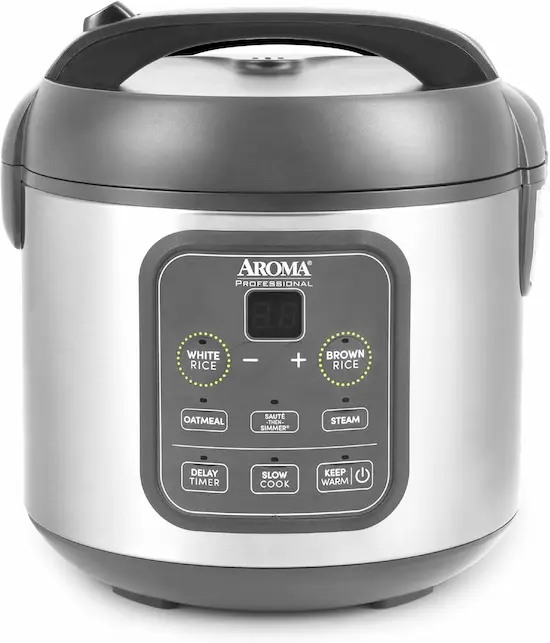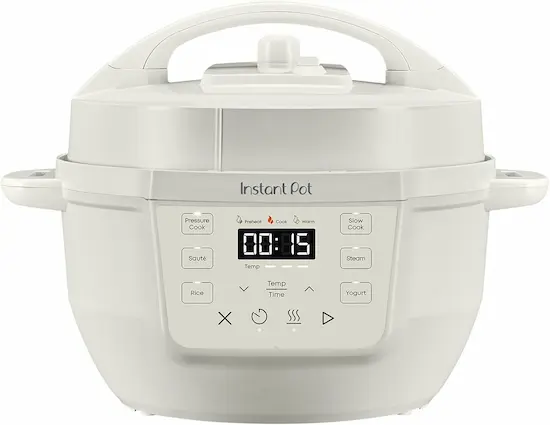
🍚 Get the exact ratio for your brown rice + device
Select rice type and cooking method — the calculator gives you water amount and cook time, not a generic chart.
Brown rice and white rice look similar in the bag. They cook completely differently.
The reason isn't the rice itself — it's the bran. Brown rice keeps the outer bran layer that white rice has milled away. That single difference changes water requirement, cooking time, and the approach you need on every cooking device.
Using white rice ratios on brown rice produces crunchy, undercooked grains. This guide covers the correct ratios for every method, why they differ, and the adjustments that actually fix common brown rice failures.
Why Brown Rice Needs More Water: The Bran Barrier
Brown rice is a whole grain. The kernel has three layers:
- Bran (outer layer) — fibrous, intact in brown rice, removed in white rice
- Germ — the nutrient-dense core
- Endosperm — mostly starch, what you're cooking when you cook rice
When you cook white rice, water reaches the starchy endosperm almost immediately. When you cook brown rice, water first has to penetrate the bran layer — which acts like a slow-draining membrane. That penetration takes more time, which requires more water to still be available when the starch is ready to absorb it.

The result: brown rice needs significantly more water and roughly twice the cooking time of white rice.
Brown Rice Water Ratio by Cooking Method
| Method | Rice : Water | Cook Time | Notes |
|---|---|---|---|
| Stovetop | 1 : 2.25 | 40–45 min | Tight-fitting lid essential; don't lift during cooking |
| Stovetop (rinsed rice) | 1 : 2 | 38–42 min | Rinsing removes surface starch and some bran; reduce water slightly |
| Rice cooker (Brown setting) | Machine markings | 35–50 min | Use the brown rice line, not white rice line |
| Rice cooker (no Brown setting) | 1 : 1.75 | 35–50 min | May need 10 min extra steam after cycle ends |
| Instant Pot / Pressure cooker | 1 : 1.25 | 22–24 min HP + NR | Less water needed — sealed environment prevents evaporation |
| Microwave | 1 : 2.5 | 30–35 min at 50% power | Use a microwave-safe dish with a vented lid; reduce power to avoid boilover |

💡 The stovetop variable: The range between 2 and 2.5 cups is real, not a typo. It depends on how tight your lid fits (looser lid = more evaporation = more water needed) and your altitude. Start with 2.25 cups — this is the middle ground that works for most pots.
Stovetop Method: Step by Step
Brown rice on the stovetop fails most often from two mistakes: lifting the lid mid-cook (releasing steam) and not resting the rice after cooking.
- Rinse (optional but recommended — removes surface starch and some phytic acid)
- Combine rice and cold water in a heavy-bottomed pot with a tight lid
- Bring to a boil uncovered on medium-high heat
- Reduce heat to the lowest setting that maintains a gentle simmer
- Cover tightly — don't lift the lid for 40 minutes
- Check at 40 minutes: a grain should be tender with no crunch. If still crunchy, add 2 tablespoons water, replace lid, 5 more minutes
- Remove from heat and rest covered for 10 minutes — this step is not optional
- Fluff with a fork and serve
The 10-minute rest allows steam to redistribute through the rice, finishing the cooking and preventing wet, sticky grains.
Rice Cooker: Why the Brown Rice Setting Matters
Most rice cookers with a Brown Rice setting use a different cycle than white rice — typically:
- Extended soak phase before heating (10–20 minutes of warm water sitting with the grain)
- Longer heating period at a slightly lower temperature
This cycle exists specifically because the bran layer needs time to hydrate before the interior starch will cook properly. If you skip this and use the white rice setting, the bran warms up quickly, trapping heat inside before the starch can absorb water — the result is unevenly cooked rice with a cooked exterior and still-firm interior.
If your rice cooker doesn't have a Brown Rice setting: Use 1.75 cups water per cup of rice. After the cook cycle ends, leave the rice on Warm with the lid closed for 10 extra minutes before opening. This simulates part of what the Brown Rice cycle does.
Instant Pot: Why Less Water Works
The Instant Pot ratio (1:1.25) seems wrong compared to stovetop (1:2.25). It isn't — the pressure cooker environment changes the math.
In a sealed pressure cooker, there is virtually no evaporation. Every drop of water you add stays in the pot and is available for the rice. On the stovetop, a significant portion of your water budget evaporates during the 40-minute cook — which is why you need to add extra.
In the Instant Pot, you only need enough water to hydrate the rice, not enough to account for evaporation losses.
Instant Pot process:
- Rinse brown rice (reduces starchiness and improves texture in the IP)
- Add rice and water in 1:1.25 ratio
- Seal, set to High Pressure for 22–24 minutes
- Full Natural (don't quick release — the rice needs this to finish)
- Open, fluff, serve
Different Types of Brown Rice
Not all brown rice is identical. These adjustments apply:
| Brown Rice Variety | Stovetop Ratio | Notes |
|---|---|---|
| Long grain brown | 1 : 2.25 | Standard — this is what most packages mean by "brown rice" |
| Short grain brown | 1 : 2.25 | Higher amylopectin — naturally stickier result even when the water ratio matches long-grain brown rice |
| Brown basmati | 1 : 2 | Drier grain with more variation by age. Start here, then add a splash more water only if your batch stays firm. |
| Brown jasmine | 1 : 2.25 | Similar to long grain; slightly more fragrant |
| Quick-cook brown rice | Per package (usually 1 : 1.25) | Pre-cooked and dried — completely different product, don't use standard ratios |
To Soak or Not to Soak
Soaking brown rice for 30–60 minutes before cooking:
Benefits: Reduces cook time by 10–15 minutes, improves texture consistency, reduces phytic acid content (improves mineral absorption), more evenly hydrates the bran.
If you soak: Drain the soaking water, use fresh water for cooking, and reduce your water by 2–3 tablespoons per cup (the grain absorbed water during soaking).
If you skip soaking: Use the full ratios in the charts above. The rice will be fine — soaking is an optimization, not a requirement.

Not sure about your specific brown rice or rice cooker model?
The calculator adjusts for grain type, age, and device — including Aroma, Zojirushi, and Instant Pot.
Troubleshooting Brown Rice
Problem: Crunchy or undercooked center Cause: Not enough water or cook time. The bran is still blocking full hydration. Fix: Add 2 tablespoons water, cover, cook 5–8 more minutes on lowest heat. Next batch: increase water by 0.25 cup.
Problem: Mushy or soggy Cause: Too much water, or lid was loose and then too much water was added to compensate. Fix: Next batch reduce water by 2 tablespoons. Fluff immediately after cooking instead of leaving it on warm.
Problem: Burnt bottom, raw top Cause: Heat too high during simmer phase. Fix: After bringing to boil, reduce to the absolute lowest setting. Use a heat diffuser if your stove runs hot.
Problem: Took much longer than expected Cause: You may have quick-cook brown rice (pre-processed) — use package directions. Or your pot lid doesn't seal well. Fix: If the lid fits loosely, add 2–3 tablespoons extra water next time.
Problem: Gummy or sticky texture Cause: Too much starch released, possibly from not rinsing or using too high heat. Fix: Rinse before cooking. After cooking, spread rice on a baking sheet for 5 minutes to steam off excess moisture.
Brown Rice vs White Rice: When Each Makes Sense
Brown rice is nutritionally superior — it retains fiber, vitamins, and minerals that milling removes from white rice. But it takes twice as long and has a chewier texture that isn't always what a dish calls for.
Brown rice is better for: Grain bowls, meal prep containers, stir-fry as a base, eating as a standalone side where texture and nutrition matter.
White rice is better for: Sushi (needs precise sticky texture), congee, rice porridge, any dish where tender, neutral rice is the goal, and situations where you're cooking in under 25 minutes.
Neither is the wrong choice — they're different ingredients that happen to look similar dry.
The Bottom Line
Brown rice: 1 cup to 2.25 cups water on the stovetop, 40–45 minutes, 10-minute rest after cooking.
Rice cooker with Brown setting: use the machine markings. Without: 1:1.75 ratio, expect a longer cycle.
Instant Pot: 1:1.25, 22–24 minutes high pressure, then Full Natural.
The bran layer explains everything — more time, more water, more patience. Get those three right and brown rice is reliable.
Related Reading
- Rice Water Ratio Chart — Every rice type and method in one reference
- Does Rice Age Matter? — Why brown basmati needs even more water than standard brown rice
- Rice Cooking Methods Compared — Stovetop vs rice cooker vs Instant Pot for brown rice
- How Long to Cook Rice in a Rice Cooker — Timing chart including brown rice by cooker type
- Why Rice Turns Mushy — The starch science behind over-hydration