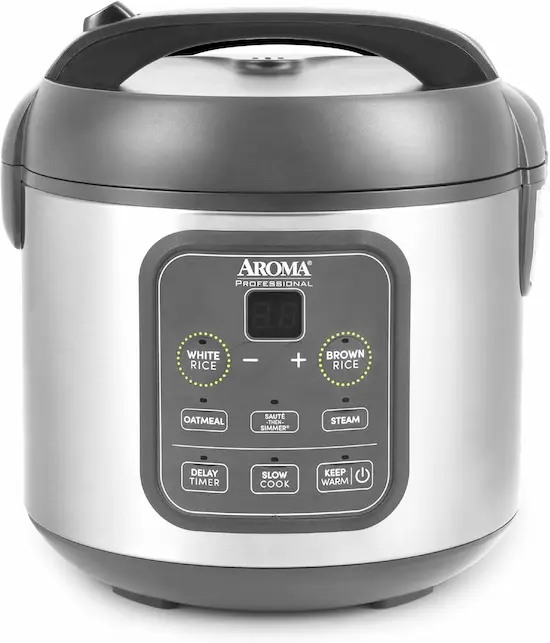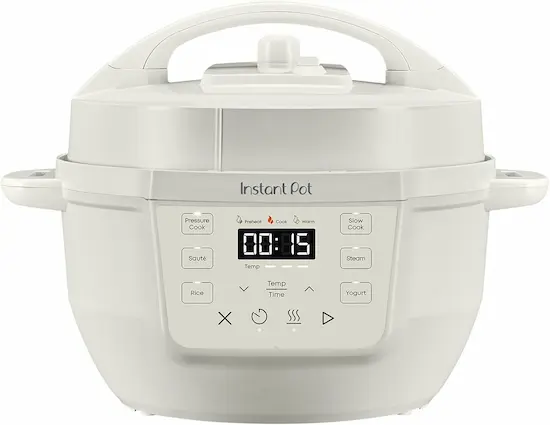
🍚 Get exact water ratios and timing for your rice cooker.
Select your rice type, quantity, and device — get precise ratios so every batch finishes on time.
White rice takes 15–25 minutes in a rice cooker. Brown rice takes 35–50 minutes. But timing alone doesn't tell the full story.
Rice cookers don't actually cook based on minutes — they cook based on water absorption. That's why two batches of rice using the same cooker can finish at different times. Understanding how rice cookers decide when rice is done removes guesswork completely.
Why Rice Cookers Don't Use Timers
Unlike ovens or stovetops, rice cookers rely on physics instead of clocks.
Water cannot exceed boiling temperature (212°F / 100°C) while liquid remains. During cooking: water boils, rice absorbs moisture, steam escapes slowly, and water eventually disappears. Once all water is absorbed, temperature rises suddenly, the internal sensor detects the change, and the cooker switches from Cook to Warm.
So cooking time depends on water amount, rice variety, batch size, and starting water temperature — not a preset timer. This is why correct water ratios matter so much.
Rice Cooker Cooking Time Chart (All Major Rice Types)
| Rice Type | Cooking Time | Water Ratio | Texture |
|---|---|---|---|
| White long grain | 15–25 min | 1:1.25 | Soft & fluffy |
| Jasmine rice | 15–20 min | 1:1.25 | Light, aromatic |
| Basmati rice | 15–22 min | 1:1.25 | Separate grains |
| Sushi / short grain | 18–25 min | 1:1.1 | Sticky |
| Brown rice | 35–50 min | 1:1.75 | Chewy |
| Wild rice blend | 45–60 min | 1:2 | Firm |
Times vary slightly by cooker wattage and model.
How Rice Quantity Changes Cooking Time
More rice does NOT cook proportionally longer. Heating water takes most of the energy, not cooking the grains themselves.
| Amount | White Rice Time |
|---|---|
| 1 cup | ~15 min |
| 2 cups | ~18 min |
| 4 cups | ~22 min |
Doubling rice rarely doubles cooking time. This surprises most beginners who expect linear scaling.
The Hidden Step Most People Skip: Resting Time
Rice is technically finished when the cooker switches to Warm — but texture improves dramatically if you wait 10 more minutes.
After the cooker switches to Warm: leave the lid closed and let rice steam for 10 minutes before opening. During this rest, moisture redistributes evenly, grains firm slightly, and stickiness balances out. Skipping this step causes wet tops and dense bottoms.
White Rice Cooking Timeline (What Happens Inside)
Understanding the stages helps troubleshoot problems before they become habits.
Phase 1 — Heating (0–5 minutes): Water temperature rises. No visible changes yet.
Phase 2 — Active Boil (5–12 minutes): Bubbles visible through lid, steam increases, rice absorbs water rapidly.
Phase 3 — Absorption (12–18 minutes): Water level drops visibly. Rice expands.
Phase 4 — Steam Finish (final minutes): Remaining moisture equalizes throughout the rice mass.
Phase 5 — Auto Shutoff: Water gone → temperature spike → Warm mode activates.
Why Brown Rice Takes So Much Longer
Brown rice keeps its bran layer intact. That outer layer slows water penetration, requires longer heat exposure, and needs more total hydration. Think of it like cooking pasta with a protective shell.
| Stage | Extra Time vs White Rice |
|---|---|
| Hydration | +10 min |
| Cooking | +10–15 min |
| Steam finish | +5–10 min |
Total time nearly doubles. Always use the Brown Rice setting if your cooker has one — it adjusts the heating curve for gradual penetration through the bran.
Rice Cooker Settings Explained
Most rice cookers include multiple buttons that confuse new users.
| Setting | Purpose |
|---|---|
| White Rice | Fast cooking cycle |
| Brown Rice | Extended hydration cycle |
| Quick Cook | Higher heat, skips soaking phase |
| Steam | Steaming vegetables or fish |
| Keep Warm | Holding temperature after cooking |
The cooker still relies on water evaporation for completion regardless of setting. Settings mainly adjust heating curves.
Quick Cook Mode: Reduces cooking time by skipping soaking stages. Use when you need rice fast and texture perfection isn't critical. Avoid for brown rice, sushi rice, and large batches.
Why Your Rice Cooker Sometimes Takes Longer
Cooking time increases when: cold water is used, rice was not rinsed, a large batch is cooking, or the lid was opened during cooking. Opening the lid releases steam pressure and resets heat balance — always keep the lid closed.
Should You Rinse Rice Before Cooking?
Usually yes. Rinsing removes excess surface starch.
| Rinsed | Not Rinsed |
|---|---|
| Fluffy separate grains | Stickier texture |
| Cleaner flavor | Cloudier cooking liquid |
| Even cooking | Possible clumping |
Exception: sushi rice sometimes benefits from partial starch retention for the characteristic stickiness.
High Altitude Cooking Adjustments
At high altitude, water boils at lower temperatures, which means rice needs more time and slightly more water to cook through.
Add 1–2 tablespoons extra water per cup at elevations above 3500 feet. Expect slightly firmer grains even with adjustments.
Advanced Texture Control
Small water adjustments create noticeably different results.
| Goal | Adjustment |
|---|---|
| Firmer rice | -1 tbsp water per cup |
| Softer rice | +1 tbsp water per cup |
| Sticky rice | Skip rinsing |
| Restaurant-style fluffy | Rinse well + rest 10 min |
Frugal Tip: Cook Extra Rice Once, Eat Multiple Meals
Rice cooker electricity use for 4 cups vs 1 cup is nearly identical. The machine runs the same heating cycle regardless of quantity.
Cook once and use the rice for fried rice, burrito bowls, soups, and meal prep lunches across the week. This reduces energy cost per serving dramatically and makes the rice cooker one of the most frugal appliances in the kitchen.
Complete Rice Cooker Timing Cheat Sheet
| Rice Type | Cook Time | Rest Time |
|---|---|---|
| White long grain | 15–25 min | 10 min |
| Jasmine | 15–20 min | 10 min |
| Basmati | 15–22 min | 10 min |
| Sushi / short grain | 18–25 min | 10 min |
| Brown rice | 35–50 min | 10–15 min |
| Wild rice blend | 45–60 min | 15 min |
Related Reading
- Rice Water Ratio Chart — Every rice type and method in one reference, including stovetop, rice cooker, and Instant Pot ratios
- Rice Cooker Lines vs Measuring Cups — Why the water line markings inside your cooker don't match standard US cups
- Aroma Rice Cooker Instructions — Water lines, settings, and why the Aroma cup doesn't match standard US measuring cups
- Brown Rice Water Ratio — Why the bran layer needs extra water and a longer cooking cycle in a rice cooker
- Jasmine Rice Water Ratio — The 1:1.25 ratio that works better than what the package recommends for fragrant rice
- Zojirushi Rice Cooker Instructions — What each Zojirushi setting does when your question is 'which program', not 'how long'
- Cuckoo Rice Cooker Instructions — How long each Cuckoo pressure program runs and the safe release sequence