Quick answer: why your rice cooker numbers don't match
In my kitchen, this mismatch almost always comes from using a 240ml US measuring cup with a cooker calibrated for a 180ml rice cup. If you use the original cup, the line marks usually work. If you use a standard cup, measure water separately.
🍚 Want the exact starting point for your cooker and rice type?
Use the calculator if you're switching between Aroma, Zojirushi, stovetop, or Instant Pot and don't trust the line markings.
When I first started using a rice cooker seriously, I assumed the markings inside the pot were idiot-proof.
That seemed like the whole point. Pour in rice, fill to the line, press the button, and walk away.
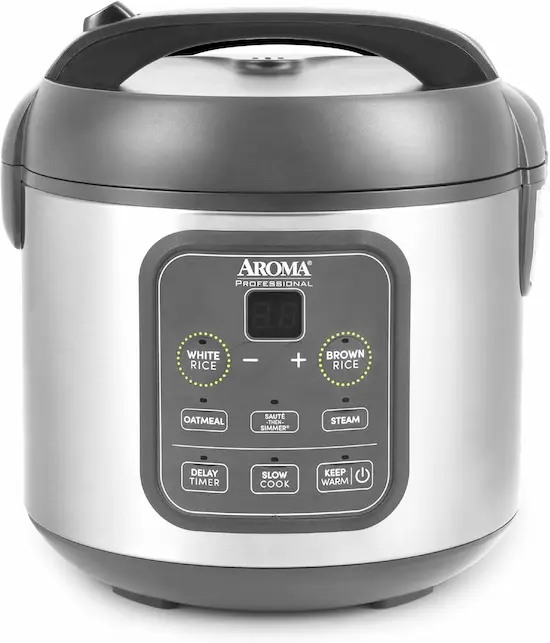
Then I bought an Aroma ARC-914SBD at Walmart in Denton, Texas, measured the rice with a standard Pyrex cup from my baking drawer, filled the pot to the matching line, and got a batch of jasmine rice so wet it looked like it had been negotiated rather than cooked.
I blamed the rice. Then I blamed the machine. Then I blamed the cheap bag of long-grain white from Aldi.
The real problem was simpler and more annoying: the cup and the line markings were speaking two different measurement languages.
Once I understood that, rice cookers stopped feeling mysterious. In my experience, this is one of the highest-leverage things a home cook can learn, especially if you rotate between Costco basmati, Nishiki short-grain, Texas grocery-store long grain, and brown rice from the natural foods aisle at H-E-B.
The First Thing Most People Miss: The Rice Cup Is Not a Normal Cup
The little translucent cup that comes with many rice cookers is usually 180 milliliters.
That is not a US cup.
A standard US measuring cup is 240 milliliters.
That means the rice cooker cup is about 0.75 of a US cup.
That difference sounds small until you scale it across 2 cups, 3 cups, or a full family-size batch in a 5.5-cup Zojirushi Neuro Fuzzy, a Tiger JBV-A10U, or a budget Aroma cooker.
If you measure rice with a 240ml cup and then fill water to the line meant for a 180ml cup, you are effectively increasing the rice quantity without telling the water line. In practice, the relationship between grain volume, headspace, and evaporation changes just enough to produce mushy, blown-out rice.
When I first practiced this side by side on a rainy March weekend in North Texas, I noticed the sensation immediately when I lifted the lid. The correctly measured batch had separate grains and a gentle glossy finish. The mismatched batch had the heavier, stickier surface I usually associate with too much water in a covered pot.
What the Water Lines Actually Mean
This part matters more than the cup-size trivia.
The line inside the pot is not saying:
use a 1:1.5 ratio
It is saying:
if you used the machine's rice cup and added 1 cup of raw rice, fill water to this physical level in this specific pot
That is a very different instruction.
The line is tied to:
- the pot diameter
- the depth of the insert
- the sensor behavior of the machine
- the cup size the manufacturer included
- the rice style the manufacturer expects you to cook most often
In my practice, the line markings behave more like a shorthand for a particular machine ecosystem than a universal ratio.
That is why a Line 2 on a Zojirushi doesn't translate neatly to a generic online chart, and why an Aroma line can feel wrong if you're cooking aged Royal basmati instead of basic white long grain.
When the Lines Work Beautifully
I don't want to overcorrect and tell you the lines are useless. They are not.
They work well when all four of these things are true:
- You are using the original 180ml rice cup.
- You are cooking a grain the machine expects, usually white rice.
- Your rice is not unusually old or unusually dry.
- You are not improvising with broth, oil, coconut milk, or mix-ins that change absorption.
In my kitchen, a Zojirushi line plus the original cup is very reliable for plain white short-grain and plain jasmine.
The texture should feel springy and loose when you fluff it with a rice paddle, not gummy and not chalky. The grains should release from each other with almost no pressure.
That is the point where I leave the lines alone.
When I Stop Trusting the Lines and Measure Water Manually
There are four situations where I stop using the pot markings and switch to measured water:
1. Brown Rice
Brown rice exposes weak assumptions fast.
The bran layer slows water penetration, the cook time is longer, and the difference between a firm but finished grain and a hard center can be just a few tablespoons of water over a multi-cup batch.
When I first practiced brown basmati in a standard cooker during a dry fall week in October, I noticed the line-mark method came out slightly firmer than I wanted, especially after a 10-minute rest. Measured water fixed it more consistently.
2. Aged Basmati
Aged basmati is thirsty but also delicate. It wants enough water to hydrate fully, but not so much that the grains split and collapse.
This is exactly why I prefer using the Rice Water Ratio Calculator instead of blindly trusting a line when I am cooking a 10-pound burlap-style bag from India or Pakistan.
3. Standard US Cups
If the original cup is gone, cracked, or living permanently in the back of a junk drawer under expired soy sauce packets, just stop pretending the lines still make sense.
Measure rice and water intentionally.
4. Anything Beyond Plain Rice
If I add bone broth, a tablespoon of butter, frozen peas, canned coconut milk, or diced carrots, I stop relying on line marks. Those additions change the cooking environment.
The Test I Use in Real Life
When I am trying to decide whether a cooker line or a measured ratio is more trustworthy, I run the same test I used on my old Aroma and later on a Zojirushi NS-TSC10:
Batch A
- machine cup
- water to line
Batch B
- standard US cup
- measured water based on grain and device
Then I compare:
- grain separation
- top surface texture
- bottom moisture
- how the rice behaves after a 10-minute rest
In my experience, the line method usually wins for plain medium- or short-grain white rice.
The measured-water method usually wins for:
- brown rice
- aged basmati
- weird batch sizes like 1.5 cups or 2.5 cups
- any situation where the original cup is missing
Why the Same Cooker Can Feel Inconsistent From Bag to Bag
This is where rice age and brand matter more than most appliance guides admit.
I have cooked Kirkland jasmine, Lundberg brown rice, Nishiki medium grain, and Royal basmati in the same machine with the same human and the same kitchen. They do not all behave the same.
In my experience:
- Nishiki and other stickier medium-grain rice are forgiving.
- Royal basmati punishes excess water fast.
- older brown rice punishes insufficient water fast.
- bargain long grain from a warehouse shelf can swing either direction depending on age.
When I first practiced side-by-side batches of jasmine and basmati in late August, with indoor temperature around 76F and a thunderstorm rolling across Wise County, I noticed the jasmine absorbed line-based water well, while the basmati was better with a slightly drier manual measurement.
The sensation should be different in the spoon. Jasmine can tolerate a softer cling. Basmati should stay long, distinct, and almost feathery.
My Rule for Aroma Cookers
For budget Aroma machines, this is the rule I teach friends and family:
- If you have the original cup: use the line for plain white rice.
- If you lost the cup: ignore the line and use measured water.
- If you're cooking brown rice or aged basmati: use measured water unless you've already calibrated your machine.
That single rule eliminates most of the confusion.
My Rule for Zojirushi Cookers
Zojirushi machines are usually more forgiving because the heating logic and keep-warm cycle are gentler. For the full model-by-model menu breakdown, see the Zojirushi Rice Cooker Instructions; the Korean pressure-style sibling is covered in the Cuckoo Rice Cooker Instructions.
But even there, I still separate two questions:
- Is the cooker good?
- Is my measurement method consistent?
The answer to Question 1 does not save you from sloppiness on Question 2.
If I use the original cup and cook white rice on a Zojirushi, I trust the machine.
If I use a standard OXO measuring cup and then try to reverse-engineer the line, I do not.
The Easiest Fix If You Lost the Original Cup
This is the simplest path:
- Use standard US cups for the rice.
- Use a measured water ratio by grain and device.
- Write the ratios you like on painter's tape under the lid or inside a cabinet door.
That is what I finally did after losing an Aroma cup during a move between Fort Worth and Decatur. It was less elegant than trusting the insert lines, but much more reliable.
What About the "Brown Rice" and "Porridge" Lines?
Treat them the same way: they are machine-specific water levels, not universal ratios.
If you are cooking the default grain the machine expects, they can work well.
If you are adapting a different grain, a nonstandard cup, or a different moisture environment, I would rather trust a calculated ratio than a printed line that was never designed for your exact scenario.
The Mistake I See Most Often in Other People's Kitchens
I have observed in students that the most common mistake is not "using too much water" in the abstract.
It is this exact sequence:
- grab a standard 1-cup measure
- pour rice into cooker
- fill water to matching line
- assume the machine failed
The machine often did exactly what it was told.
The mismatch happened before the button was pressed.
A Quick Calibration Method I Actually Use
If you cook rice often, calibrate your cooker once and stop guessing forever.
For white rice
Cook 1 standard US cup of rice three times:
- batch 1: machine line method if you still have the original cup
- batch 2: measured water at your normal target
- batch 3: measured water minus 2 tablespoons if batch 2 felt wet
Take notes on:
- top texture
- bottom texture
- how it reheats the next day
That last point matters. A "good" batch that turns gluey in the fridge was probably still a little too wet.
When the Calculator Is Better Than Memory
If you rotate between:
- Aroma
- Zojirushi
- Instant Pot Duo
- stovetop saucepan
and you cook:
- jasmine on Monday
- brown rice on Wednesday
- basmati with dal on Saturday
memory gets messy.
That is where the Rice Water Ratio Calculator genuinely saves time. I use it less because I don't know the broad principles, and more because I don't want to keep the whole matrix in my head.
The Bottom Line
Rice cooker lines are not wrong. They are just narrower in meaning than most people think.
In my experience, they work when you stay inside the system the manufacturer designed:
- original rice cup
- expected grain
- plain rice
- standard batch size
The moment you step outside that system, measured water becomes safer than faith.
If your rice cooker has ever made you feel like you somehow forgot how to count, you probably did not. You were just reading a 180ml machine with a 240ml cup.
Related Reading
- Rice Water Ratio Chart - The full baseline chart for stovetop, cooker, and pressure cooker
- Aroma Rice Cooker Instructions - Practical use notes for one of the most common budget cookers
- How Long to Cook Rice in a Rice Cooker - Timing chart for the rice types most people run through a cooker every week
- Does Rice Age Matter? - Why a new bag and an old bag behave differently
- Why Rice Turns Mushy - What starch is doing when a batch collapses