Pressure Cooker Rice: The Exact Ratios, Timing, and Science

Pressure cookers (like the Instant Pot) are sold as foolproof: Push a button. Walk away. Perfect rice.
Yet, pressure-cooked rice is one of the most commonly failed home foods. People report rice turning into glue, the bottom layer burning, or grains that look cooked but taste chalky.
This isn’t user error. It’s a misunderstanding of physics.
Pressure changes how starch behaves. Once you understand that, pressure cooker rice becomes repeatable and predictable — not luck-based.
What Pressure Actually Does to Rice
Under pressure, water boils above 212°F (100°C). This forces water into the rice grain rather than just letting it absorb slowly.
This means pressure cooking amplifies small mistakes.
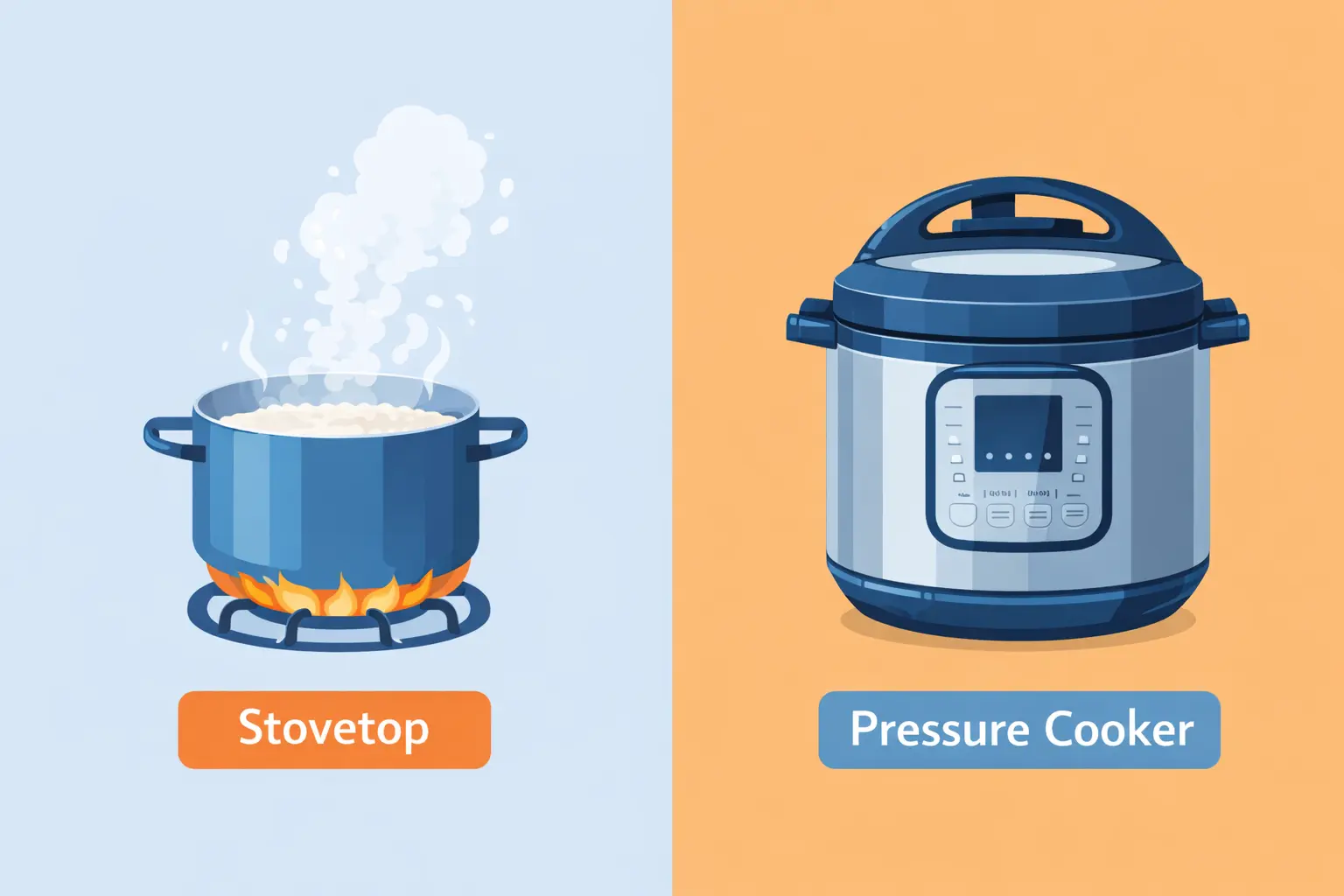
An extra 2–3 tablespoons of water that wouldn’t matter on the stovetop (because it would evaporate) has nowhere to go in a sealed pot. It stays there, turning your fluffy grains into mush.
⚠️ The #1 Rule
Pressure Cooker Rice Needs Less Water. Always.
On average, you need 20–30% less water than stovetop recipes. If you use a 1:2 ratio in an Instant Pot, you will fail.
Pressure Cooker Rice Ratios (By Rice Type)
These ratios assume rinsed rice and a standard electric pressure cooker.
| Rice Type | Ratio (Rice:Water) | Release Method |
|---|---|---|
| White Long-Grain | 1 : 1 | Natural (10 min) |
| Jasmine | 1 : 1 | Quick Release |
| Basmati | 1 : 1 | Natural (10 min) |
| Brown Rice | 1 : 1.25 | Full Natural |
| Short-Grain (Sushi) | 1 : 1.1 | Natural (10 min) |
Special Note on Aromatic Rice: Varieties like Seeraga Samba are extremely sensitive. They often need even less water (0.9 cups) to prevent mushiness. (Read our Seeraga Samba Guide for specifics).
🧮 Stop Memorizing Charts
Our calculator has a "Pressure Cooker" mode that adjusts the water automatically for any batch size.
Use Rice Calculator →Timing & Release: The Hidden Variables
Water controls texture. Time controls integrity.
Natural Release (NR) vs. Quick Release (QR)
- Natural Release: You let the pot cool down on its own. This continues cooking the rice gently and allows moisture to redistribute. Essential for Brown Rice.
- Quick Release: You flip the valve to "Venting." This stops cooking immediately. Essential for Jasmine Rice (which gets mushy if it sits too long).
The Hidden Mistakes That Ruin Dinner
❌ 1. Using the “Rice” Button Blindly
That preset button assumes you are cooking a specific amount of medium-grain white rice. If you cook 3 cups of Jasmine or 1 cup of Brown rice, the preset will fail you. Always use Manual / Pressure Cook mode.
❌ 2. Stirring After Cooking
Stirring hot rice releases trapped starch and turns fluffy grains into gummy clumps. Always fluff gently with a fork. Lift, don't mash.
❌ 3. The "Burn" Error
Burning isn't about temperature — it's about localized dehydration.
- Cause: Too little water, or sugary rice (aged basmati) sticking.
- Fix: Add 1 tablespoon of oil or butter before cooking to coat the bottom.
Pressure Cooker vs. Stovetop: When to Choose Which?
Pressure isn't always better. It is a tool, not a magic wand.
| Situation | Best Method | Why? |
|---|---|---|
| Brown Rice | Pressure Cooker | Saves 20+ minutes; softer texture. |
| Basmati / Jasmine | Stovetop | Preserves delicate aroma better. |
| Large Batch | Pressure Cooker | Consistent heat distribution. |
| Small Batch (1 cup) | Stovetop | Faster setup/cleanup. |
(Curious about the cost difference? See our Energy Showdown: Oven vs Pressure Cooker).
Can You Fix Bad Pressure Cooker Rice?
- Mushy? Spread it on a baking sheet and bake at 350°F for 5-8 minutes to dry it out. Or refrigerate it for fried rice. (See more: Why Rice Turns Mushy).
- Undercooked? Sprinkle 2-3 tbsp water, seal, and cook on High Pressure for 1 more minute.
Final Takeaway
Pressure cooker rice isn’t harder — it’s just less forgiving.
Once you reduce the water, control the release, and ignore the "Rice" preset button, you will get separate grains and zero burning every time.
Ready to cook? Get your exact ratio now: