🧪 Why Blanching is Not Optional
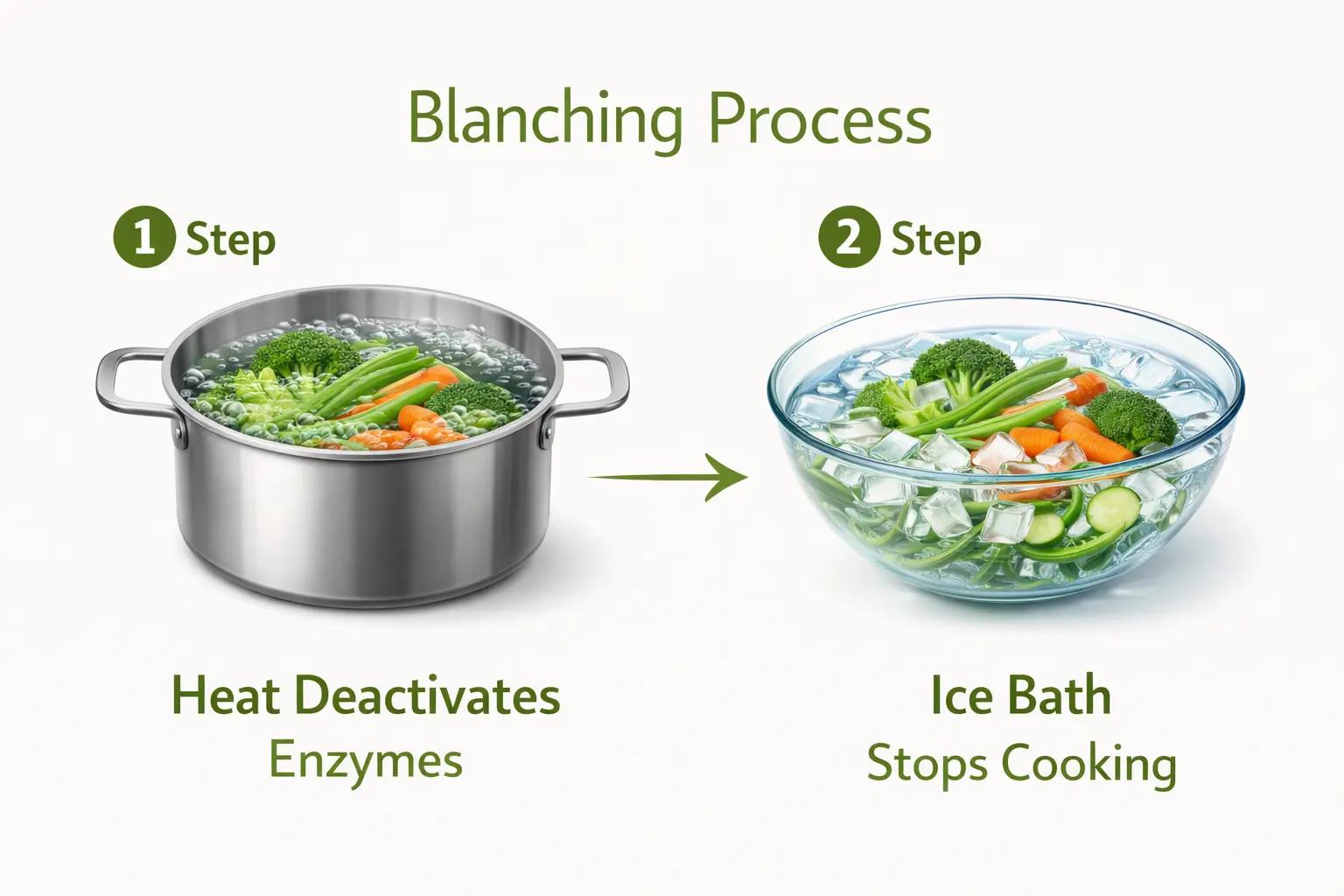
If you throw raw broccoli into the freezer, it will turn brown and mushy in weeks. Why? Enzymes.
Freezing slows down bacteria, but it does not stop the natural enzymes that cause ripening and decay.
- Heat Inactivation: Enzymes are proteins. They are destroyed (denatured) at temperatures between 160°F–180°F.
- The Sweet Spot: You need to boil long enough to kill the enzymes, but short enough to keep the cell walls intact (crunchy).
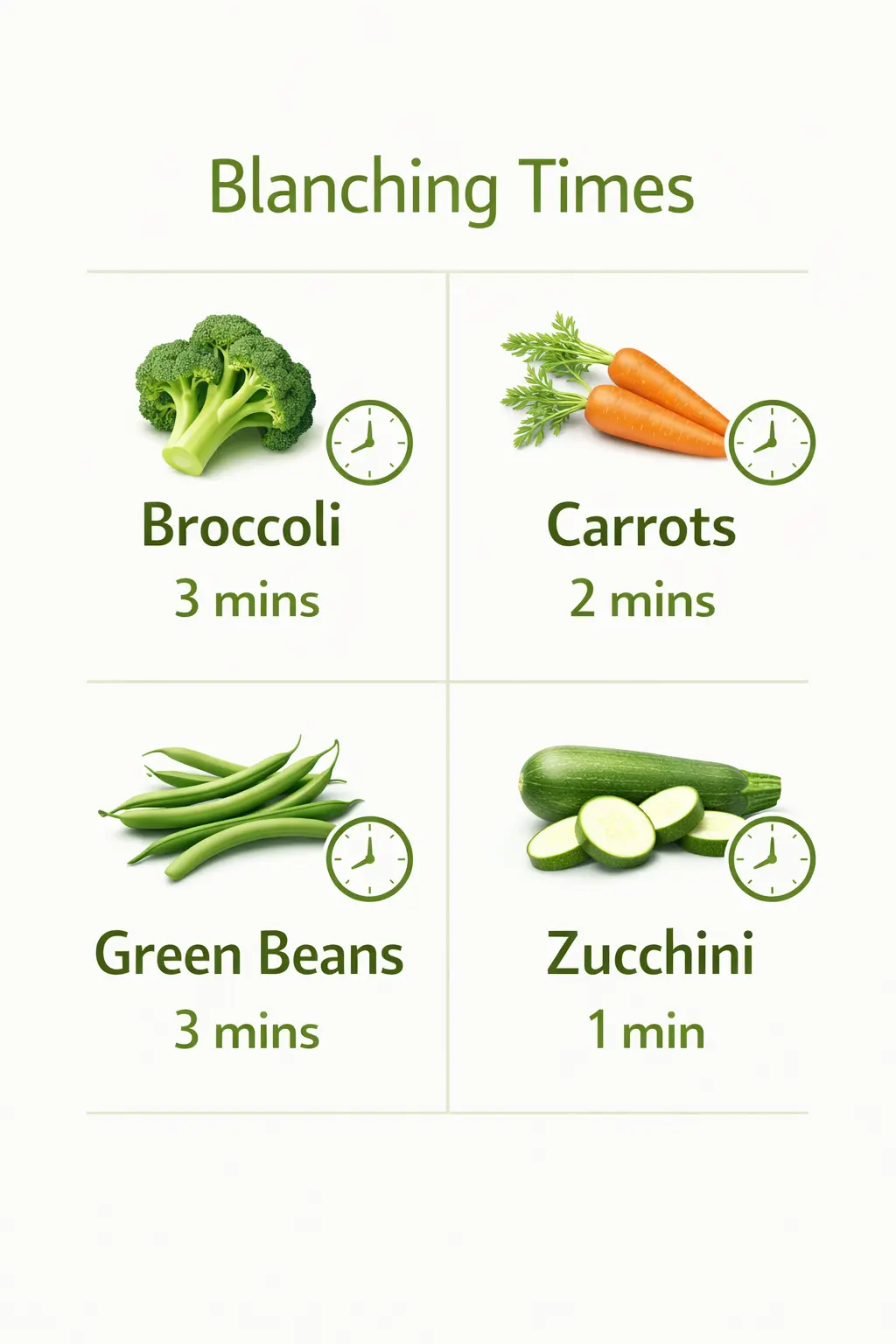
This timer hits the exact USDA-recommended window where enzymes die but texture survives.
What This Tool Does
This isn't just a countdown. This is a preservation safety tool. It is designed to inactivate enzymes without cooking the vegetable through. It assumes you are using boiling water (212°F) and are freezing for long-term storage (3+ months).
When to Use This Tool
- ✅ MUST USE FOR: Long-term freezer storage, Garden harvests, Bulk buying (Costco/CSA boxes).
- ❌ SKIP IF: Eating fresh within 48 hours, Pickling/Fermenting (use our Brine Calculator), or Dehydrating.
What Happens If You Get It Wrong?
- Under-blanching: The enzymes survive. In 2 months, your corn will taste like cardboard and your beans will turn gray.
- Over-blanching: The cell walls rupture. You end up with cooked mush that falls apart when thawed.
- Skipping the Ice Bath: The vegetable keeps cooking from residual heat. You get over-cooked texture even if the boil time was perfect.
Frequently Asked Questions
How long to blanch broccoli? ▼
For standard broccoli florets (1.5" diameter), blanch for exactly 3 minutes in boiling water, then immediately plunge into ice water for 3 minutes to stop cooking. Larger florets may need 4 minutes.
Why do vegetables get mushy after freezing? ▼
Mushiness is caused by enzyme activity that continues even at freezing temperatures. Blanching kills these enzymes (specifically peroxidase and catalase) and preserves the cell walls, preventing mushy texture and color loss.
Is an ice bath necessary for blanching? ▼
Yes. The ice bath stops the cooking process instantly. Without it, residual heat will overcook the vegetable, leading to a mushy texture and nutrient loss. The ice bath should be the same duration as the blanching time.
Can I steam blanch instead of boiling? ▼
Yes, but it takes 1.5x longer than water blanching. For broccoli, steam for 5 minutes instead of 3 minutes boiling. Steam blanching retains more nutrients but requires a proper steamer basket and is less consistent for beginners.
Can I re-use the blanching water? ▼
Absolutely. If you are doing batches, keep the water boiling and top it up. Just make sure it returns to a full rolling boil before starting the timer for the next batch. This saves water and energy.
How long can blanched vegetables be frozen? ▼
Properly blanched and frozen vegetables maintain best quality for 8-12 months. They're safe indefinitely but may develop off-flavors or freezer burn after 1 year. Label bags with dates and use oldest first.
Do I need to blanch before dehydrating? ▼
No. Dehydrating removes moisture completely, which stops enzyme activity. Blanching is only necessary for freezing. However, some people blanch corn and beans before dehydrating for better color retention.
What vegetables should not be blanched? ▼
Tomatoes, onions, peppers, and herbs do not require blanching before freezing. Tomatoes can be frozen whole or chopped. Peppers and onions freeze well raw. Herbs should be frozen immediately without blanching.
Can I blanch vegetables the day before freezing? ▼
Not recommended. Blanch and freeze the same day for best quality. If you must wait, refrigerate blanched vegetables in an airtight container for up to 24 hours. Drain thoroughly before freezing to prevent ice crystals.
How do I thaw frozen blanched vegetables? ▼
For best texture, cook from frozen without thawing. Add directly to boiling water, stir-fries, or steaming baskets. Thawing causes additional moisture loss and mushiness. Only thaw if using in cold salads or dips.