"This calculator estimates batter depth changes to prevent overflow, underbaking, and dry cakes when swapping pan sizes."
🔥 Why Pan Size Ruined Your Cake
It's not just about volume. Baking is about Heat Transfer and Depth.
Too Deep (Small Pan)
Heat takes too long to reach the center. By the time the middle is cooked, the edges are burnt and dry.
Too Shallow (Big Pan)
Moisture evaporates too fast. The cake turns into a cracker before it has time to rise fully.
This calculator adjusts for these physical changes, telling you not just "if it fits," but how the bake time will shift.
When This Calculator Works Best
This tool is designed for standard batters like:
- Butter Cakes (Yellow, Chocolate)
- Quick Breads (Banana Bread, Pumpkin Loaf)
- Brownies and Blondies
- Cheesecakes (Volume check only)
❌ When NOT to Swap Pans
- Angel Food / Chiffon: These rely on climbing the pan walls. Changing geometry can cause collapse.
- Soufflés: Requires specific ramekin dimensions for lift.
- No-Bake Desserts: Depth doesn't matter for baking, but setting time will vary.
Common "Panic Swaps" Solved
We built this for the home baker who finds an old recipe calling for a "9-inch round" but only owns a modern 8x8 square pan. Or for when you want to turn a sheet cake recipe into a layered birthday cake.
Baking Conversion FAQs
How do I convert 9x13 to 8x8 pan? ▼
A 9x13 pan (117 sq in) is almost twice the size of an 8x8 pan (64 sq in). Use only half the batter and save the rest for cupcakes or a second batch. Baking time will be slightly longer since batter is deeper. Add 5-10 minutes and check with a toothpick.
Can I use a 9 inch round pan instead of 8x8 square? ▼
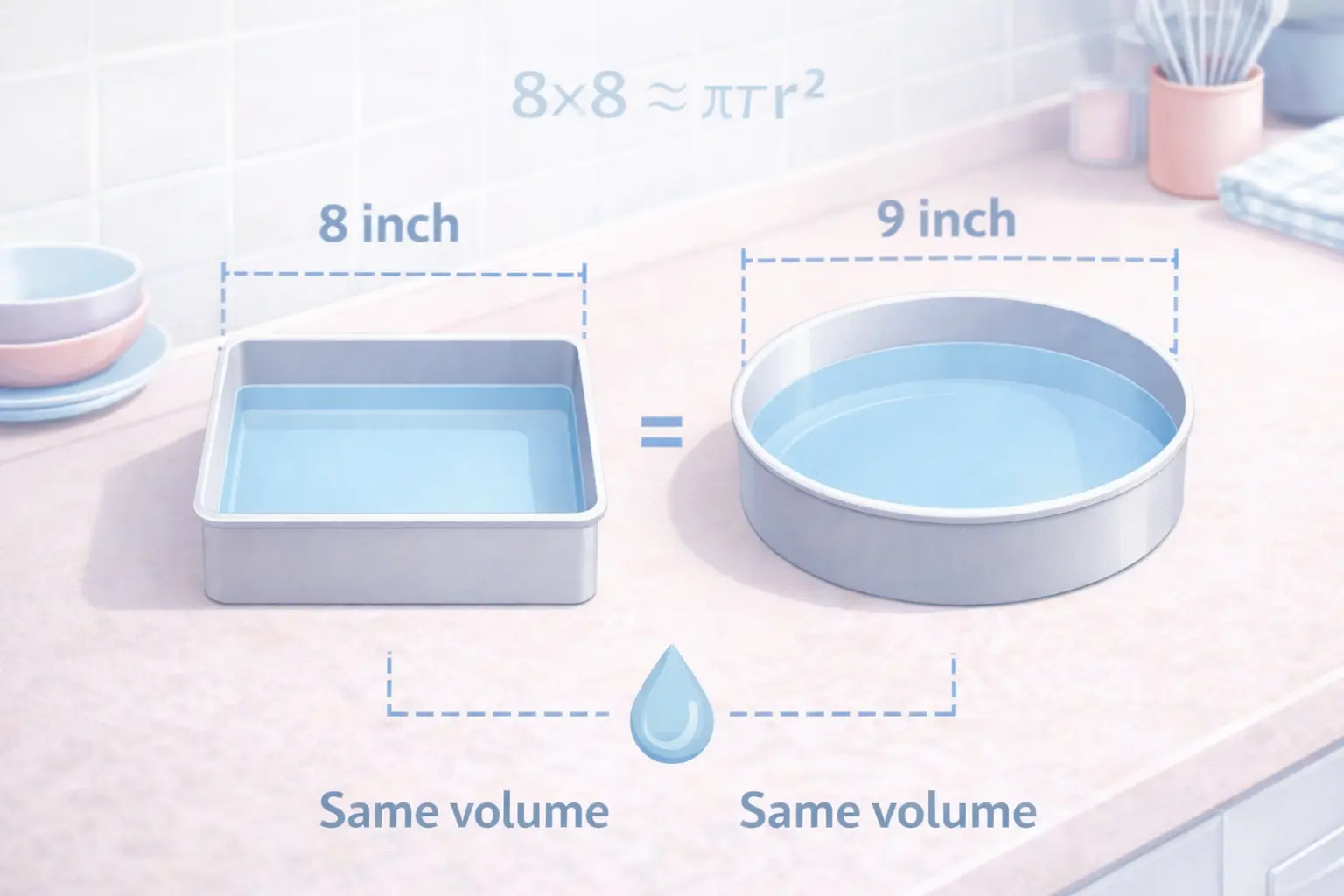
Yes! This is the perfect substitution. A 9" round pan and 8x8" square pan both hold approximately 64 square inches and 6 cups of batter. No baking time or temperature adjustment needed.
How to convert loaf pan recipe to cake pan? ▼
A standard 9x5 loaf pan (45 sq in, 6 cups) is closest to an 8" round pan (50 sq in). The cake will be slightly thinner, so reduce baking time by 10-15% and start checking doneness 10 minutes early. Temperature stays the same.
What happens if my pan is too small? ▼
If you force all batter into a smaller pan, it will overflow during baking and create a mess. The batter will also be too deep and won't cook evenly—burnt edges, raw center. Either remove excess batter or use two pans.
How to adjust baking time for smaller pan? ▼
Smaller pan = deeper batter = longer baking time. Reduce oven temperature by 25°F and add 10-15 minutes to prevent burnt edges while the center cooks through. Use a toothpick test to confirm doneness.
Can I use a bundt pan instead of round cake pans? ▼
A 10" bundt pan (~12 cups) holds approximately the same as a 9x13 sheet cake. It can replace two 9" round pans. Bake at the same temperature but expect 15-20% longer time due to the thick, dense center. Grease heavily to prevent sticking.
Do I need to adjust temperature when changing pan size? ▼
Only if changing batter depth significantly. If using a smaller, deeper pan, reduce temperature by 25°F to prevent burnt edges. If using a larger, shallower pan, you can keep the same temperature but reduce time by 15-20%.
Can I use an 8x8 square pan instead of a 9-inch round? ▼
Yes! This is the most perfect swap in baking. An 8-inch square pan (64 sq in) holds almost exactly the same volume as a 9-inch round pan (~63.6 sq in). No baking time adjustment is usually needed.
What if my pan is glass instead of metal? ▼
Glass conducts heat faster and holds it longer than metal. If switching from metal (recipe) to glass (yours), reduce oven temperature by 25°F to prevent burnt edges.
How full should I fill a cake pan? ▼
A general rule is 1/2 to 2/3 full. Never fill more than 2/3 full, or the batter will likely overflow during the rise. If you have extra batter, bake a few cupcakes on the side.