Skip to content

Free Vinegar Cleaning Solution Calculator

Calculate Safe Vinegar to Water Ratios for Windows, All-Purpose & Mold Removal

This vinegar cleaning solution calculator helps you mix the perfect vinegar to water ratio for safe, effective household cleaning. Calculate precise vinegar dilution ratios for windows (1:1), all-purpose cleaning (1:2), and heavy-duty mold removal (undiluted). Stop wasting money on toxic cleanersโ€”make your own DIY vinegar cleaner for pennies per bottle.

Standard spray bottles are 16oz or 32oz

Your Recipe

5.3
Vinegar
+
10.7
Water

Total: 16 oz

๐Ÿ’ก Pro Tip: Add 10-15 drops of Lemon Essential Oil to cut the vinegar smell and boost grease-fighting power.

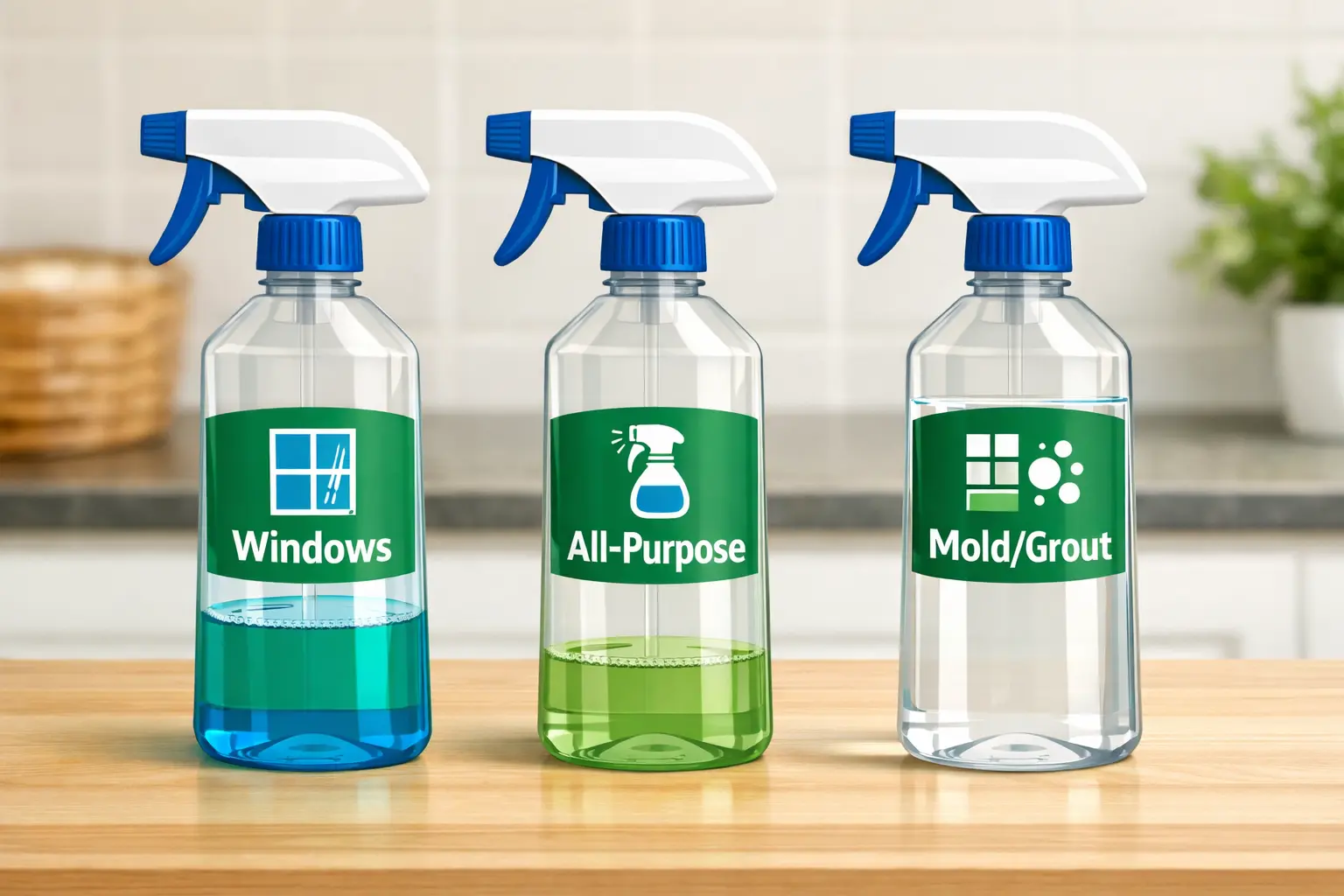
Three spray bottles showing DIY vinegar cleaning solution ratios: 50/50 for windows, 1:2 for all-purpose, undiluted for heavy-duty mold removal
Recipe Card: Three proven ratios for streak-free glass, all-purpose cleaning, and heavy-duty mold removal

How to Mix Vinegar Cleaning Solution (Step-by-Step)

1

Choose Your Cleaning Task

Windows need 1:1 ratio. All-purpose cleaning uses 1:2. Mold requires undiluted vinegar.

2

Measure Your Spray Bottle

Use the calculator above. Standard spray bottles are 16oz (473ml) or 32oz (946ml).

3

Add Vinegar First

Pour the calculated amount of white vinegar (5% acidity) into your clean spray bottle.

4

Add Filtered Water

Top up with distilled or filtered water to the calculated amount. Tap water works but may leave mineral deposits.

5

Optional: Add Essential Oils

Add 10-15 drops of lemon or tea tree oil to mask vinegar smell and boost antibacterial properties.

6

Shake and Label

Shake well before each use. Label bottle with contents and date. Lasts 6 months.

๐Ÿ’ฐ Cost Comparison: DIY vs Store-Bought

ProductCost per 16ozCost per Use
Windex Glass Cleaner$3.99$0.25
Method All-Purpose$4.49$0.28
Lysol Mold & Mildew$5.99$0.37
DIY Vinegar Cleaner$0.47$0.03

Annual Savings:

Average household uses 3 bottles of cleaner per month. With DIY vinegar solution, you save approximately $150/year compared to name-brand cleaners.

๐Ÿ’ฐ

Is DIY really cheaper?

Store-bought cleaners cost up to $4.50/bottle. We broke down the math to show why you're mostly paying for water and plastic.

See the Cost Breakdown

Vinegar Cleaning Solution Ratio Chart

Use this quick reference chart if you don't want to calculate manually. These are standard dilution ratios for household vinegar cleaning.

Cleaning TaskVinegar : Water RatioNotes
Glass & Windows1 : 1Streak-free, light soil
All-Purpose Cleaning1 : 2Counters, appliances
Heavy-Duty / Mold100% VinegarNo dilution

DIY Cleaning: Green, Safe & Cheap

โš ๏ธ
Important Safety Note:
Vinegar is a cleaner, not a hospital-grade disinfectant. According to CDC and EPA guidance, vinegar can reduce some household bacteria and mold, but it should not be relied on to sanitize surfaces contaminated with raw meat or illness-causing pathogens.

Why store-bought cleaners are a waste, and vinegar is a wonder.
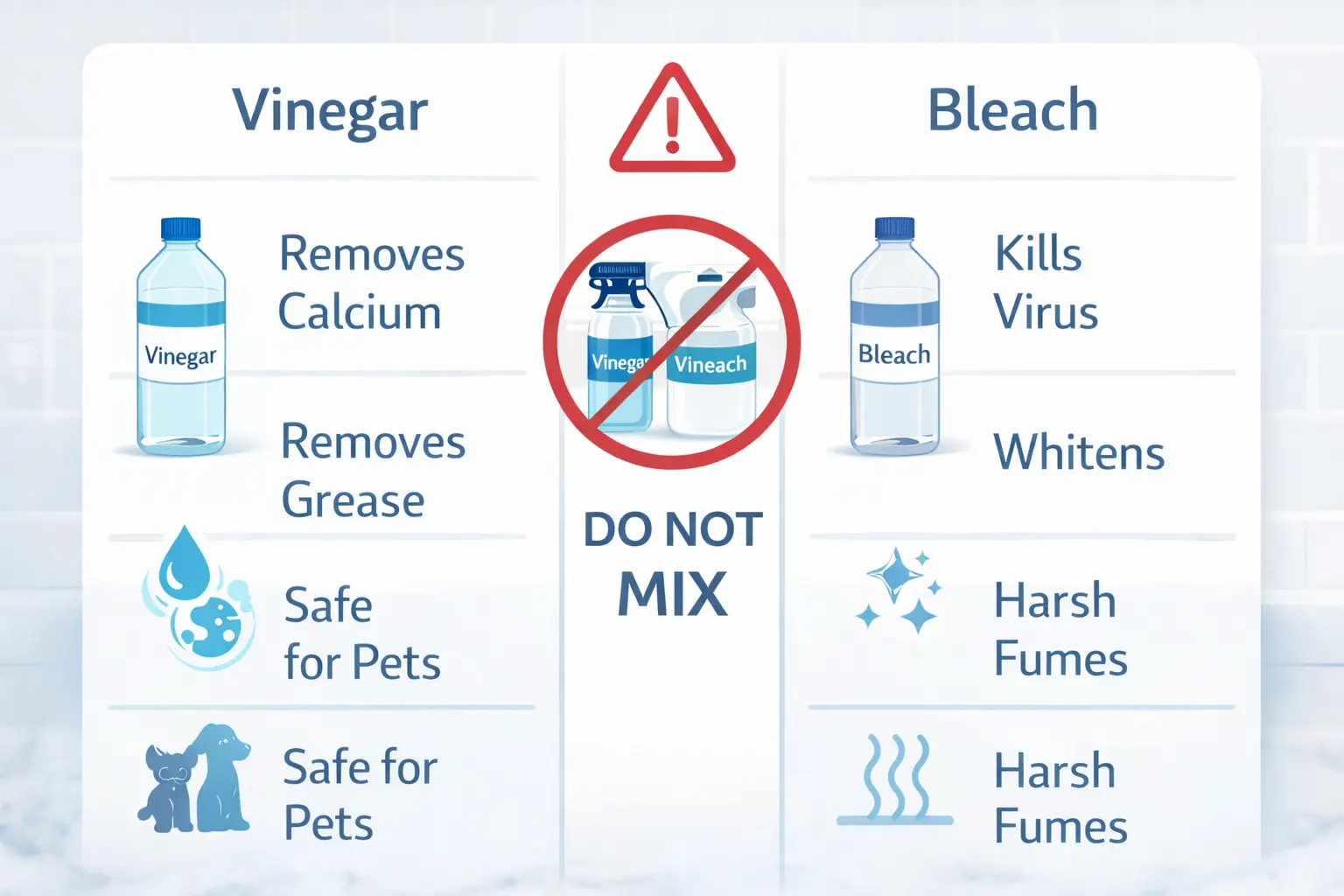
Comparison chart showing vinegar is an acid for mineral deposits and grease while bleach is a base for sanitizing with safety warning never mix vinegar and bleach
Safety Warning: Vinegar (acid) and bleach (base) create toxic gas when mixed. Never combine them.

Why Make Your Own Cleaner? (Health, Environment, Cost)

Commercial cleaning products often contain harsh chemicals, artificial fragrances, and dyes that can irritate skin, lungs, and contribute to indoor air pollution. Making your own vinegar-based cleaner offers compelling advantages:

  • Healthier Home: Avoids respiratory irritants and skin sensitivities. Safe for homes with children and pets.
  • Eco-Friendly: Reduces plastic waste from single-use bottles and avoids chemical runoff into water systems.
  • Cost-Effective: White vinegar is incredibly cheap, making it a very frugal option compared to specialized cleaners.

Beyond health and sustainability, cost is where DIY really shines. Most store-bought cleaners are over 90% water โ€” and priced accordingly .

What Makes Vinegar a Powerful Cleaner? (The Acetic Acid Secret)

The secret to white vinegar's cleaning power lies in its **acetic acid** (typically 5% concentration). This mild acid effectively:

  • Cuts Grease & Grime: Dissolves greasy residue and sticky build-up.
  • Dissolves Mineral Deposits: Excellent for hard water stains, soap scum, and limescale on faucets and shower heads.
  • Natural Disinfectant: While not a registered disinfectant like bleach, acetic acid can kill many common household bacteria (like E. coli and Salmonella) and molds, though it may take longer contact time.
  • Deodorizes: Neutralizes odors rather than just masking them.

Vinegar works by dissolving mineral buildup and breaking down grease โ€” not by bleaching or oxidizing stains. This is why vinegar outperforms bleach on hard water stains .

How to Choose the Right Dilution Ratio

Not all cleaning tasks require the same strength of vinegar. Using the right dilution ensures effectiveness without damaging surfaces:

ModeRatio (Vinegar:Water)Best For
Glass & Windows1:1 (50% Vinegar)Streak-free shine, light soil.
All-Purpose1:2 (33% Vinegar)Counters, appliances, general cleanup.
Mold & GroutFull Strength (100% Vinegar)Heavy mildew, soap scum, deep cleaning.

Always test in an inconspicuous area first, especially on sensitive surfaces.

What NOT to Clean with Vinegar (Crucial Warnings)

While versatile, vinegar's acidity makes it unsuitable for certain materials:

  • Natural Stone: Marble, granite, travertine can be etched and dulled by acid.
  • Hardwood Floors: Can strip finishes and dull the sheen over time.
  • Cast Iron: Strips away the protective seasoning.
  • Egg Spills: Vinegar can actually "cook" and harden egg proteins, making cleanup harder.
  • Electronics: Can damage sensitive components. Use specialized cleaners or isopropyl alcohol.

Frequently Asked Questions

What is the best vinegar to water ratio for cleaning windows? โ–ผ
For streak-free windows, use a 1:1 ratio (equal parts white vinegar and water). For lightly soiled windows, you can dilute to 1:2. Spray on, wipe with microfiber cloth in circular motions, then buff dry with newspaper for best results.
How much vinegar do I need for a 16oz spray bottle? โ–ผ
For all-purpose cleaning (1:2 ratio): Use 5.3oz vinegar + 10.7oz water in a 16oz bottle. For glass cleaning (1:1 ratio): Use 8oz vinegar + 8oz water. Use our calculator above for other bottle sizes.
Can I use apple cider vinegar for cleaning? โ–ผ
While apple cider vinegar works, white vinegar is better for cleaning because: (1) It's cheaper, (2) Won't stain light surfaces, (3) Same acidity level. Save apple cider vinegar for cooking and use distilled white vinegar (5% acidity) for all cleaning tasks.
Does vinegar kill mold and mildew? โ–ผ
Yes, but not all types. White vinegar kills approximately 82% of mold species including common household mold. For best results, spray undiluted white vinegar on moldy surfaces, let sit for 1 hour, then scrub and rinse. For black mold or severe infestations, consult a professional.
How long does homemade vinegar cleaner last? โ–ผ
Vinegar cleaning solutions last 6 months if stored in a sealed spray bottle away from direct sunlight. The acidic pH prevents bacterial growth. If you add essential oils, use within 3 months as the oils can oxidize. Always label with mixing date.
Can I mix vinegar with baking soda? โ–ผ
Mixing them creates a fizzy reaction that can help lift dirt, but they largely neutralize each other, reducing their individual cleaning power. It's often better to use them sequentially rather than mixed in a bottle.
What is the standard vinegar dilution ratio for cleaning? โ–ผ
For most household cleaning, the standard vinegar dilution ratio is 1 part vinegar to 2 parts water. Glass and windows often use a stronger 1:1 ratio.
Can I mix vinegar with alcohol for cleaning? โ–ผ
Mixing vinegar with alcohol is generally unnecessary. Vinegar works through acidity, while alcohol disinfects through evaporation. For most home cleaning tasks, vinegar alone is sufficient and safer.

Explore More Kitchen Math

Don't guess. Calculate.