"This raised bed soil calculator estimates total soil volume and shows how much you can save by using organic filler layers instead of pure soil."
🛑 Stop Buying Dirt
The biggest mistake new gardeners make is filling an 18-inch deep raised bed entirely with premium potting soil.
A raised bed is not a giant flower pot.
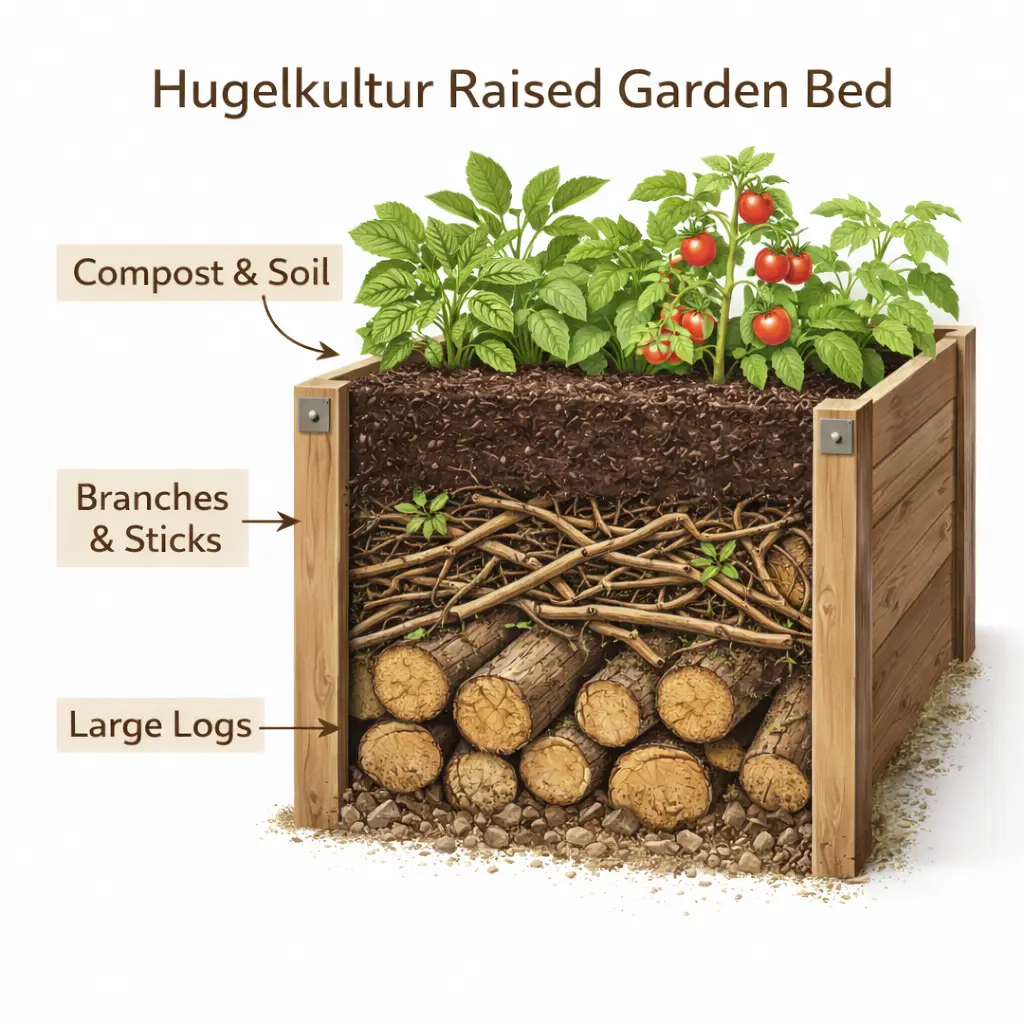
- Bottom Layer: Acts as drainage and water reservoir. Doesn't need nutrients.
- Top Layer: This is where the roots live. This needs the good stuff.
Most vegetable roots (lettuce, herbs, beans) only feed in the top 6-8 inches. Anything deeper than 12 inches is just structural support. Don't pay $10/bag for structural support.
Why Fill the Bottom 35%? (Hugelkultur Lite)
Our calculator assumes a safe filler ratio of 35%. This technique, borrowed from German Hügelkultur, uses organic debris (logs, sticks, cardboard) to fill the base.
Why 35%? Because for a standard 12-24 inch bed, this leaves plenty of depth (8+ inches) for roots while maximizing savings. Over time, this bottom layer composts, releasing heat and nutrients back to your plants.
❌ When NOT to Use Fillers
- Deep Root Crops: Carrots and Parsnips need obstacle-free soil. Fill fully for them.
- Shallow Beds: If your bed is less than 10 inches deep, use 100% soil.
- Perennials: Blueberries or fruit bushes may need specific soil pH throughout.
What Happens Next Year? (Settling)
Expect the bed to settle 1-2 inches in the first season as the organic filler compresses and composts. This is normal!
Simply top it off with an inch of fresh compost each spring. This "No-Dig" method keeps your soil structure healthy and your wallet happy.
Soil & Bed FAQs
How much soil for a 4x8 raised bed 12 inches deep? ▼
A 4x8 raised bed that is 12 inches (1 foot) deep requires 32 cubic feet of soil. This equals approximately 1.19 cubic yards or about 22 bags of 1.5 cu ft soil. Always buy 1 extra bag for settling.
What is the cheapest way to fill a raised bed? ▼
The cheapest method is Hugelkultur: Fill the bottom 35% with free organic materials (logs, sticks, leaves, cardboard), then top with quality soil. This saves 35% on soil costs while improving drainage and water retention. For a standard 4x8 bed, this saves approximately $40-60 in soil costs.
How deep should raised bed soil be? ▼
Minimum 6-8 inches for shallow-rooted crops (lettuce, herbs, radishes). 12 inches is standard for most vegetables. 18-24 inches for deep-rooted crops (tomatoes, carrots, potatoes). Most vegetable roots feed in the top 6-8 inches, so deeper beds benefit from Hugelkultur filler in the bottom layer.
Can I put cardboard at the bottom of my raised bed? ▼
Yes! This is called "Sheet Mulching" or "Hugelkultur Lite". It suppresses weeds, retains moisture, and saves you money by reducing the amount of expensive soil needed.
Can I use regular garden soil in raised beds? ▼
Not pure garden soil—it compacts too easily. Use a raised bed mix: 60% topsoil + 30% compost + 10% perlite/vermiculite for drainage. Avoid 100% potting mix (too expensive) or 100% topsoil (poor drainage). Commercial "raised bed soil" blends are pre-mixed correctly.
How to convert cubic feet to cubic yards? ▼
Divide cubic feet by 27 to get cubic yards. Formula: Cubic Yards = Cubic Feet ÷ 27. Example: 32 cubic feet ÷ 27 = 1.19 cubic yards. This is important for bulk soil delivery, which is priced by the cubic yard.