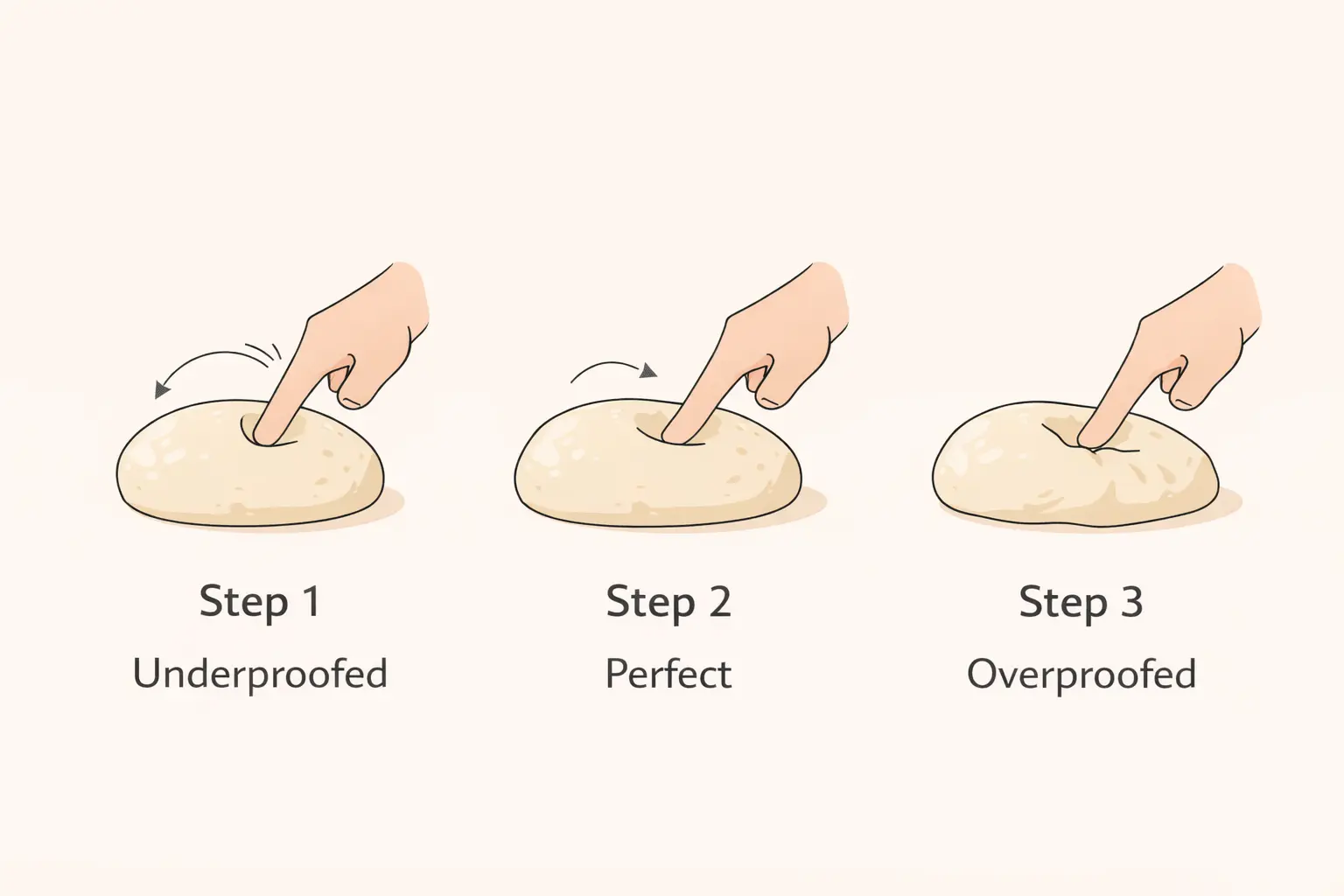
Understanding Baker's Math
Why measuring by weight changes everything.
Why Most Sourdough Recipes Fail
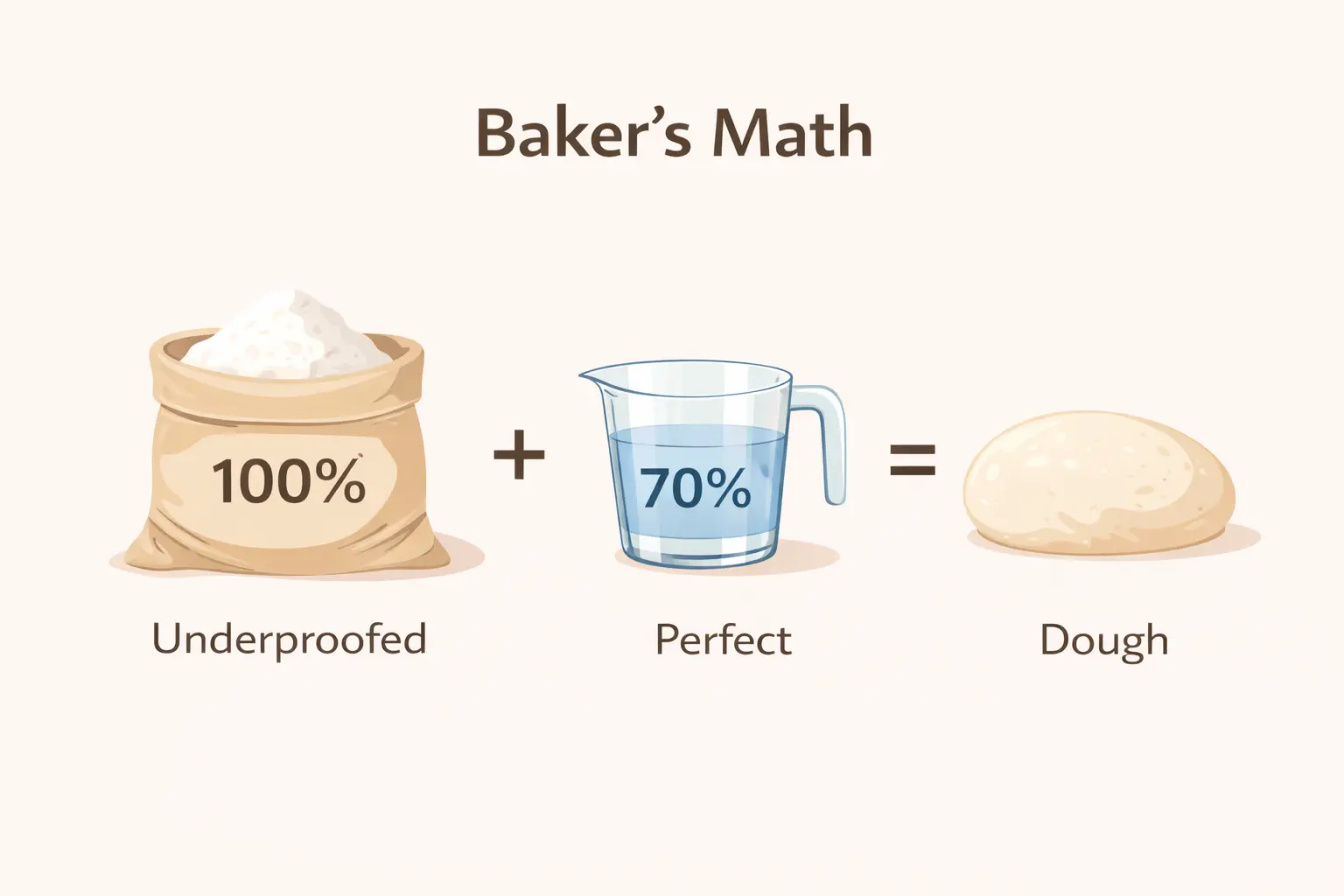
Most sourdough failures come from one problem: hydration is guessed, not calculated. Flour absorbs water differently depending on humidity, grain type, and starter hydration. Baker's Percentage solves this by making Flour = 100%. Everything else is a percentage of the flour weight.
Why We Don't Use "Cups" for Bread
If you scoop a cup of flour on a humid day, it packs down and weighs 150g. On a dry day, it might weigh 120g. That 30g difference is enough to turn a light loaf into a brick. That is why our baker's percentage calculator defaults to grams.
Frequently Asked Questions
My dough is too sticky! Should I add flour? ▼
Try not to. Adding raw flour late in the process creates streaks and dense spots. Instead, wet your hands with water or lightly oil the counter. "Wet hands stick less than dry hands."
When is my starter ready to use? ▼
Look for the "Float Test." Drop a teaspoon of starter into a glass of water. If it floats, it's full of gas and ready to bake. If it sinks, feed it and wait another hour.
Why is my sourdough loaf flat and dense? ▼
A flat or dense sourdough loaf is usually caused by incorrect hydration or fermentation.
- Too low hydration: Dough is stiff and cannot expand properly.
- Too high hydration: Dough spreads if gluten strength is insufficient.
- Under-fermentation: Not enough gas was produced before baking.
What hydration percentage should I use for sourdough? ▼
Beginners: Start with 65-70% hydration for easier handling.
Standard: 72-75% is the sweet spot for most sourdough.
Advanced: 80%+ creates ciabatta-style open crumb but requires skill.
Use our hydration calculator above to get exact measurements for your chosen percentage.
Standard: 72-75% is the sweet spot for most sourdough.
Advanced: 80%+ creates ciabatta-style open crumb but requires skill.
Use our hydration calculator above to get exact measurements for your chosen percentage.
Want to go deeper?
- 👉 Struggling with texture? Learn why sourdough turns dense or flat
- 👉 Wasting starter? How to size your starter to avoid discard