The Science of Salt & Safety
🛡️
USDA Safety Note:
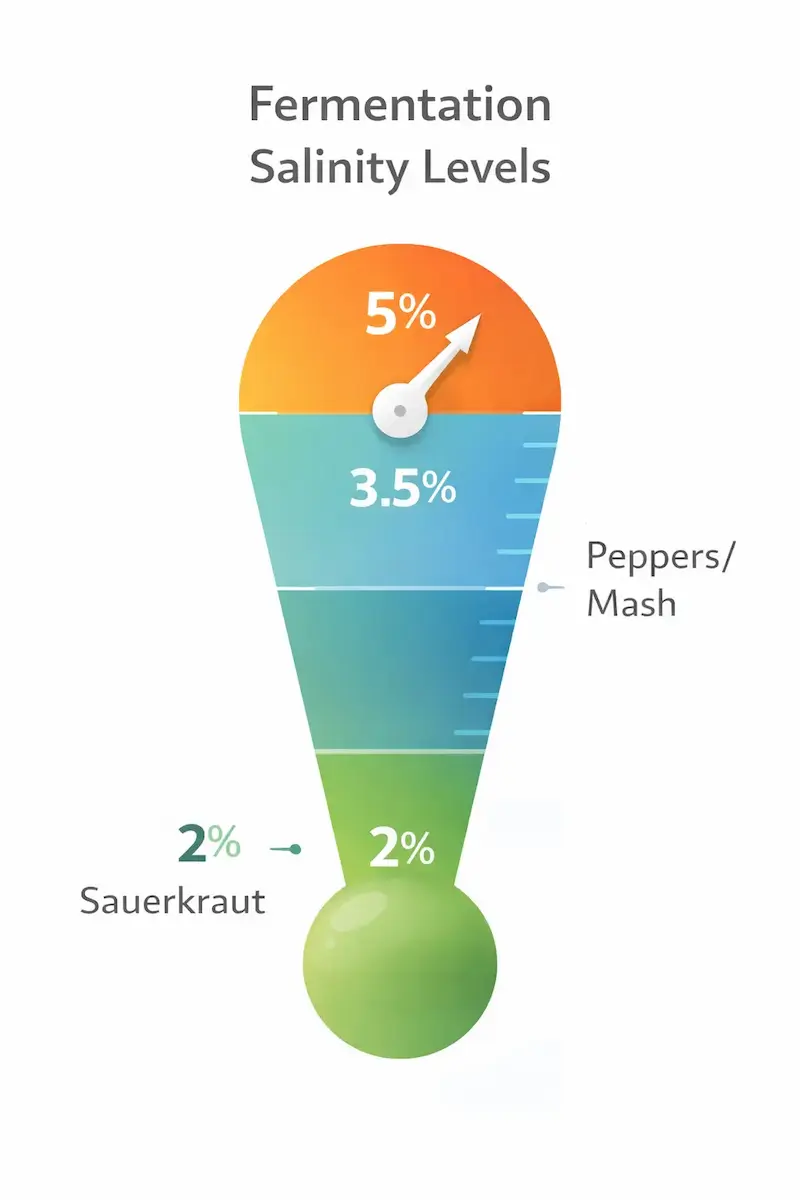
Safe lacto-fermentation requires a minimum salt concentration of 2.0%. This creates an environment that inhibits harmful bacteria like Clostridium botulinum while allowing beneficial probiotics to thrive.
Safe lacto-fermentation requires a minimum salt concentration of 2.0%. This creates an environment that inhibits harmful bacteria like Clostridium botulinum while allowing beneficial probiotics to thrive.
Why Salinity Matters (It's Not Just Taste)
In lacto-fermentation, salt acts as a selective barrier. A correct fermentation salt ratio ensures that pathogens die while Lactobacillus bacteria survive to preserve your food.
If your pickles turn soft or hollow, incorrect salt concentration is usually the culprit. Read our guide on preventing mushy pickles here .
Morton vs. Diamond Crystal: The Density Trap
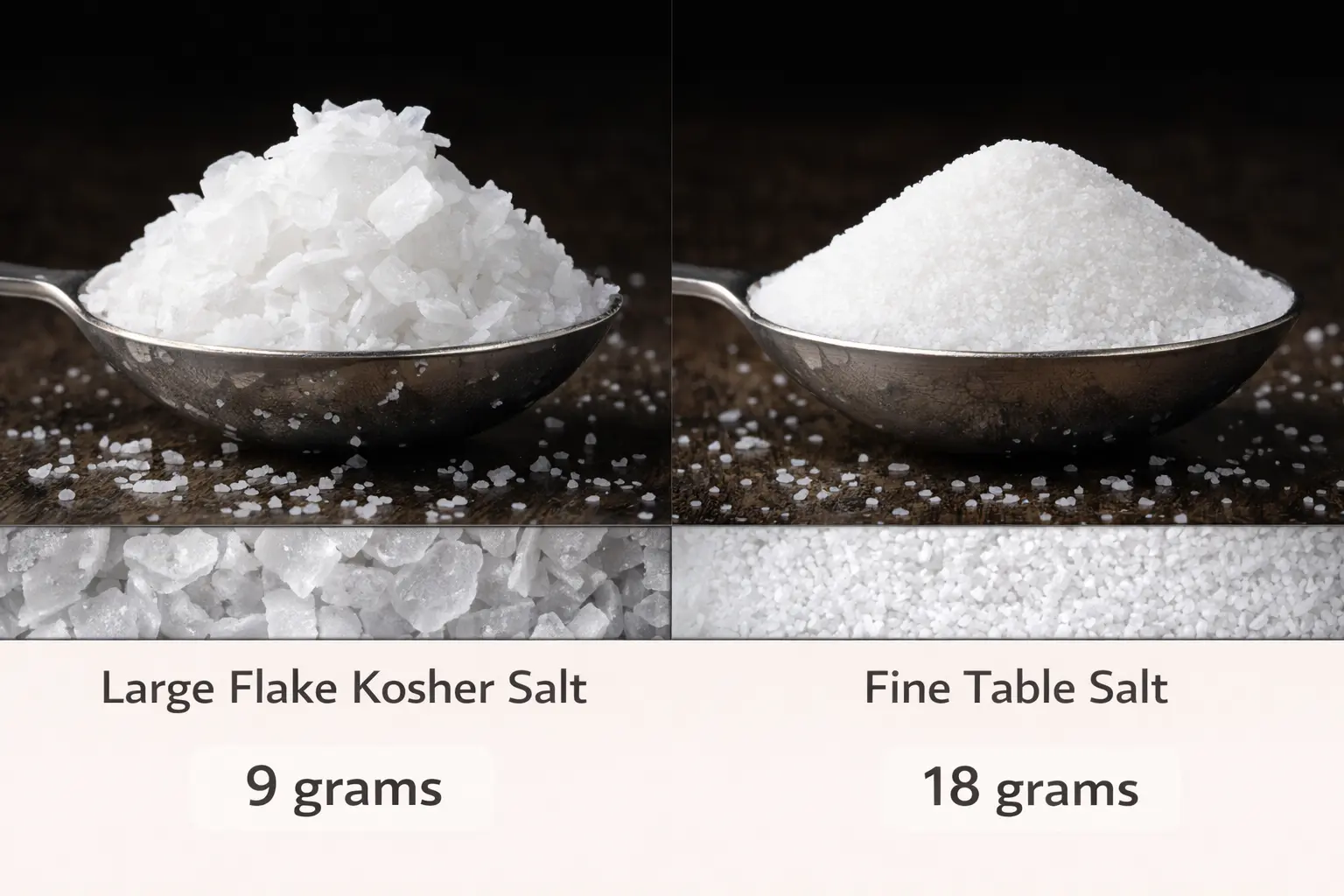
Most fermentation failures happen because recipes use volume (cups/spoons) instead of weight. Table Salt is nearly twice as dense as Diamond Crystal Kosher Salt. Using our calculator above prevents this common mistake by converting grams to spoons based on the specific brand density.
Frequently Asked Questions
How much salt do I need for 1 quart of pickling brine? ▼
For a standard 3.5% brine (ideal for cucumbers), use approximately 33 grams of salt per quart of water. This is roughly 2.5 Tbsp of Morton Kosher salt or 3.5 Tbsp of Diamond Crystal.
What is "Total Weight" vs "Water Only" calculation? ▼
Water Only: You calculate salt based only on the water added. Easiest for beginners making brine pickles.
Total Weight: You weigh the vegetables AND the water together. This is the professional method often used for sauerkraut.
Total Weight: You weigh the vegetables AND the water together. This is the professional method often used for sauerkraut.
Can I use vinegar with this calculator? ▼
No. This calculator is for salt brine fermentation only. Lacto-fermentation and vinegar pickling rely on completely different science and ratios.
Can I use this calculator for brining meat (chicken/turkey)? ▼
No. Meat brining typically uses sugar and different salt ratios (often higher) for shorter periods. This calculator is optimized for vegetable lacto-fermentation (2-5%). For meat, please use a specialized meat brining calculator to ensure safety and flavor.
New to fermentation? Learn how salt works differently from vinegar in preservation .