🔄 Need a different quantity?
Enter your recipe's buttermilk amount and get exact substitute ratios scaled to your batch size.
Most recipes that call for buttermilk don't actually need the specific flavor of cultured buttermilk. What they need is the acid.
Buttermilk is acidic (pH 4.5–4.8) because of lactic acid produced during fermentation. That acidity does three things in baking: it reacts with baking soda to produce CO₂ (leavening), it breaks down gluten proteins (tenderness), and it adds a slight tang. Any substitute that delivers similar acidity will work in most recipes.
This guide covers all five practical options — with exact ratios, what each one does differently, and when one is clearly better than another.
Why Buttermilk Does What It Does
Understanding the function makes the substitutes make sense.
Reaction with baking soda: Buttermilk's acidity reacts with sodium bicarbonate (baking soda) to produce carbon dioxide bubbles. No acid = no reaction = flat baked goods. This is why recipes using buttermilk often specify baking soda rather than baking powder — the soda needs an acid to activate.
Gluten tenderization: Acid partially breaks down gluten strands, producing a more tender, fine crumb. Pancakes, cakes, and quick breads made with buttermilk are softer than those made with regular milk.
Flavor: The tangy, slightly sour note in buttermilk biscuits, ranch dressing, and buttermilk fried chicken comes from the lactic acid. Substitutes using vinegar or lemon juice approximate this but with a sharper, less complex acid note.
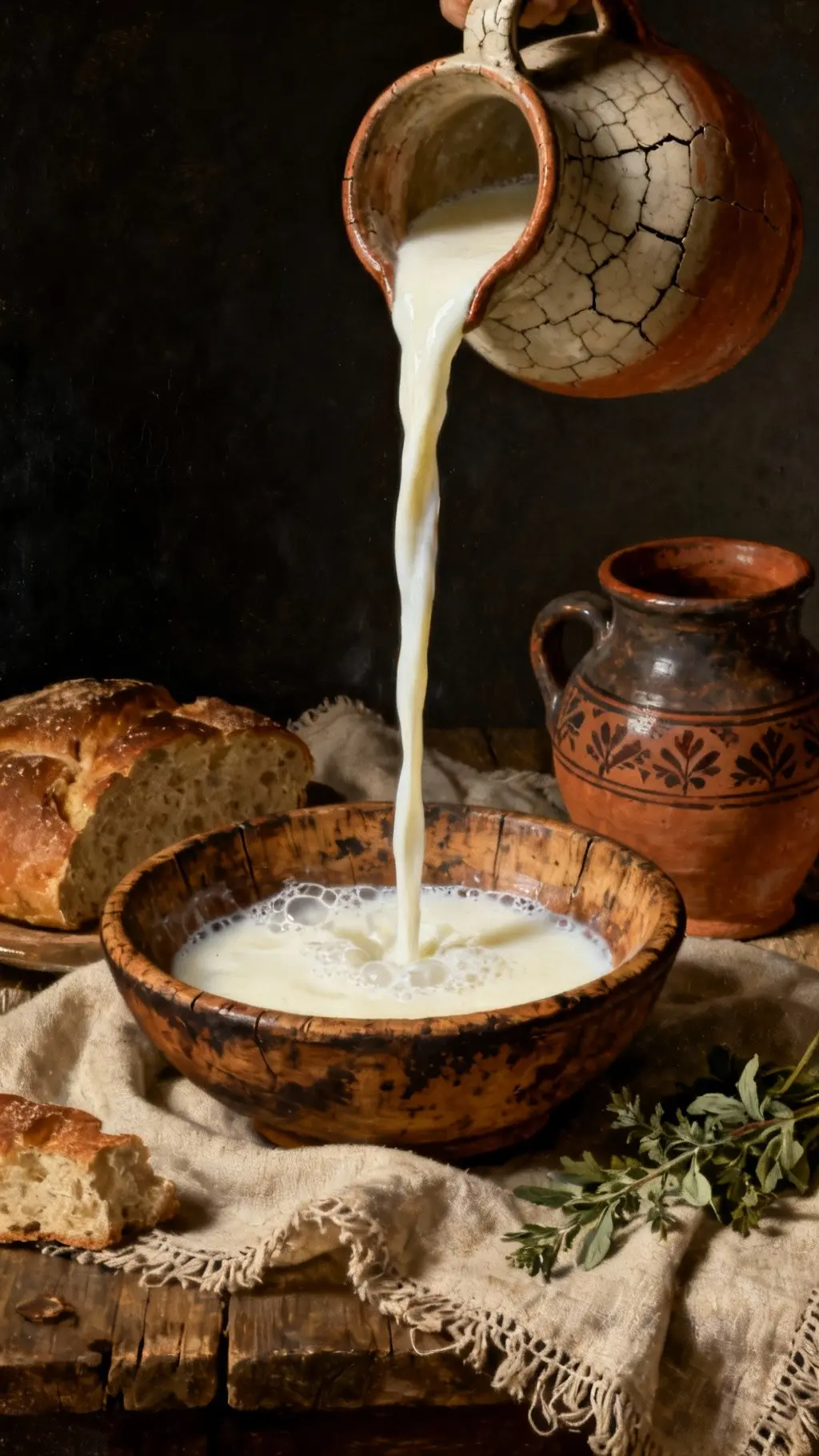
The 5 Buttermilk Substitutes
1. Milk + Acid (The Standard Substitute)
Ratio: 1 cup milk + 1 Tbsp vinegar or lemon juice
Method:
- Pour 1 tablespoon of acid into a liquid measuring cup
- Fill with whole milk to the 1-cup line
- Stir once
- Wait 5 minutes (the milk will curdle slightly — this is correct)
- Use immediately
Which acid to use:
- White vinegar: Sharper, more neutral. Works in savory applications (fried chicken brine, dressings) and baked goods with strong flavors (chocolate cake, banana bread, spice cake).
- Lemon juice: Brighter, slightly fruity. Better for delicate bakes (vanilla cake, lemon muffins, scones) where a citrus note is acceptable or desirable.
Milk fat matters: Whole milk produces the closest result to real buttermilk. Skim milk works but produces a thinner substitute with less fat — final texture is slightly drier. 2% milk is a good middle ground.
Does it curdle? Yes, slightly. You'll see small curds forming after 5 minutes. This is the protein coagulation from the acid reaction — it's correct and doesn't affect baked goods.
| Recipe calls for | Acid amount | Milk to add |
|---|---|---|
| ¼ cup buttermilk | ¾ tsp acid | Fill to ¼ cup |
| ½ cup buttermilk | 1½ tsp acid | Fill to ½ cup |
| 1 cup buttermilk | 1 tablespoon acid | Fill to 1 cup |
| 2 cups buttermilk | 2 tablespoons acid | Fill to 2 cups |
2. Plain Yogurt (The Richest Substitute)
Ratio: Plain yogurt 1:1 for regular yogurt; for thicker doughs and biscuits, a richer option is 0.75 cup milk + 0.25 cup sour cream
Why it works: Yogurt is already fermented and acidic (pH 4.0–4.4) — even more acidic than buttermilk. It contains similar lactic acid bacteria byproducts and reacts with baking soda in the same way.
Result difference from milk + acid: Yogurt contains more protein and fat than the milk + acid method. A standard cake-style swap is 0.75 cup milk + 0.25 cup plain yogurt. This produces more tender, moist baked goods — noticeably so in cakes, muffins, and quick breads. If you want the best result, yogurt is often the better substitute.
When yogurt is clearly better:
- Cakes where tenderness is critical (red velvet, carrot cake, chocolate layer cake)
- Muffins where you want a tight, moist crumb
- Pancakes — yogurt pancakes are fluffier than vinegar-milk versions because of higher protein content
When yogurt is awkward:
- Recipes where you need to pour a thin liquid (some waffle batters, certain quick breads) — even thinned yogurt is thicker than buttermilk
- Large quantities — yogurt gets expensive at 2+ cups
3. Kefir (The Closest Flavor Match)
Ratio: 1:1 — use kefir in equal quantity to buttermilk
What it is: Fermented milk drink with a pH very close to buttermilk (4.3–4.5) and a similar cultured tang. It's thinner than yogurt but thicker than milk — very close to the consistency of commercial buttermilk.
Result: Nearly indistinguishable from real buttermilk in baked goods. The lactic acid profile is similar; the fat content is similar. If you have kefir on hand, it's the best substitute for recipes where buttermilk flavor is important (biscuits, ranch dressing, buttermilk pie).
Limitation: Not everyone keeps kefir stocked. It costs more per ounce than milk.
4. Dairy-Free Buttermilk (Plant Milk + Acid)
Ratio: Keep the same acid math as the dairy version: 1 cup milk + 1 Tbsp vinegar or lemon juice using soy or oat milk instead of dairy milk.
Method: Identical to the milk + acid method — acid first, then fill with plant milk, wait 5 minutes.
Which plant milk works best:
| Plant Milk | Curdles? | Result Quality | Notes |
|---|---|---|---|
| Soy milk | Yes, visibly | Excellent ✅ | Highest protein — most similar to dairy buttermilk in function |
| Oat milk | Slightly | Good ✅ | Mild flavor; adds slight sweetness; works well in pancakes and muffins |
| Almond milk | Barely | Acceptable ⚠️ | Low protein; thinner result; works for quick breads, not ideal for cakes |
| Coconut milk (carton) | Slightly | Acceptable ⚠️ | Coconut flavor detectable; best for tropical or chocolate recipes |
| Rice milk | No | Weak ❌ | Very low protein; minimal curdling; weak acid reaction |
5. Buttermilk Powder (The Long-Shelf Alternative)
Ratio: Per package instructions — typically 4 tablespoons powder + 1 cup water per 1 cup buttermilk
What it is: Spray-dried cultured buttermilk. Reconstitutes into functional buttermilk when mixed with water. Lasts 12 months unopened at room temperature; 3–6 months after opening if stored in a sealed container.
Result: Very close to fresh buttermilk. The drying process slightly changes the lactic acid profile, but in most baked goods the difference is undetectable.
Best use case: Households that bake occasionally but don't want to buy fresh buttermilk and waste most of a quart for one recipe. A single container of buttermilk powder covers dozens of recipes for the same cost as 2–3 quarts of fresh.
Where to find it: Bob's Red Mill sells it widely. Saco Buttermilk Blend is another common brand. Often in the baking aisle near powdered milk.
Recipe calls for an odd amount?
The calculator scales any buttermilk substitute to exact tablespoon measurements for any quantity.
When Substitutes Work vs When They Don't
Works reliably:
- Pancakes and waffles — the acid-baking soda reaction is the main function; any acidic substitute works
- Quick breads (banana bread, zucchini bread, bran muffins) — forgiving recipes that tolerate texture variation
- Chocolate cake — strong flavors mask any slight tang difference from vinegar
- Fried chicken brine — the acid tenderizes proteins; white vinegar + milk is fine
Works with minor texture differences:
- Biscuits — kefir or yogurt produce better results than milk + vinegar; the difference is noticeable
- Layer cakes — yogurt produces superior results over milk + vinegar; milk + acid works but crumb is slightly less tender
- Scones — any substitute works; lemon juice version adds pleasant brightness
Substitutes struggle:
- Recipes where buttermilk is a primary flavor component (buttermilk pie, buttermilk panna cotta, straight buttermilk dressing) — cultured flavor is detectable and matters
- Recipes requiring the specific viscosity of buttermilk to function (some crepe batters, thin pourable batters) — milk + acid may be too thin or too thick depending on the original
The Baking Soda Connection
One practical note: if you're substituting and your recipe calls for baking soda (not baking powder), make sure your substitute is actually acidic.
Baking soda needs acid to activate. If you use sweet milk instead of an acid-based buttermilk substitute, the baking soda won't react properly and the baked goods won't rise as intended.
All five substitutes in this guide are acidic and will activate baking soda correctly. If your recipe uses baking powder instead of baking soda, the acidity of the substitute matters less — baking powder contains its own acid and activates without an external acid source.
The Bottom Line
For most baking: 1 tablespoon white vinegar + whole milk to 1 cup, rest 5 minutes. It's the fastest, cheapest, and most reliable option with ingredients you already have.
For the best results: plain yogurt (thinned if Greek) — the higher protein produces more tender baked goods across the board.
For dairy-free: soy or oat milk + 1 tablespoon acid per cup — both curdle sufficiently and function well in most recipes.
For occasional bakers who waste fresh buttermilk: buttermilk powder — 12-month shelf life, results nearly identical to fresh.
Related Reading
- Egg Substitutes for Baking — Which egg substitute works for cookies, cakes, and meringue
- Complete Baking Substitutions Guide — Pantry swaps across all baking ingredients
- Milk Types and Substitutions Explained — When plant milks work in baking and when they don't
- Free Ingredient Substitution Calculator — Scaled ratios for any recipe amount