⚡ Calculate your exact cooking cost per meal.
Enter your appliance wattage, cooking time, and local electricity rate — see the real cost difference between your kitchen appliances.
The direct answer: microwave is cheapest per meal, air fryer is the best balance of cost and food quality, and the oven is the most expensive for small portions.
But wattage alone does not determine energy cost. The real factors are cooking time, preheat energy loss, heat efficiency, and food volume cooked. Most online comparisons ignore at least two of these — which is why real electricity bills often surprise people.
Actual Wattage Comparison
| Appliance | Typical Wattage | Heating Style |
|---|---|---|
| Microwave | 700–1200W | Electromagnetic (heats food directly) |
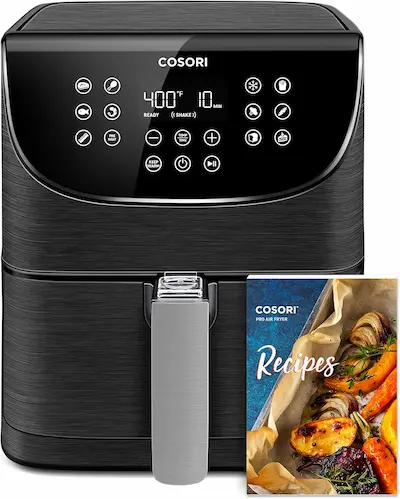
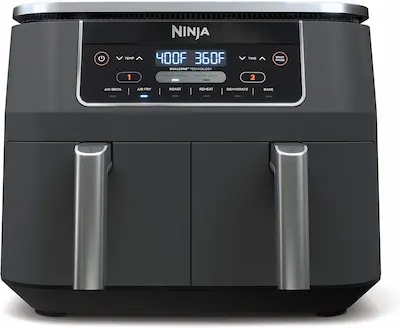
| Air fryer | 1400–1800W | Convection (circulates hot air) |
| Electric oven | 2400–5000W | Radiant + convection |
| Instant Pot | 700–1000W | Pressure heating |
At first glance, ovens appear only 2–3× stronger than air fryers. In reality, they often cost 4–6× more per meal. The reason: they run longer and waste heat on empty space.

Cost Per Hour at US Average Electricity Rate
Using the US average electricity price of $0.175/kWh:
| Appliance | Hourly Cost |
|---|---|
| 900W microwave | $0.14/hr |
| 1500W air fryer | $0.24/hr |
| 3000W oven | $0.48/hr |
| 4500W oven | $0.72/hr |
But nobody runs a microwave for a full hour. Real comparison must use cooking tasks.
Real-World Comparison: Baking a Potato Four Ways
Same food. Same result. Very different energy usage.
| Method | Time | Power | Energy | Cost |
|---|---|---|---|---|
| Microwave | 8 min | 1000W | 0.13 kWh | ~$0.02 |
| Air fryer | 35 min | 1500W | 0.87 kWh | ~$0.14 |
| Oven (with preheat) | 72 min total | 3000W avg | 3.6 kWh | ~$0.58 |
The oven costs nearly 30× more than the microwave for this specific task. Use the Cooking Energy Calculator to compare your appliances at your local electricity rate.
Why Air Fryers Are Efficient Despite High Wattage
Air fryers are powerful but efficient because they have a small cooking chamber, use rapid air circulation, require minimal or no preheat, and concentrate heat directly around food.
Heat volume matters more than power. An oven heats 5–6 cubic feet of air. An air fryer heats a 3–6 quart chamber. Heating six times more air costs energy regardless of what food is inside.
The Preheat Problem: The Hidden Energy Cost
Preheating is invisible energy consumption — during preheat, no food cooks, but full power runs continuously.
| Target Temp | Preheat Energy |
|---|---|
| 350°F | 0.6–0.8 kWh |
| 400°F | 0.8–1.0 kWh |
| 450°F | 1.0–1.3 kWh |
Preheating to 400°F uses enough energy to run 50–70 microwave meals. For more on whether preheating is worth it, see our Does Preheating the Oven Use More Energy article.
When the Air Fryer Saves Money (And When It Doesn't)
Air fryer wins when: cooking under 30 minutes, small portions, reheating leftovers, frozen foods.
Oven wins when: cooking multiple trays, batch baking for 4+ people, foods needing even heat across large surface area.
| Portions | Air Fryer | Oven |
|---|---|---|
| 1 serving | ✅ Much cheaper | ❌ Expensive |
| 2–3 servings | Cheaper | Moderate |
| 4–5 servings | Similar | Similar |
| 6+ servings | More expensive | ✅ Better value |
Energy cost per portion decreases as food quantity fills the oven's capacity.
Microwave: The Hidden Energy Champion
Microwaves heat water molecules directly, avoiding heating air or metal surfaces entirely.
| Appliance | Energy Efficiency |
|---|---|
| Microwave | 60–70% |
| Air fryer | 40–50% |
| Oven | 10–20% |
Most oven energy warms kitchen air — which then becomes a hidden cost in warm climates where air conditioning must compensate.
Frugal Cooking Strategy
Energy savings come from workflow, not appliance loyalty:
- Microwave → thaw, reheat, small portions
- Air fryer → crisp, finish, 1–3 servings
- Oven → batch cooking only, 4+ portions
This hybrid approach can reduce kitchen electricity use by 30–50% compared to using only the oven. For exact costs with your electricity rate, use the Cooking Energy Calculator.
For comparison: a microwave costs approximately $0.01–0.02 to defrost chicken — the oven is never an appropriate defrosting method.
Hidden Cost: Kitchen Heat and AC Usage
Ovens significantly increase indoor temperature. In warm climates, oven heat increases air conditioning load — and AC energy can exceed the cooking energy itself. Air fryers and microwaves emit far less ambient heat, making them especially cost-effective in summer months.
Common Myths
Myth: Smaller appliance always costs less. False — runtime matters more than wattage.
Myth: Air fryer completely replaces the oven. False — ovens remain best for volume cooking.
Myth: Microwave ruins food quality. Often incorrect — finishing method and technique matter more than appliance.
Related Reading
- Does Preheating Your Oven Use More Energy? — The truth about preheat costs and when batch cooking saves the most
- Microwave vs Oven Baked Potato: Taste, Nutrition, and Energy Cost — Side-by-side cost comparison showing when each appliance makes sense
- 2026 Home Energy Improvement Tax Credits — What qualifies for tax credits and how much you can save on efficient appliances
- Can You Use a Gas Stove During a Power Outage? — Safety rules and carbon monoxide awareness for gas cooking
- Best Non-Toxic Ceramic Air Fryers (2026) — What PTFE-free actually means and which models are worth buying