Quick answer: turkey thaw time in the fridge
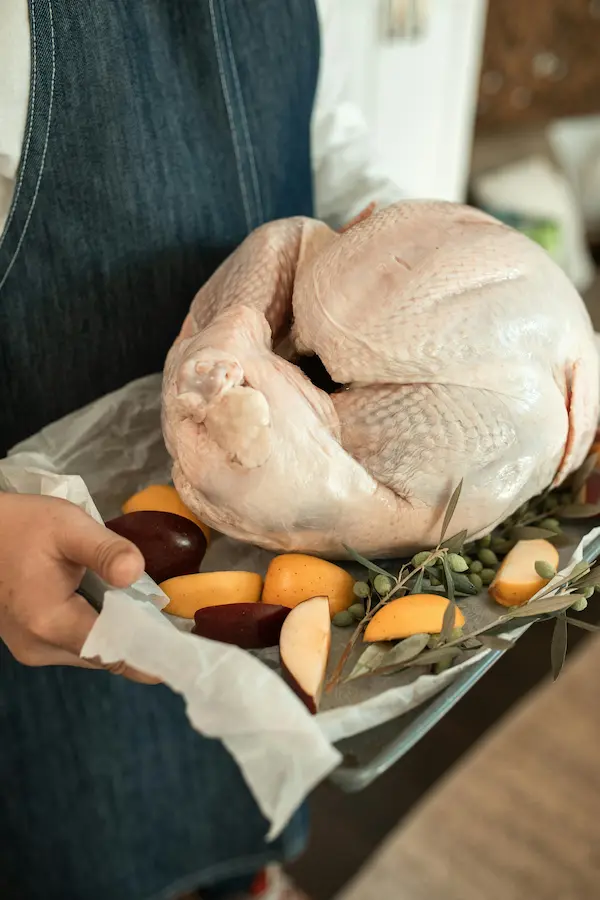
Plan on 24 hours for every 4-5 pounds. A 12-15 lb turkey needs 3-4 days, a 15-20 lb turkey needs 4-5 days, and a 20-24 lb turkey needs 5-6 days in the refrigerator.
🦃 Want the exact thaw date for your turkey weight?
Enter the turkey size and get the fridge thaw start date, cold water backup time, and roast estimate.
The most common Thanksgiving mistake happens days before the meal: forgetting to move the turkey from the freezer to the refrigerator in time.
A frozen 20-pound turkey does not thaw overnight. It needs four to five days in the refrigerator. Starting on Wednesday evening for a Thursday dinner produces a turkey that is still frozen solid in the center — and a very stressful holiday morning.
This guide gives you the exact refrigerator thaw time for every turkey size, the cold water method as a backup, what to do if you forgot entirely, and the food safety reasoning behind every recommendation.
The USDA Refrigerator Thaw Rule
The USDA guideline for refrigerator thawing is straightforward: allow 24 hours for every 4-5 pounds of turkey.
This rate accounts for heat transfer through the turkey's mass — the center of a large turkey is insulated by the surrounding meat and takes significantly longer to reach thaw temperature than the outer portions.
Refrigerator temperature must stay at 40°F or below throughout thawing. Higher temperatures push the outer turkey surface into the bacterial danger zone even while the interior remains frozen.
Refrigerator Thaw Time by Turkey Weight
| Turkey Weight | Fridge Thaw Time | Start Thawing By | Cold Water Hours |
|---|---|---|---|
| 8 – 10 lbs | 2 – 3 days | Monday (for Thursday) | 4 – 5 hours |
| 10 – 12 lbs | 2 – 3 days | Monday (for Thursday) | 5 – 6 hours |
| 12 – 15 lbs | 3 – 4 days | Sunday (for Thursday) | 6 – 8 hours |
| 15 – 18 lbs | 3 – 4 days | Sunday (for Thursday) | 8 – 9 hours |
| 18 – 20 lbs | 4 – 5 days | Saturday (for Thursday) | 9 – 10 hours |
| 20 – 24 lbs | 5 – 6 days | Friday (for Thursday) | 10 – 12 hours |
💡 When in doubt, add a day. A fully thawed turkey can sit safely in the refrigerator for 1-2 days before cooking. Starting one day early costs nothing. Starting one day late means a frozen center on Thanksgiving morning.
How to Thaw a Turkey in the Refrigerator: Step by Step
Step 1: Keep it in the original wrapper. Do not remove the plastic wrap or packaging. The original wrapper keeps the turkey contained and prevents drip contamination of other refrigerator contents.
Step 2: Place on a rimmed tray or in a roasting pan. As the turkey thaws, liquid will accumulate. A rimmed baking sheet, roasting pan, or large plate catches this liquid and prevents it from dripping onto other foods. Store on the lowest refrigerator shelf.
Step 3: Check refrigerator temperature. Verify your refrigerator maintains 40°F or below. Most refrigerators run between 35-38°F, which is ideal. If yours runs warmer, thaw on the bottom shelf where air is coldest.
Step 4: Check thaw progress on day 2. Press the thickest part of the breast on day 2. It should be softening but still firm. If the turkey is still completely rigid by day 3, move to a slightly warmer spot in the refrigerator or switch to cold water thawing.
Step 5: Verify complete thawing before cooking. The turkey is fully thawed when the meat feels flexible throughout and the cavity is free of ice crystals. Check by reaching into the cavity — if it feels cold but not frozen and ice-free, it is ready to cook.
The Cold Water Method: When You're Running Behind
If you didn't start refrigerator thawing in time, cold water thawing is the USDA-approved faster alternative.
How it works: Submerge the turkey (still in original leak-proof wrapper) in cold water. The water conducts heat far more efficiently than air, producing significantly faster thawing than the refrigerator. The rate: 30 minutes per pound.
The critical requirement: Change the water every 30 minutes without fail.
Water warms as it absorbs heat from the turkey. If you don't change it, the water temperature rises and the outer turkey surface enters the danger zone. This is not optional — if you cannot actively manage the water changes for the full duration, use the refrigerator method instead.
Cold water thaw process:
- Use a clean sink, large cooler, or stockpot
- Submerge turkey breast-side down in cold tap water
- Change water every 30 minutes
- Cook immediately after thawing — do not refrigerate after cold water thawing
Cold water thaw times:
| Weight | Time Required |
|---|---|
| 10 lbs | 5 hours |
| 12 lbs | 6 hours |
| 15 lbs | 7.5 hours |
| 18 lbs | 9 hours |
| 20 lbs | 10 hours |
| 24 lbs | 12 hours |
What If You Forgot Entirely: Cooking from Frozen
If Thanksgiving morning arrives and your turkey is still frozen solid, you have one option that does not involve counter thawing: cook it from frozen.
The USDA approves cooking turkey directly from frozen. The process:
- Remove giblets and neck from cavity as they thaw during cooking (typically after 1-1.5 hours)
- Do not stuff a frozen turkey — the stuffing cannot reach safe temperature before the outer meat overcooks
- Add 50% more cooking time to standard estimates
- A 15 lb frozen turkey at 325°F needs approximately 4.5-5.5 hours instead of 3-3.75 hours
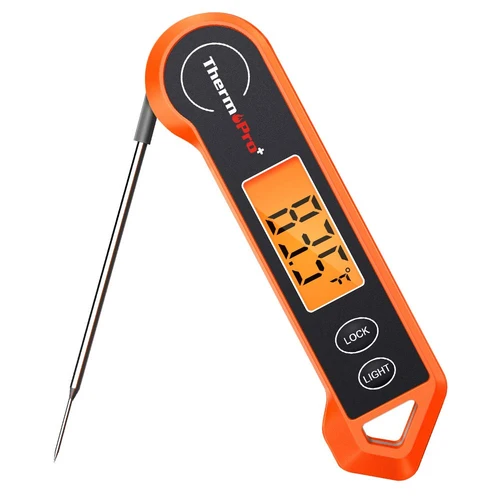
- Verify doneness exclusively by thermometer — 165°F in the thickest part of the thigh, not touching bone
The result will not be as evenly cooked as a properly thawed turkey, but it is safe and produces a meal. The breast may be slightly drier than ideal, but it is Thanksgiving — everyone is grateful.
Know your roasting time before the big day.
The calculator gives you thaw timeline, roasting estimate, and the exact moment to pull the turkey from the oven.
Why Counter Thawing Is Dangerous
Every year, the same advice circulates: "My grandmother thawed her turkey on the counter for 30 years and nobody got sick."
The reasoning is understandable but misses the statistics. Foodborne illness from poultry is underreported — most cases are attributed to "a stomach bug" rather than traced to a specific meal. The Turkey is one of the highest-risk foods in the American kitchen because of its size, density, and common bacterial load.
The physics of counter thawing:
A 20 lb turkey left on the counter at 70°F thaws from the outside in. The outer inch of meat — the portion that represents the most surface area — reaches the bacterial danger zone (40-140°F) within 1-2 hours. It may stay in this zone for 6-8 hours before the interior thaws.
Salmonella and Campylobacter double in population approximately every 20 minutes at optimal temperatures. After 6 hours in the danger zone, a small initial bacterial load becomes a significant one. Cooking kills the bacteria, but some species produce heat-stable toxins that survive cooking temperatures.
The outer turkey meat may reach 165°F during cooking while the center remains undercooked if the turkey was still partially frozen — a second failure mode that counter thawing creates.
The USDA prohibition on counter thawing is not excessive caution. It reflects the actual risk profile of large poultry thawed at room temperature.
The Danger Zone: 40°F to 140°F
Understanding why all three safe thawing methods work comes from understanding what the danger zone actually is.
Between 40°F and 140°F, most foodborne bacteria grow rapidly. The USDA defines food as "in the danger zone" when it falls within this range. The goal of all safe thawing methods is to move the turkey through this range as quickly as possible while keeping the outer surface below 40°F throughout.
Refrigerator thawing: The outer surface stays below 40°F the entire time. Thawing is slow but entirely safe regardless of duration.
Cold water thawing: Cold water (below 40°F from the tap) keeps the outer surface safe while transferring heat faster than air. The water change requirement prevents the water from warming into the danger zone.
Microwave thawing: Heats rapidly through the danger zone — safe only if followed by immediate cooking, because the outer portions may reach temperatures where bacteria activate before the interior is fully thawed.
Counter thawing: The outer surface enters the danger zone within hours and stays there for the duration of thawing. No variation of this method is safe for large poultry.
Thawing Timeline for Thanksgiving
Most American Thanksgivings fall on the fourth Thursday of November. Working backwards from that date:
For a 15 lb turkey:
- Cook Thursday → Begin thawing Sunday evening
- 4 days of thaw time with 1 day buffer
For a 20 lb turkey:
- Cook Thursday → Begin thawing Saturday evening
- 5 days of thaw time with slight buffer
For a 24 lb turkey:
- Cook Thursday → Begin thawing the previous Friday or Saturday
- 6 days required — this turkey needs to move to the refrigerator the week before Thanksgiving
The calendar rule: Larger turkeys require a full week of planning. If you're hosting more than 12 people and buying a turkey over 18 lbs, put a reminder in your phone for the Saturday before Thanksgiving.
After Thawing: How Long Is the Turkey Good?
A fully thawed turkey can remain safely refrigerated for 1-2 days before cooking. This means:
- Turkey thawed by Tuesday: safe to cook Wednesday or Thursday
- Turkey thawed by Wednesday: cook Thursday — do not push to Friday
- Turkey thawed by Monday: cook no later than Wednesday
Do not refreeze a thawed raw turkey. Refreezing degrades texture and does not reset the food safety clock — bacteria present before refreezing resume activity immediately upon thawing again.
If plans change and you cannot cook the turkey within 2 days of thawing, cook it anyway and refrigerate or freeze the cooked meat, which keeps safely for 3-4 days refrigerated or 2-6 months frozen.
Roasting Time After Thawing
Thawing is only half of the planning equation. Roasting a large turkey takes 3-5 hours depending on weight, and the oven will be occupied during that time.
Estimated roasting time at 325°F (unstuffed):
| Weight | Estimated Time |
|---|---|
| 8 – 12 lbs | 2.75 – 3 hours |
| 12 – 14 lbs | 3 – 3.75 hours |
| 14 – 18 lbs | 3.75 – 4.25 hours |
| 18 – 20 lbs | 4.25 – 4.5 hours |
| 20 – 24 lbs | 4.5 – 5 hours |
Always verify doneness by temperature, not time. Oven thermostats vary by 25-50 degrees, turkey shape affects heat distribution, and refrigerator temperature at the time of cooking affects starting temperature. A meat thermometer reading 165°F in the thickest part of the thigh (not touching bone) is the only reliable doneness indicator.
For a complete planning tool that calculates both thaw time and roasting estimate from your turkey weight, our Turkey Defrost & Roast Calculator handles both in one place.
Related Reading
- Turkey Defrost & Roast Calculator — Complete planning tool for thaw time and roasting estimate
- Food Safety Danger Zone Guide (40°F – 140°F) — Why temperature control matters for all meat, not just turkey
- Best Way to Thaw Meat: Countertop vs Fridge vs Cold Water vs Microwave — The same safety principles applied to all meat thawing
- Is It Safe to Defrost Chicken in the Microwave? — USDA guidelines for microwave thawing
- Microwave Defrost Calculator — For smaller cuts of meat year-round