Quick answer: cleaning vinegar vs white vinegar
Cleaning vinegar is 6% acidity and white vinegar is 5%. Cleaning vinegar is better for heavy limescale, but regular white vinegar works for most routine cleaning and is the safer choice for food-contact surfaces.
✨ Need the exact ratio for white vinegar or cleaning vinegar?
Choose your spray bottle size and cleaning task to get the correct dilution instantly.
You're standing in the cleaning aisle looking at two nearly identical jugs. One says "distilled white vinegar." One says "cleaning vinegar." The cleaning vinegar costs about the same. The label implies it's better for cleaning.
Is it? And if so, by how much?
The answer is: slightly, in one specific situation. For everything else, you probably already have what you need.
The Only Real Difference: 1% Acidity
Both products are acetic acid diluted in water. The difference is concentration:
| Product | Acidity | Food Safe? | Typical Cost (gallon) |
|---|---|---|---|
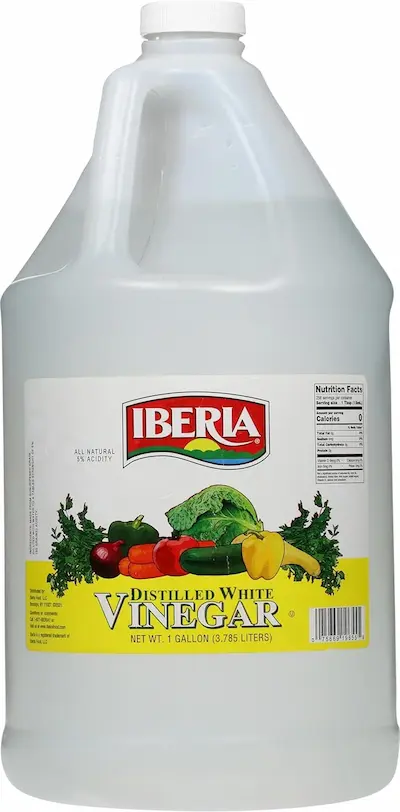
| White distilled vinegar | 5% | Yes ✅ | $3–$5 |
| Cleaning vinegar | 6% | No ❌ | $4–$6 |
| Apple cider vinegar | 5% | Yes ✅ | $10–$18 (don't use for cleaning) |
| Rice vinegar | 4–4.3% | Yes ✅ | $8–$15 (don't use for cleaning) |
That 1% difference in acidity means cleaning vinegar is approximately 20% stronger at dissolving alkaline deposits (calcium carbonate, limescale, hard water minerals). In chemistry terms: more acetic acid molecules available to react with calcium carbonate.
In practical terms: it matters for heavy buildup. It doesn't matter for routine cleaning.

When Cleaning Vinegar Is Actually Worth It
Heavy limescale on faucets and showerheads. If you've let mineral deposits build up for months — the white crusty buildup around the base of a faucet or inside a showerhead — cleaning vinegar dissolves it faster than regular white vinegar. The higher acidity means more acid molecules attacking the calcium carbonate, which speeds up the dissolution reaction.
Stubborn kettle scale. Kettles in hard water areas accumulate significant mineral deposits. Cleaning vinegar at full strength, left to soak for 30–60 minutes, removes scale that might require multiple white vinegar treatments.
Dishwasher descaling. Running a cycle with cleaning vinegar instead of white vinegar removes mineral buildup from the interior and spray arms more effectively.
That's the complete list of situations where the 1% difference produces a meaningfully different outcome.
When White Vinegar Works Just as Well
For the vast majority of cleaning tasks, 5% white vinegar performs identically to cleaning vinegar:
- General all-purpose cleaning (countertops, appliances, sinks)
- Glass and window cleaning
- Mold and mildew on tile and grout
- Odor removal (refrigerator, trash cans, cutting boards)
- Light hard water spots on faucets and shower glass
- Coffee maker descaling (light mineral buildup)
- Laundry as a fabric softener replacement
- Produce rinsing (food-safe — cleaning vinegar is not)
For these tasks, you're applying the vinegar briefly, not leaving it in contact long enough for the 1% acidity difference to produce a measurable effect.
The Food Safety Line: The One Rule That Matters Most
This is the most important distinction and the most commonly ignored one.
Cleaning vinegar is not food-safe. It's not regulated under FDA food safety standards. Some cleaning vinegar products contain non-food-grade additives (fragrances, surfactants, processing agents not cleared for food contact). Even plain cleaning vinegar that appears to contain nothing but acetic acid and water hasn't been produced or certified under food-grade standards.
Never use cleaning vinegar on:
- Cutting boards
- Countertops where food is prepared
- Produce (rinsing vegetables)
- Inside the refrigerator (food storage surfaces)
- Plates, glasses, cookware
- Any surface that will directly contact food
For food-contact surfaces, use 5% distilled white vinegar. It cleans just as effectively for these tasks and is food-safe.
⚠️ Critical distinction: "Distilled white vinegar" sold in the food aisle is food-safe. "Cleaning vinegar" sold in the cleaning aisle is not — even if the ingredient list looks identical. The difference is the regulatory standard and production process, not just the label.
Is Cleaning Vinegar a Disinfectant?
No — and neither is white vinegar.
Both kill certain organisms at full strength or 1:1 dilution. Lab studies show effectiveness against:
- E. coli
- Salmonella
- Listeria
- Some mold species (including Aspergillus)
Neither kills effectively:
- Staphylococcus aureus (common in skin infections)
- Norovirus (stomach flu)
- Clostridioides difficile (C. diff)
- MRSA
The 1% acidity difference between cleaning and white vinegar has minimal effect on antimicrobial performance. Neither is not registered with the EPA as a disinfectant because neither meets EPA efficacy standards for that claim.
For true disinfection — after someone in the household has been ill, or after contact with raw poultry — use an EPA-registered disinfectant. Vinegar in any form is a cleaner and deodorizer, not a medical-grade disinfectant.
What About "Cleaning Vinegar" That's 30% Concentration?
You may have seen industrial-strength or "horticultural" vinegar at 20–30% acidity sold online. This is a different product entirely and requires serious caution.
At 20–30% concentration, acetic acid is corrosive. It can cause chemical burns to skin, eyes, and the respiratory tract. It will permanently damage stone, metal, and most finishes on contact. It's used for weed killing and industrial descaling, not household cleaning.
Do not use high-concentration acetic acid products for home cleaning. Standard 5–6% concentrations are all that's needed and all that's safe for household use.
What's the right dilution for your task?
The calculator gives you exact ratios — works whether you're using 5% white vinegar or 6% cleaning vinegar.
Which Is Cheaper Per Use?
For routine cleaning, white vinegar is the better value because:
- It's cheaper per gallon in most stores
- You can use it in both cleaning and cooking (one product, two purposes)
- The 20% strength difference requires you to dilute cleaning vinegar slightly more for most tasks anyway
For heavy limescale specifically, cleaning vinegar may save time (fewer applications needed), which makes it worth the slight price premium if hard water is a persistent problem in your area.
The frugal choice for most households: A gallon of white distilled vinegar handles 95% of natural cleaning needs. Keep a bottle of cleaning vinegar only if you have severe hard water deposits and use it specifically for descaling tasks.
The Other Vinegars: Why They Don't Work for Cleaning
Apple cider vinegar: 5% acidity, same as white vinegar, but contains sugars, residual apple compounds, and coloring agents that leave sticky residue on surfaces and can attract insects. Costs 3–4× more per ounce. Never use for cleaning.
Rice vinegar: 4–4.3% acidity (weaker than white vinegar), costs significantly more, and has the same residue problem as ACV. Not appropriate for cleaning.
Balsamic, wine, malt vinegar: Not acetic acid in the same sense — contain sugars, tannins, and colorants that will permanently stain surfaces. Never use for cleaning.
The rule: Any vinegar that has flavor or color has compounds that will leave residue on surfaces. Only clear, flavorless distilled vinegars (white or cleaning) are appropriate for household cleaning.
The Bottom Line
Cleaning vinegar is 6% acidity. White vinegar is 5%. The 20% strength difference matters for heavy limescale and mineral deposits. It doesn't matter for the vast majority of everyday cleaning tasks.
The critical rule: cleaning vinegar is not food-safe. For any surface that contacts food, always use white distilled vinegar.
For most households, a gallon of white vinegar covers everything. If you live in a hard water area and fight constant limescale buildup, keeping cleaning vinegar specifically for descaling tasks is worth it.
Related Reading
- The Complete Natural Cleaning Guide — Ratios, surface guide, and what never to mix
- How to Use Vinegar in Laundry — Safe amounts and what vinegar actually does in the wash
- Cost of DIY Cleaner vs Store-Bought — The full annual savings breakdown
- The Science of Vinegar Cleaning Ratios — Why dilution matters more than concentration
- Vinegar vs Baking Soda vs Hydrogen Peroxide — Which cleaner belongs on which mess once the acidity question is settled