Quick answer: how much vinegar should you use in laundry?
Use 0.5 cup of white distilled vinegar per standard load in the fabric softener dispenser. Vinegar helps soften fabric and remove odors, but it does not disinfect laundry and should never be mixed with bleach.
✨ Need the exact vinegar amount for your washer or bottle?
Scale the vinegar amount for small, standard, or large loads without guessing.
White vinegar as a fabric softener replacement isn't a myth. It works — the mechanism is real, the cost difference is significant, and the result on towels and cotton fabrics is noticeably better than doing nothing.
But the claims get exaggerated quickly. Vinegar doesn't disinfect laundry (not at this concentration). It doesn't reliably remove stains. And used daily over years, there's a legitimate concern about washing machine seals.
This guide covers what vinegar actually does in the wash, what it doesn't, exactly how to use it, and where the risks are real versus overstated.
What Vinegar Actually Does in the Wash
Softens Fabric (The Main Benefit)
Most laundry detergents are highly alkaline — pH 9 to 11. After washing, alkaline detergent residue remains in fabric fibers. This residue:
- Makes fabric feel stiff and scratchy
- Reduces absorbency in towels
- Can cause skin irritation in sensitive individuals
White vinegar (pH 2.4) is acidic. When added during the rinse cycle, it neutralizes alkaline detergent residue — dissolving it out of the fibers. The result is softer, more absorbent fabric.
This is the same mechanism commercial fabric softeners use, but without the synthetic coating agents, fragrance chemicals, or cost. Commercial softeners work by depositing a thin layer of lubricating chemicals on fabric. Vinegar works by removing what makes the fabric stiff. The sensory result (softer laundry) is similar.
Most noticeable on: Towels, bed linens, cotton t-shirts, and any fabric that has accumulated detergent buildup over many washes.
Removes Odors
Vinegar removes common laundry odors by two mechanisms:
- Neutralizing alkaline odor compounds. Sweat, mildew, and pet odors are often alkaline in chemistry. Acid neutralizes them.
- Dissolving residue. Bacteria and mold that produce persistent odors often live in detergent residue that wasn't fully rinsed. Vinegar dissolves this residue.
Works well for:
- Musty towels that smell after washing
- Gym clothes with persistent sweat odor that survives regular washing
- Laundry that sat in the machine too long (sour smell)
- Pet bedding and fabric with pet odors
For severe odors: Pre-soak in cold water with 1 cup of white vinegar per 1 gallon for 30 minutes before the regular wash cycle.
Brightens Whites (Mild Effect)
Vinegar has a mild brightening effect on white and light-colored fabrics by removing the alkaline mineral deposits and detergent films that dull fabric over time. The effect is subtle compared to optical brighteners in commercial whitening products, but noticeable on fabrics with significant buildup.
Do not confuse this with bleaching — vinegar has no bleaching action. It removes dulling residue; it doesn't actively whiten.
Reduces Static
Detergent residue contributes to static buildup in dryer-dried synthetic fabrics. Removing that residue reduces (but doesn't eliminate) static cling. The effect is less reliable than commercial dryer sheets for heavy synthetic loads.
What Vinegar Does NOT Do in Laundry
These claims circulate widely online but are not supported by evidence:
Disinfect laundry: Vinegar at 0.5 cup per load, diluted into a full washing machine drum, reaches a concentration too low to reliably kill pathogens. Even at full strength, white vinegar doesn't kill norovirus, MRSA, or C. difficile — the pathogens that matter in illness situations. For true disinfection, hot water (above 140°F) combined with an EPA-registered laundry disinfectant is required.
Remove stains: Vinegar may help with some mineral-based stains (hard water deposits) but does not remove protein stains (blood, sweat), oil-based stains, or dye stains. Treating a stain with vinegar before washing may actually set some protein stains. Use an enzyme-based stain remover for spot treatment.
Replace detergent: Vinegar has no surfactant (soap) properties. It won't lift grease, oils, or dirt from fabric. It is a rinse additive — it works alongside detergent, not instead of it.
Kill dust mites: The concentration in a wash load is insufficient to affect dust mites reliably. Hot water above 130°F and proper drying are the effective approaches for dust mites.
How to Use Vinegar in Laundry
Front-Load Washing Machines
Add 0.5 cup (120ml) of white distilled vinegar to the fabric softener dispenser. The machine automatically dispenses this during the rinse cycle when it's most effective.
Do not add vinegar to the detergent compartment — it will mix with detergent during the wash cycle, react immediately (neutralizing each other), and deliver no benefit in the rinse.
Top-Load Washing Machines
Two options:
Option 1 (easiest): Add 0.5 cup to the fabric softener dispenser if your machine has one.
Option 2 (all machines): Wait for the rinse cycle to start (when the machine fills with clean water), pause the machine, add 0.5 cup vinegar directly to the water, resume. This delivers vinegar during the rinse where it works.
Do not pour directly onto clothes before the wash cycle — undiluted vinegar can affect some synthetic dyes and delicate fabrics.
Quantity Reference
| Load Size | White Vinegar Amount | Add To |
|---|---|---|
| Small load | 0.25 cup (60ml) | fabric softener dispenser |
| Standard load | 0.5 cup (120ml) | fabric softener dispenser |
| Large / heavily soiled load | 0.75 cup (180ml) | fabric softener dispenser |
| Odor pre-soak (before washing) | 1 cup per 1 gallon of water | Soak 30 min, then wash normally |
What Temperature?
Vinegar works in any water temperature. Cold water wash cycles are fine — the vinegar doesn't need heat to dissolve detergent residue. Hot water washes increase its effectiveness slightly but are not necessary.
The Washing Machine Damage Question
This concern is legitimate and often dismissed too quickly by natural cleaning advocates.
Washing machine rubber seals (particularly the door gaskets on front-load machines) are designed to withstand water and detergent. Acetic acid (vinegar) at repeated, concentrated exposure can degrade certain rubber compounds over time. Several appliance manufacturers have publicly noted this concern and some have stated that vinegar use may void warranty coverage on seal-related damage.
The realistic risk assessment:
Occasional use (a few times per week): Low risk. The vinegar is heavily diluted in the drum and the machine rinses thoroughly. The exposure to seals is brief and diluted.
Every load, daily, for years: Higher risk. Cumulative acid exposure on rubber seals is a real degradation mechanism, even if the individual exposure per load is small.
Practical approach: Use vinegar for specific situations where it provides clear benefit (musty towels, odor control, fabric softening for sensitive skin) rather than every load by default. This captures the benefits while minimizing cumulative seal exposure.
⚠️ Never mix vinegar and bleach in the same load. Mixing acid (vinegar) with hypochlorite (bleach) produces chlorine gas. Even residual bleach in the machine drum from a previous load can react. If using bleach, skip vinegar. If using vinegar, skip bleach. Run a plain water rinse cycle between if needed.
Vinegar for Specific Laundry Problems
Musty towels: This is where vinegar is most effective. Run towels through a hot cycle with 1 cup of vinegar and no detergent. Follow immediately with a hot cycle with detergent and no vinegar. Dry completely on high heat. This removes the bacterial buildup and detergent residue causing the smell.
Sweat odor that survives regular washing: Pre-soak athletic wear in cold water with 0.5 cup vinegar for 30 minutes. Wash immediately. The vinegar breaks down the alkaline compound buildup where odor bacteria live.
Stiff, scratchy towels: Run a load with 0.5 cup vinegar and no fabric softener. High heat dry cycle. The vinegar removes built-up detergent; the heat opens the cotton fibers. One treatment noticeably improves towel softness.
Baby clothes / sensitive skin: Vinegar residue-free rinse is useful for those sensitive to fragrances or detergent residue. No vinegar remains in fabric after the rinse cycle and drying — it's entirely safe for sensitive skin.
Denim: Vinegar helps set dye and reduce bleeding in dark denim. Add 0.5 cup to the rinse cycle for new dark jeans to reduce initial dye bleed onto other laundry.
Cost Comparison
| Product | Cost per load |
|---|---|
| Commercial fabric softener (Downy, Snuggle) | $0.12–$0.20 |
| Dryer sheets | $0.07–$0.15 |
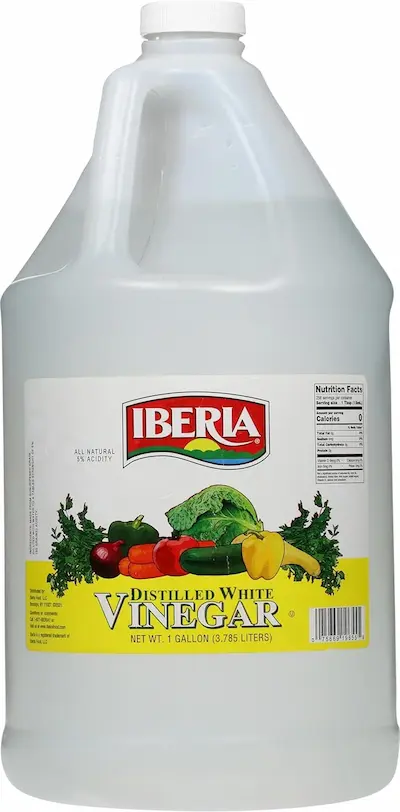
| White vinegar (½ cup from gallon jug) | $0.04–$0.07 |
For a household doing 8 loads per week, switching from commercial fabric softener to white vinegar saves approximately $40–$80 per year.
The Bottom Line
Vinegar in laundry: real benefits, real limitations, one real risk.
Works well: Fabric softening, odor removal, brightening whites, reducing static. Add 0.5 cup to the fabric softener dispenser per load.
Does not work: Disinfection, stain removal, replacing detergent.
Real risk: Cumulative rubber seal degradation with daily use over years. Occasional use is safe.
Hard rule: Never in the same load as bleach.
The frugal math is clear. The mechanism is real. Use it for what it actually does.
Related Reading
- The Complete Natural Cleaning Guide — Ratios and surface guide for whole-home cleaning
- Cleaning Vinegar vs White Vinegar — The 1% acidity difference and when it matters
- The Science of Vinegar Cleaning Ratios — Why concentration and contact time determine effectiveness
- Cost of DIY Cleaner vs Store-Bought — Full annual savings breakdown