☕ Want the exact grams for your press size?
Enter your French press volume and preferred strength — get precise coffee and water measurements instantly.
French press is unforgiving in a specific way: unlike drip machines that paper-filter the result, French press puts your coffee-to-water ratio and brew time on full display. Get either wrong and the cup tastes obviously off.
The ratio question — 14:1, 15:1, 1:17 — has a correct answer for each use case. The brew time question has exactly one answer: 4 minutes. This guide covers both, with gram measurements by press size so you're not guessing.
The French Press Ratio, Explained
The ratio notation works like this: 15:1 means 1 part coffee to 15 parts water, measured by weight (grams).
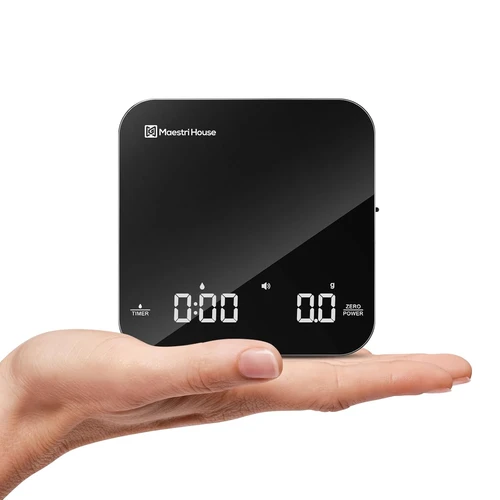
Weight is essential here. Tablespoon measurements for coffee are unreliable because coffee density varies significantly by roast level and grind size. A tablespoon of light-roast beans weighs differently than a tablespoon of dark-roast. A tablespoon of whole beans vs coarse-ground coffee is a completely different amount. Weight gives you consistent results every time.
The Three Standard Ratios
| Ratio | Strength | Best For | Coffee per 12oz mug |
|---|---|---|---|
| 14:1 | Strong / Café-style | Those who drink black coffee and want intensity; adding milk or cream | 24g coffee to 330g water |
| 15:1 ⭐ Standard | Balanced | SCAA recommended; most palates; shows bean character without excess strength | 22g coffee to 330g water |
| 1:17 | Light / Mild | Sensitive to caffeine; large volumes; light roasts at full expression; iced coffee base | 19g coffee to 330g water |
The SCAA (Specialty Coffee Association) Golden Cup Standard specifies 55g of coffee per liter of water — which works out to approximately 1:18 at their standard. French press specifically is commonly brewed at 15:1 because the metal filter produces a heavier extraction than paper filters, requiring slightly more coffee to achieve the same perceived strength as drip.
Gram Measurements by French Press Size
French presses come in four common sizes. These measurements use the 15:1 ratio as the baseline:
| Press Size | Water (g) | Coffee at 14:1 | Coffee at 15:1 | Coffee at 1:17 |
|---|---|---|---|---|
| 3-cup (12oz / 350ml) | 330g | 24g | 22g | 19g |
| 4-cup (17oz / 500ml) | 470g | 34g | 31g | 28g |
| 8-cup (34oz / 1L) | 940g | 67g | 63g | 55g |
| 12-cup (51oz / 1.5L) | 1,410g | 101g | 94g | 83g |
Note: Don't fill your French press completely to the marked capacity — leave about ½ inch of headroom for the grounds to bloom and for the plunger mechanism. The water weights above account for this.
Brew Time: 4 Minutes, Not Negotiable
The standard French press steep time is 4 minutes at coarse grind and 195–205°F water temperature. This isn't a guideline — it's the extraction window where coffee tastes right.
Why exactly 4 minutes:
Coffee extraction happens in phases. Solubles extract at different rates: acids and fruity compounds first (under-extraction), then sugars and balanced compounds (ideal extraction), then bitter compounds and tannins (over-extraction).
At coarse grind and proper temperature, the 4-minute window captures the balanced phase without entering the bitter zone. Finer grinds extract faster (which is why fine-ground coffee in a French press tastes bitter at 4 minutes — it's already over-extracted).
Extraction by time:
- Under 3 minutes: Sour, thin, under-extracted. The sweet compounds haven't dissolved yet.
- 3–4 minutes: Transitioning to balanced. Acceptable from 3:30 onward.
- 4 minutes: Sweet spot. Full extraction of desirable compounds.
- Over 5 minutes: Bitter, astringent, over-extracted. Tannins and harsh compounds dominate.
⏱️ After pressing: pour immediately. Don't let coffee sit in the French press after pressing — the grounds at the bottom continue extracting into the liquid. If you're not drinking it all immediately, pour the remaining coffee into a separate carafe.
Grind Size: The Variable Most People Get Wrong
Ratio and brew time only work if grind size is correct. French press requires coarse grind.
What coarse looks like: Individual particles clearly visible, roughly the size of coarse sea salt or breadcrumbs. Not powder, not medium grind.
Why coarse matters for French press:
- The metal filter allows particles to pass through into the cup. Fine grinds produce muddy, gritty coffee with sediment throughout.
- Finer particles extract faster. A medium or fine grind at 4 minutes is over-extracted and bitter, regardless of ratio.
- The plunger is the grind-size indicator: it should press down smoothly with moderate resistance. Too easy = too coarse. Too hard or impossible = too fine.
Grind comparison:
| Grind Size | Looks Like | French Press Result |
|---|---|---|
| Extra coarse | Peppercorns | Under-extracted, weak, sour |
| Coarse ✅ | Coarse sea salt | Correct — balanced, full-bodied |
| Medium | Sand | Over-extracted, bitter, muddy sediment |
| Fine / Espresso | Powder / flour | Undrinkably bitter, plunger stuck, thick sediment |
Water Temperature: 30 Seconds Off Boil
The ideal French press water temperature is 195–205°F (90–96°C). Boiling water is 212°F (100°C) — too hot. It scorches the grounds and extracts bitter compounds faster than the sugars and balanced compounds.
The simplest approach: boil water, wait 30 seconds, pour. That drops most kettles from 212°F to approximately 205°F. No thermometer needed.
If you're brewing light roasts, lean toward the lower end of the range (195°F — about 60 seconds off boil). Light roasts are more delicate; the extra cooling gives better control over extraction.
Step-by-Step: How to Use a French Press
Heat water to just off boil (30 seconds after removing from heat).
Preheat the press: Pour a small amount of hot water into the empty press, swirl, discard. This prevents the glass from cold-shocking and maintains brew temperature.
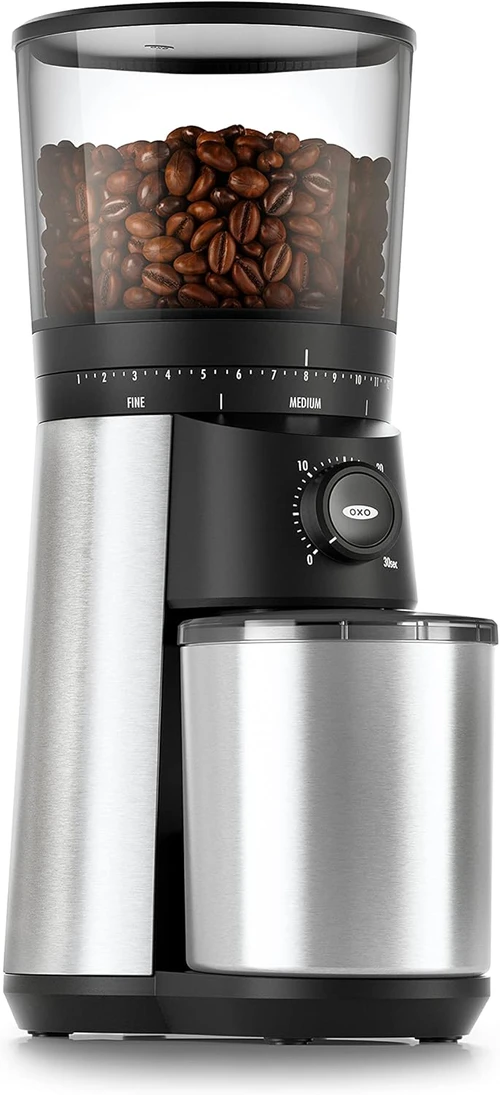
Weigh and grind your coffee to a coarse grind. Use the gram measurements from the table above for your press size.
Add coffee to the press. Give it a gentle shake to level the grounds.
Start the timer and pour water in a slow, circular motion to saturate all grounds evenly. Pour to your target water weight.
Stir once gently with a wooden spoon or chopstick to ensure full saturation. Place the plunger on top (don't press) to retain heat.
Wait 4 minutes. Exactly.
Press slowly — about 30 seconds from top to bottom. Steady, even pressure. If it's hard to press, your grind is too fine.
Pour immediately. Don't let coffee sit in the press.
Skip the math — get the exact grams for your press.
Enter your French press size and preferred strength. The calculator does the rest.
French Press vs Pour Over: Which Ratio Wins?
Same ratio, different cup — because the filter makes all the difference.
French press (metal filter): Allows coffee oils (cafestol, kahweol) and fine particles to pass into the cup. Produces a heavier, fuller-bodied cup with more texture. The oils carry flavor compounds that paper filters trap.
Pour over (paper filter): Removes oils and fine particles. Produces a cleaner, brighter cup where individual flavor notes (fruit, floral, nutty) are more distinct.
At the same ratio (15:1): French press tastes stronger and heavier than pour over because of the oil content. To achieve a similar perceived strength in pour over, use a slightly stronger ratio (1:13 or 1:14).
Neither is objectively better — they're different cups suited to different coffee preferences and bean profiles.
The Bottom Line
French press ratio: 15:1 for balanced, 14:1 for strong, 1:17 for lighter. Measured by weight, not tablespoons.
Brew time: 4 minutes, always.
Grind: coarse — coarse sea salt texture. If the plunger is hard to push, grind coarser.
Water: 30 seconds off boil. Not boiling.
Those four variables determine your cup. Get them right and French press produces some of the best coffee you'll make at home.
Related Reading
- Coffee Brewing Methods Compared — SCAA Golden Cup ratios and side-by-side method comparison
- Cold Brew Coffee Ratio: Concentrate vs Ready-to-Drink — 1:6 vs 1:8 explained, with brew time guide
- Free Coffee Ratio Calculator — Gram measurements for French press, pour over, drip, and cold brew