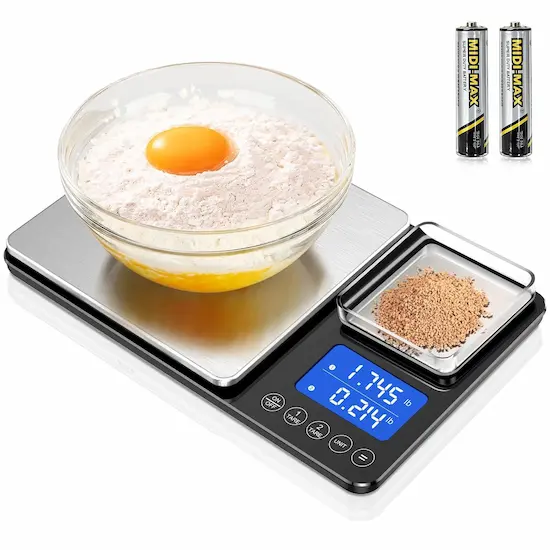
🥒 Check your salt ratio first — it causes 80% of failures.
Enter your cabbage weight and verify the exact grams of salt. Wrong ratio = no fermentation or contamination.
Something went wrong with your sauerkraut. Before you throw the jar away, run through this guide — most failures are fixable, and some things that look like failure are completely normal.
The quick check: if your sauerkraut smells pleasantly sour (like pickles or vinegar), the fermentation is working. If it smells rotten or chemical, that's a real problem. The appearance of the brine and cabbage can mislead you — use smell as your primary diagnostic tool.

Problem 1: No Bubbles After 48 Hours
This is the most common worry. Before diagnosing it as failure, check the temperature.

Cause 1: Temperature too low. Lactobacillus bacteria slow significantly below 65°F. If your kitchen is cold — below 65°F — fermentation may be happening but too slowly to produce visible bubbles.
Fix: Move the jar somewhere warmer. On top of the refrigerator, near a heating vent, or inside an oven with just the oven light on (light bulbs generate gentle warmth). Target 68–72°F.
Cause 2: Salt ratio too high. If you added more than 3% salt by weight, you've over-salted the brine. At high concentrations, salt suppresses even the salt-tolerant lactobacillus.
Fix: Taste the brine — if it tastes very salty (more than ocean water), you likely over-salted. You can dilute by adding filtered water with 2% dissolved salt (2g salt per 100ml water). Or start a new batch by weight.
Cause 3: Chlorinated tap water. Chlorine is added to municipal water specifically to kill microorganisms. Those same microorganisms you need for fermentation.
Fix: Use filtered water, or let tap water sit uncovered overnight (chlorine off-gases). For the current batch, if bubbles haven't started by day 3, start fresh with filtered water.
Cause 4: Jar sealed too tight. CO₂ produced by bacteria needs to escape. If the lid is completely airtight, pressure can build up and slow fermentation, or gas escapes through the seal intermittently without visible bubbling.
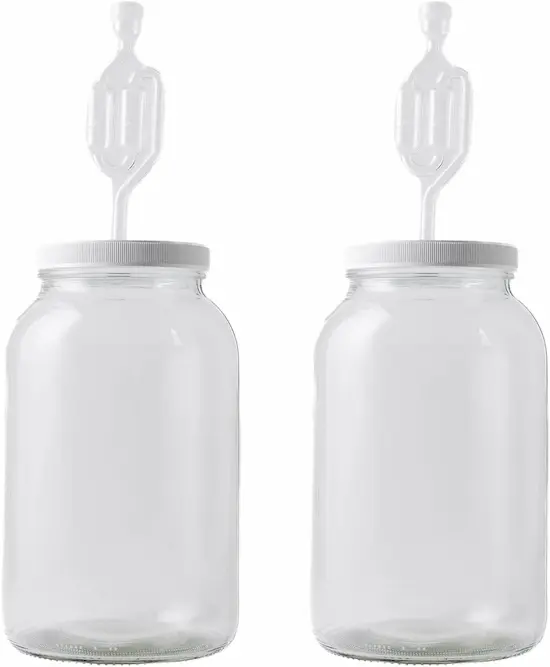
Fix: Loosen the lid slightly — just enough that gas can slowly escape. If using an airlock lid, verify it's assembled correctly.
✅ Normal: No visible bubbles but smell is sour. If you can see the brine becoming cloudy and the smell is pleasantly sour or tangy, fermentation is working — it may just be slow. Not all active ferments produce dramatic visible bubbling.
Problem 2: White Film on the Surface
What it is: Kahm yeast. This is a wild yeast (not bacteria) that grows on the brine surface when exposed to air. It appears as a flat, white or cream-colored film — smooth to the touch, not fuzzy or raised.
Is it dangerous? No. Kahm yeast is harmless. It can affect flavor — making it slightly more yeasty or less clean-tasting — but it doesn't make sauerkraut unsafe.
What to do: Skim it off with a clean spoon. Then address the cause:
- Ensure cabbage is fully submerged below the brine surface — floating cabbage is the primary cause
- If the jar has a lot of headspace (air space above the brine), either top up with 2% brine (2g salt per 100ml water) or use a smaller jar
- Check more frequently and skim as needed
When to be concerned: If the film is fuzzy, raised, or colored (pink, blue-green, black), that is actual mold — see Problem 4 below.
Problem 3: Slimy or Ropy Brine
The brine looks gelatinous, stringy, or coats your spoon when you stir it.
Cause 1: Iodized salt. This is the most common cause. Iodine is added to table salt as a public health measure — it is also a microbiocide. When iodine disrupts lactobacillus bacteria, other bacteria fill the void and some produce slime as a byproduct.
Fix for current batch: If the smell is still sour and pleasant, the sauerkraut may be edible — slimy texture is unpleasant but not necessarily unsafe. For future batches: always use non-iodized salt. Kosher salt, sea salt, and pickling/canning salt are all safe. Look for labels without "iodized" or "iodine added."
Cause 2: Contaminated equipment. Residual soap, sanitizer, or other food residues can introduce bacteria that produce slime.
Fix: Wash jars and tools in hot water without soap (soap residue can persist), or use jars sterilized in boiling water.
Cause 3: Very warm temperatures with high-sugar cabbage. Certain bacterial strains proliferate rapidly at temperatures above 75°F and produce viscous compounds.
Fix: Ferment at lower temperatures — 65–70°F produces cleaner flavor and firmer texture.
Problem 4: Colored or Fuzzy Mold
Pink, red, green, blue, black, or any fuzzy growth = discard the batch.
Mold produces mycotoxins that penetrate throughout the ferment, not just on the surface. Scooping off visible mold does not make the rest safe. The same contamination that produced visible mold on the surface has affected the entire jar.
Why this happened:
- Cabbage was not fully submerged below the brine — the area exposed to air is where mold grows
- Equipment was not clean
- Salt ratio was too low (under 2%), allowing mold-supporting organisms to establish
- Contamination from another moldy food nearby (bread, fruit)
For next batch:
- Ensure cabbage stays below brine throughout fermentation — use a fermentation weight, a small zip-lock bag filled with 2% brine, or a piece of reserved outer cabbage leaf as a barrier
- Verify salt is 2% by weight using our Brine Calculator
- Use non-iodized salt
- Keep the fermentation area away from bread and other mold-prone foods

Problem 5: Soft, Mushy Texture
You wanted crunchy sauerkraut. You got mush.
Cause 1: Temperature too warm. Fermentation above 75°F accelerates enzyme activity in the cabbage. Pectinase enzymes break down the pectin that holds cell walls together. Result: soft, structureless cabbage.
Fix for this batch: Move to a cooler location immediately. Texture won't recover — the cell structure is already broken — but you prevent further softening. Next batch: ferment at 65–70°F.
Cause 2: Too little salt. Under 2% salt fails to suppress the bacteria that produce pectin-degrading enzymes. The protective lactobacillus doesn't dominate.
Fix: Recalculate your ratio — always use weight, not volume. See How to Make Sauerkraut for the 2% formula.
Cause 3: Over-fermented. Left too long before refrigerating. Extended fermentation at room temperature continues to soften texture.
Fix: Refrigerate earlier next batch — around day 5–7 when flavor is tangy but still has some crunch. The refrigerator dramatically slows fermentation and preserves texture.
Starting a new batch?
Calculate the exact salt weight for your cabbage before you begin — this prevents most of these problems at the source.
Problem 6: Too Sour or Too Salty
Too sour: You fermented too long. Flavor and acidity continue developing at room temperature as long as bacteria are active. The fix going forward is to taste daily starting day 5 and refrigerate the moment it's as tangy as you want. Refrigeration slows (but doesn't stop) fermentation — a very cold fridge largely halts it.
For a batch that's already too sour: mix with non-fermented ingredients (coleslaw, sandwiches, soup where acid is welcome) rather than eating straight.
Too salty: Your salt ratio was above 2.5%. The cabbage absorbed too much salt and the brine tastes overwhelming.
Fix for current batch: Rinse before serving to remove surface salt. For next batch, recalculate to 2% by weight.
Problem 7: Brine Level Dropped
After a few days, your brine level dropped and cabbage is exposed above the liquid.
This is normal — cabbage absorbs some brine as fermentation progresses. It's a problem only if you leave the exposed cabbage unaddressed.
Fix: Make a 2% brine (2g non-iodized salt per 100ml filtered water), stir to dissolve, and add enough to cover the cabbage by at least 0.5 inch. Do this promptly — exposed cabbage above the brine will mold within hours.

Quick Diagnosis Table
| What you see / smell | Likely cause | Safe to eat? | Fix |
|---|---|---|---|
| No bubbles, sour smell developing | Slow fermentation (cool temp) | Yes ✅ | Move to warmer spot |
| No bubbles, no smell change after 72 hrs | Too cold, chlorinated water, or over-salted | Restart | Check temp + salt ratio + water source |
| Flat white film (smooth) | Kahm yeast | Yes ✅ | Skim, keep cabbage submerged |
| Fuzzy or colored mold | Real mold contamination | Discard ❌ | Throw out entire batch |
| Slimy / ropy brine | Iodized salt, dirty equipment | Usually yes, texture off | Use non-iodized salt next time |
| Soft, mushy texture | Too warm, too little salt, or over-fermented | Yes ✅ (taste fine) | Refrigerate sooner next batch |
| Vinegar or very sharp smell | Fully fermented / acidic | Yes ✅ | Refrigerate to stop fermentation |
| Rotten or chemical smell | Contamination | Discard ❌ | Throw out, sterilize equipment |
The Golden Rule: Smell Is the Real Test
Appearance misleads. Cloudy brine looks wrong but is completely normal — it means bacteria are active. White film looks alarming but is usually harmless Kahm yeast. Pink cabbage looks worrying but may just be red cabbage bleeding color.
Smell is reliable. Sour = good. Tangy = good. Sharp vinegar = fermented and done. Rotten, putrid, or chemical = problem.
When in doubt: if it smells fine, it almost certainly is fine. Properly acidified sauerkraut is one of the most self-preserving foods you can make. The lactic acid environment is hostile to virtually every pathogen.
Related Reading
- How to Make Sauerkraut at Home — The complete 2% ratio guide and day-by-day timeline
- Fermentation Temperature Guide — How temperature controls speed, texture, and flavor
- The Science of Pickling Salt Density — Why 2% is the safe zone and what happens outside it
- Lacto-Fermentation vs Vinegar Pickling — These are different processes with different failure modes