
Suzanne Williamson, RD
Registered dietitian and founder of Frugal Organic Mama. The vinegar-and-baking-soda combination is probably the most persistent cleaning myth in natural household care — it looks like it's working, and it isn't. Understanding the actual chemistry of these three ingredients took me from frustrated experimenter to reliable results every time.
✨ Need the exact vinegar ratio for your spray bottle?
The cleaning calculator gives precise amounts for any bottle size and cleaning task — so you're not guessing at dilutions.
Three ingredients, three different mechanisms, three different jobs. The confusion about which to use — and the persistent myth that combining them creates a super-cleaner — comes from not understanding what each one actually does at a chemical level.
Once you understand the mechanism, the job-matching becomes obvious.

The Chemistry of Each Cleaner
Vinegar is a 5% solution of acetic acid in water. pH approximately 2–2.5. Its cleaning mechanism is acid dissolution: acetic acid reacts with alkaline compounds and dissolves them. Hard water scale (calcium carbonate), soap scum (metal stearates), and rust stains (iron oxides) are all alkaline or weakly alkaline — vinegar dissolves them because opposite pH compounds react.
Vinegar does not kill a broad spectrum of pathogens reliably. It can inhibit some bacteria in laboratory conditions, but it is not EPA-registered as a disinfectant. "Kills 99.9% of bacteria" is not a claim you can make about standard household white vinegar.
Baking soda is sodium bicarbonate. pH approximately 8.3–9. Its cleaning mechanisms are two entirely separate things: mild abrasion and odor neutralization.
As an abrasive: baking soda crystals are softer than most surfaces (Mohs hardness ~2.5, well below porcelain, stainless steel, or glass). They scrub without scratching. This is what actually cleans when you make a baking soda paste — the crystals physically lift and remove grime.
As a deodorizer: sodium bicarbonate reacts chemically with acidic odor molecules — volatile fatty acids, sulfur compounds, ammonia-adjacent compounds — neutralizing them rather than masking them. This is why it works in refrigerators and on carpets where fragrance-based deodorizers only cover smells.
Baking soda does not disinfect. It does not dissolve mineral deposits (they're alkaline like it is — same charge repels). It does not have meaningful antiviral or antifungal properties.
Hydrogen peroxide (3% solution, standard pharmacy concentration) is an oxidizing agent. pH approximately 6.2, nearly neutral. Its cleaning mechanism is oxidation: it donates oxygen atoms to organic molecules, breaking them apart. This kills microorganisms by oxidizing their cell membranes and internal structures.
Hydrogen peroxide at 3% concentration is EPA-registered as a disinfectant. It kills bacteria, viruses (including influenza and norovirus at appropriate contact times), mold, and mildew. It breaks down into water and oxygen — the only byproducts are harmless. It leaves no residue.
It does not scrub. It does not dissolve mineral deposits. It bleaches colored surfaces and fabrics at higher concentrations (the 3% solution is safe for most surfaces but can lighten some fabrics over repeated use).

The Mixing Problem
Vinegar + Baking Soda = Salt Water
This is the most important cleaning chemistry correction in this entire article.
When you mix vinegar (acetic acid) and baking soda (sodium bicarbonate), an acid-base neutralization reaction occurs:
CH₃COOH + NaHCO₃ → CH₃COONa + H₂O + CO₂. Acid-base neutralization produces sodium acetate (weak salt), water, and carbon dioxide. The cleaning power of both ingredients is destroyed.
The CO₂ is the dramatic fizzing.
You have taken two useful cleaning agents — an acid that dissolves alkaline deposits, and an abrasive that scrubs — and created a neutral salt solution that does neither job well. The reaction destroys the active cleaning properties of both.
The fizzing is visually convincing. It feels like something is happening. Something is happening — you're watching an acid-base reaction that produces gas. But the cleaning power is gone.
The one exception where the fizz has value: Drains. Pouring baking soda followed by vinegar into a slow drain produces CO₂ bubbles that can mechanically dislodge loose debris. It is not as effective as a proper drain snake, but the fizz has some physical action in the enclosed space of a drain pipe. For this specific application, the combination has some logic.
For every other cleaning application: use them separately, for their individual mechanisms.
Vinegar + Hydrogen Peroxide = Peracetic Acid
This combination requires a stronger warning than the baking soda one.
Mixing vinegar (acetic acid) and hydrogen peroxide creates peracetic acid (peroxyacetic acid) — a strong oxidizer that can irritate skin, eyes, and respiratory tract. Do not mix in the same container. Use sequentially: apply one, wipe, then the other. Peracetic acid is a powerful oxidizer used industrially for food equipment sanitization and medical instrument sterilization — at controlled concentrations, with proper safety protocols.
At home concentrations created by mixing kitchen vinegar and pharmacy hydrogen peroxide, the result is a solution that:
- Is more irritating to skin, eyes, and mucous membranes than either component
- Can cause respiratory irritation if inhaled during spraying
- Is not a predictable concentration for reliable disinfection
- Has no established safety profile for casual home use
The safe sequential method: Apply vinegar to a surface, wipe clean, then apply hydrogen peroxide separately. Research from Virginia Tech's Microbiologist Dr. Susan Sumner showed this sequential application (in either order) is more effective against pathogens like Salmonella than either alone — and significantly more effective than mixing them. The key is: separate applications, not combined in a bottle.

Job-by-Job Reference
| Cleaning task | Vinegar | Baking soda | Hydrogen peroxide | Best approach |
|---|---|---|---|---|
| Hard water scale / mineral deposits | ✅ Best | ✗ | ✗ | Undiluted or 1:1 with water, 30-min soak |
| Soap scum on tub / shower | ✅ Best | ✓ Scrub | ✗ | Vinegar spray, let sit 10 min, baking soda scrub, rinse |
| Disinfecting counters after raw meat | ✗ | ✗ | ✅ Best | 3% H₂O₂ spray, 30-60 sec contact, wipe |
| Mold and mildew on grout | ✓ Some | ✗ | ✅ Best | H₂O₂ undiluted, 10 min contact, scrub |
| Refrigerator odors | ✓ Light | ✅ Best | ✗ | Open box of baking soda, replace every 3 months |
| Scrubbing sink / tub surface | ✗ | ✅ Best | ✗ | Baking soda paste (baking soda + small amount of water), scrub, rinse |
| Glass and windows | ✅ Best | ✗ | ✓ Works | Vinegar 1:1 with water, microfiber cloth |
| Fabric deodorizing / laundry | ✅ Best | ✅ Best | ✓ Caution | Vinegar in rinse cycle; baking soda with detergent. H₂O₂ can bleach colored fabric. |
| Cutting board sanitation | ✓ Partial | ✗ | ✅ Best | For wood boards: vinegar wipe, dry, H₂O₂ wipe. See our cutting board guide. |
| Toilet bowl mineral deposits | ✅ Best | ✓ Scrub | ✗ | Pour 2 cups vinegar, let soak 1 hour, baking soda scrub |
| Carpet stains and odors | ✓ Some stains | ✅ Odors | ✓ Test first | Blot stain with vinegar, dry, baking soda on odor, vacuum |

The Surfaces That Need Special Attention
Natural stone (marble, granite, travertine): Never use vinegar — it etches calcium carbonate surfaces permanently. Never use baking soda — abrasive enough to dull polished stone over time. Hydrogen peroxide at 3% is generally safe for granite; use caution on marble (even neutral solutions can interact with sealers). Use stone-specific cleaners for regular maintenance.
Hardwood floors: Vinegar degrades polyurethane finish over repeated use. Baking soda can leave residue and is abrasive enough to affect some finishes. Hydrogen peroxide in high concentrations can bleach wood. For hardwood floors, use a pH-neutral hardwood cleaner. See the Cleaning Calculator for vinegar dilution ratios safe for hardwood floors at a 1:10 ratio — damp mop only.
Stainless steel: All three work on stainless steel, but baking soda can leave a white residue that requires thorough rinsing. Vinegar works well for fingerprints and light mineral deposits. Hydrogen peroxide is fine for disinfection. Always wipe with the grain of the steel to avoid micro-scratches.
Aluminum: Avoid vinegar on aluminum — acetic acid reacts with aluminum oxide and can cause pitting over time. Baking soda is safe. Hydrogen peroxide is safe at 3% concentration.
Egg residue: Cold water only for egg residue — vinegar and hot water both coagulate egg proteins, making them harder to remove. Once the bulk of the egg is removed with cold water, then vinegar or other cleaners are fine.
The Cost Comparison
All three are inexpensive, but the cost difference is meaningful at scale.
| Cleaner | Typical cost | Cost per spray bottle (32oz) | Shelf life |
|---|---|---|---|
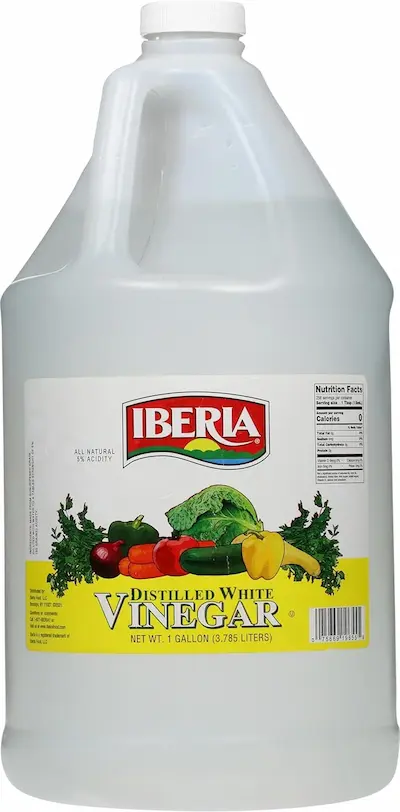
| White distilled vinegar | $3–5 per gallon | $0.25–0.40 | Indefinite (acidic, self-preserving) |
| Baking soda | $1–2 per pound | $0.10–0.20 (paste) | 2 years sealed; 6 months open |
| Hydrogen peroxide (3%) | $1–2 per 16oz bottle | $2–4 | 6 months once opened; degrades in light |
The hydrogen peroxide shelf life note matters practically: Hydrogen peroxide degrades when exposed to light — this is why it comes in dark brown bottles. Once opened, it loses potency within 6 months. A bottle that has been sitting open under a sink for a year may have degraded significantly. Test it: pour a small amount on a cut — it should bubble vigorously on contact with blood (catalase enzyme reaction). If it barely fizzes, it's lost potency. For cleaning purposes, pour a small amount on a dirty surface — active H₂O₂ will bubble slightly on organic material. No bubbling suggests it has degraded.
Store hydrogen peroxide in its original dark bottle, away from light.

A Practical Home Cleaning Setup
Based on this chemistry, a complete natural cleaning setup for most homes:
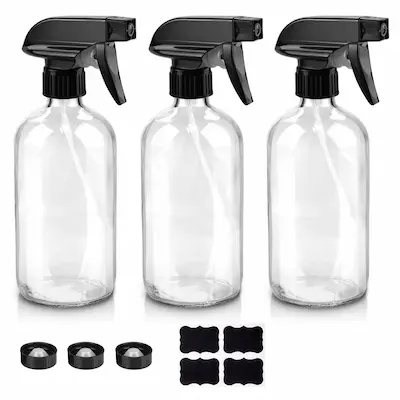
Spray bottle 1 (Vinegar — 1:1 with water): All-purpose acid cleaner. Counters (non-stone), sinks, toilets, glass, appliance surfaces. See the Cleaning Calculator for exact amounts per bottle size.
Spray bottle 2 (Hydrogen peroxide — use undiluted, 3%): Disinfecting. After handling raw meat, bathroom surfaces, cutting boards, mold and mildew. Keep in its original brown bottle or an opaque spray bottle.
Baking soda (loose or paste): Scrubbing. Sinks, tubs, baked-on cookware, carpet odors, refrigerator deodorizing.
Total cost for a full year of these three: approximately $15–25. Comparable commercial cleaner products covering the same functions: $60–120+.
Making your vinegar spray right now?
Enter your bottle size — the calculator gives you exact vinegar and water amounts for any task and any dilution.
Related Reading
- Natural Cleaning Guide: Vinegar and Baking Soda — Complete guide to natural cleaning with ratios for every surface
- Cleaning Calculator — Exact vinegar-to-water ratios for hardwood, tile, laminate, and every surface
- Cleaning Vinegar vs White Vinegar — The 5% vs 6% acidity difference and when the stronger version matters
- Vinegar in Laundry — How vinegar and baking soda each contribute differently in the wash cycle
- Cost of DIY Cleaner vs Store-Bought — What the full homemade cleaner setup saves over time