It started with a single number: a $247 electricity bill that didn't make sense.
I stood in my kitchen \u2014 the room I'd designed to save us money \u2014 staring at the waste I'd been ignoring. The oven hot from a single tray of roasted vegetables. The bottle of store-bought cleaner under the sink at $4.49. The chicken breast I'd microwaved in a panic because I forgot to thaw it.
Each habit felt harmless in isolation. Together, they were quietly draining over $500 a year from our household budget \u2014 and most of the waste was completely unnecessary.

Here are the five kitchen mistakes costing you real money, ranked by how much they cost, with exactly how to fix each one.
1. Using the Oven When a Smaller Appliance Works
This is the single biggest energy leak in most kitchens.
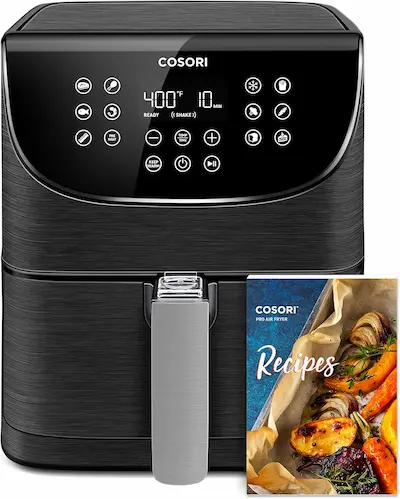
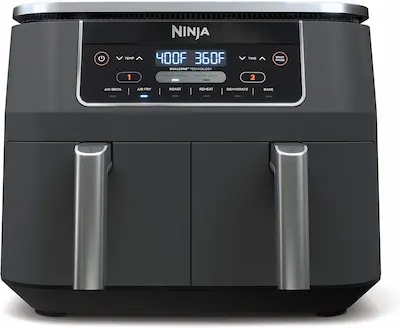
A standard electric oven draws around 3000 watts. An air fryer draws 1500. A microwave draws around 1000. For a 30-minute cooking task, here's what those numbers mean at the average US electricity rate of $0.175/kWh:
| Appliance | Typical Wattage | 30-Minute Cost |
|---|---|---|
| Large oven | 3000 W | $0.48 |
| Air fryer (convection) | 1500 W | $0.30 |
| Microwave | 1000 W | $0.03 |
The microwave costs $0.03 per meal \u2014 roughly one-sixteenth the cost of the oven. Over a year of daily cooking, choosing the wrong appliance can cost $100-200 in unnecessary electricity alone.
See the full 11-appliance energy cost comparison \u2192
The fix: For meals under 30 minutes, reach for the microwave, air fryer, or toaster oven first. Save the large oven for casseroles, whole chickens, and anything that needs the full cooking cavity.

2. Preheating the Oven When You Don't Need To
Preheating is the most misunderstood energy waste in the kitchen. Most of us do it out of habit, not necessity.
Here's what preheat actually costs: a standard oven preheat to 350\u00b0F takes 10-15 minutes and uses 0.4-0.6 kWh \u2014 enough energy to power 5-10 microwave meals before any food goes in. Over a year of cooking 3-4 times per week, unnecessary preheat alone can add $50-110 to your electricity bill.
The real waste happens because preheat accounts for a large share of total energy, not a fixed cost. For short cooking tasks under 30 minutes, preheat can account for 20-40% of the total energy used \u2014 meaning you're burning nearly half your cooking energy before the food even enters the oven.
Read the full preheat cost breakdown \u2192
The fix: Skip preheat for casseroles, roasted vegetables, baked potatoes, and most dense foods. Preheat only for bread, cookies, pastries, pizza, and anything where the initial heat surge affects the texture.
3. Buying Brand-Name Cleaning Products
Here's a dirty secret about those gleaming bottles under your sink: they're mostly water.
The average store-bought all-purpose cleaner costs $3.50-$4.50 per 24oz bottle. The active ingredient in most "natural" cleaners is vinegar \u2014 the same vinegar you can buy for $0.02 per ounce. A DIY vinegar cleaner costs $0.10-$0.20 per 24oz bottle \u2014 a savings of roughly 95%.
At one bottle per month, switching to DIY saves $40-50 per year per cleaning task. If you use separate products for counters, windows, bathrooms, and floors (the average household uses 4-6 different cleaners), that's $160-300 per year that could be going back into your wallet instead of down the drain.
And that's just the product cost. Store-bought cleaners also mean single-use plastic bottles, shipping emissions, and the hidden environmental cost of manufacturing and disposal.
Full DIY vs store-bought cost analysis \u2192
The fix: Buy a single durable spray bottle and a gallon of white vinegar. Mix according to the task \u2014 1:1 for all-purpose, 1:3 for windows, full strength for mold. Your wallet and the planet will both thank you.
4. Defrosting Meat the Wrong Way
Defrosting mistakes cost money in two ways: wasted food and wasted energy.
When you defrost chicken on the counter (the most common mistake), the surface reaches the bacterial danger zone within 2 hours while the center stays frozen. By the time the center thaws, the surface has been in unsafe territory for hours \u2014 and you either throw it away ($5-12 per pound of wasted chicken) or cook it with partially cooked edges that dry out during reheating.
The faster safe method \u2014 microwave defrost \u2014 uses energy, but cold water thawing costs essentially nothing beyond the water itself. Fill a bowl, submerge the sealed meat, change the water every 30 minutes. A 1-pound chicken breast thaws in about 30 minutes with zero energy cost and full USDA safety compliance.
Complete safe defrost timing chart \u2192
The fix: Plan ahead and use the refrigerator (zero energy, best texture). Forgot? Use the cold water method \u2014 it's nearly free and safe. Microwave only as a last resort when you need meat immediately, and cook it right after.
5. Not Knowing Which Appliance Is Actually Cheapest for Each Job
The most expensive kitchen mistake is treating all cooking tasks equally.
A baked potato costs $0.03 in the microwave and $0.58 in the oven \u2014 a 19\u00d7 difference for the exact same food. A pot of boiling water costs $0.02 in an electric kettle vs $0.06 on the stovetop \u2014 saving $12-15 per year if you boil water daily.
The pattern is consistent: small appliances (microwave, kettle, toaster oven, air fryer) beat large appliances (oven, stovetop) for every short-duration cooking task. The savings compound because these small tasks \u2014 reheating leftovers, boiling water, cooking a single portion \u2014 are the most frequent things you do in the kitchen.
Microwave vs oven: exact baked potato cost comparison \u2192
The fix: Think about the cooking task, not the recipe habit. Reheating leftovers? Microwave. Boiling water? Electric kettle. Single portion of roasted vegetables? Air fryer or toaster oven. Matching the appliance to the job is the single most impactful change you can make.
The Bottom Line

These five mistakes don't require expensive upgrades, complicated systems, or a complete kitchen remodel. They're about changing small daily habits \u2014 reaching for a different appliance, mixing your own cleaner, planning your defrost an hour ahead.
Here's the yearly savings summary:
| Mistake | Yearly Savings |
|---|---|
| Choose smaller appliances | $100-200 |
| Skip unnecessary preheat | $50-110 |
| Switch to DIY cleaners | $45-85 |
| Defrost with cold water | $20-60 |
| Match appliance to task | $30-60 |
| Total | $245-515 / year |
Start with the easiest fix today \u2014 I'd suggest the microwave for your next reheat \u2014 and see how much your next utility bill drops.