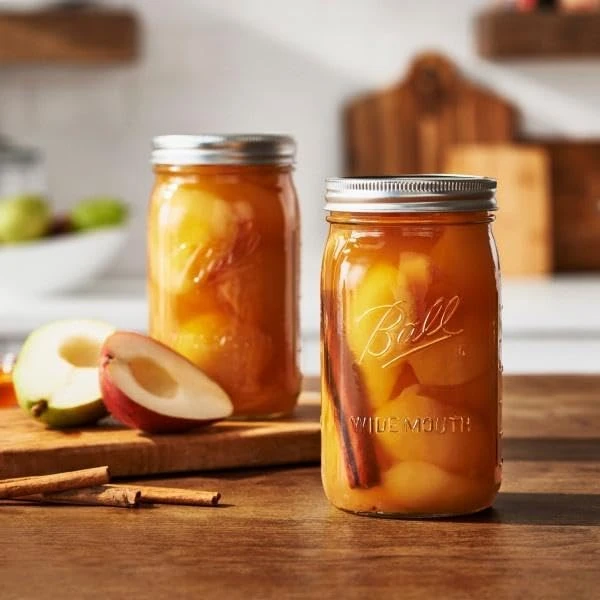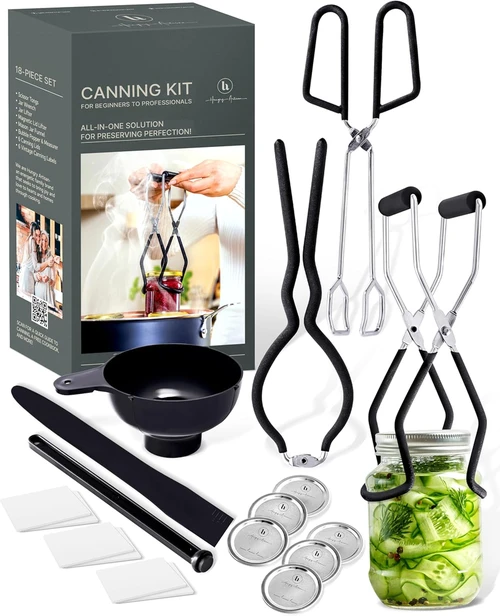
🌾 Starting a canning session?
Calculate exactly how many jars you need before you heat the canner — prevents rushed decisions that cause seal failures.
Home canning has been practiced for over 200 years. For most of that history, it was done by intuition — grandmothers passed down methods that worked, more or less, more often than not.
The USDA guidelines exist because "more often than not" isn't good enough when the failure mode is botulism.
This guide explains what the USDA home canning guidelines actually say, the science behind each requirement, and — critically — which parts are flexible and which are not. Understanding the reasoning makes you a better canner than simply following rules you don't understand.
The Origin of USDA Canning Guidelines
The USDA began systematic research into home canning safety in the early 20th century following a series of botulism outbreaks linked to home-canned vegetables. The current guidelines are maintained by the National Center for Home Food Preservation (NCHFP) at the University of Georgia, operating under a USDA cooperative agreement.
Every tested recipe in the USDA guide represents laboratory-validated processing conditions. Researchers pack jars according to the recipe, insert temperature probes into the coldest point of the jar (usually the geometric center), and measure whether the internal temperature reaches the level required to destroy target pathogens within the specified processing time.
This testing is not theoretical. It accounts for:
- Heat penetration through specific food textures (whole beans vs sliced beans conduct heat differently)
- The buffering effect of different pH levels on bacterial survival
- Variation in altitude (which affects boiling temperature)
- Jar size (larger jars take longer for heat to reach the center)
When you change the recipe — substituting different vegetables, changing proportions, altering the amount of acid — you invalidate the heat penetration data the processing time was based on.
The Two-Canner System: Why It Exists
USDA guidelines divide all home-canned foods into two categories based on a single factor: pH.
High-Acid Foods (pH 4.6 or below) — Water Bath Canning
Foods with pH below 4.6 create an environment hostile to Clostridium botulinum growth. The bacterium cannot produce its toxin in high-acid conditions.
At this pH level, boiling water (212°F/100°C) is sufficient to destroy other harmful organisms and molds within the tested processing times.
High-acid foods safe for water bath canning:
- Most fruits (apples, peaches, berries, citrus)
- Properly acidified tomatoes
- Jams, jellies, preserves, marmalades
- Pickles with sufficient vinegar (5% acidity minimum)
- Fermented vegetables (sauerkraut, lacto-fermented pickles)
- Fruit juices and ciders
Low-Acid Foods (pH above 4.6) — Pressure Canning Required
Low-acid environments allow C. botulinum spores to germinate and produce toxin. Boiling water at 212°F cannot destroy these spores in the time available during reasonable processing.
The critical number is 240°F (116°C) — the temperature achievable only under pressure in a pressure canner. At this temperature, USDA-tested processing times destroy spores throughout the jar.
Low-acid foods requiring pressure canning:
- All vegetables: green beans, corn, beets, carrots, peas, potatoes
- All meats, poultry, and seafood
- Dried beans and legumes
- Mixed recipes containing low-acid ingredients (vegetable soups, chili, stews)
- Mushrooms
⚠️ The most dangerous misconception in home canning
"I've water bath canned my green beans for 30 years and never gotten sick."
Botulism is rare — which is why people get away with unsafe practices for years. But botulism toxin is one of the most lethal substances known. A single jar of improperly canned low-acid food can kill multiple people. The USDA recommendation is not overcautious. It is based on the minimum temperature required to destroy spores that may or may not be present in any given batch.
The Tomato Exception: Why Tomatoes Need Added Acid
Tomatoes exist in a gray zone. Modern tomato varieties have been bred for sweetness, which means lower natural acidity. Many contemporary tomatoes have pH values between 4.3 and 4.9 — straddling the 4.6 safety threshold.
The USDA requires adding acid to all home-canned tomatoes regardless of variety:
- 2 tablespoons bottled lemon juice per quart (1 tablespoon per pint)
- 0.5 teaspoon citric acid per quart (0.25 teaspoon per pint)
- 4 tablespoons of 5% vinegar per quart (not recommended — can affect flavor)
Why bottled lemon juice and not fresh? Bottled lemon juice has standardized, consistent acidity. Fresh lemon juice acidity varies by fruit and season, making it unreliable for safety calculations.
This requirement applies even to heirloom varieties labeled as "acidic." Without laboratory pH testing of your specific batch, you cannot reliably determine whether your tomatoes fall above or below the safety threshold.
Processing Time Variables
USDA processing times are not one-size-fits-all. They vary based on:
Jar Size
Larger jars take longer for heat to penetrate to the center. Processing times are specified separately for pints and quarts — you cannot substitute one for the other without adjusting time.
Half-pint jars can generally use the same time as pints for most recipes. Half-gallon jars are not recommended for most foods.
Altitude
Water boils at lower temperatures at higher elevations. At 5,000 feet, water boils at approximately 203°F instead of 212°F. This reduced temperature means longer processing times are needed to achieve the same bacterial kill.
Water bath canning altitude adjustments:
| Altitude | Time adjustment |
|---|---|
| 0 – 1,000 ft | No adjustment |
| 1,001 – 3,000 ft | Add 5 minutes |
| 3,001 – 6,000 ft | Add 10 minutes |
| Above 6,000 ft | Add 15 minutes |
Pressure canning altitude adjustments affect the pressure setting rather than time:
| Altitude | Weighted gauge | Dial gauge |
|---|---|---|
| 0 – 1,000 ft | 10 lbs | 11 lbs |
| 1,001 – 2,000 ft | 15 lbs | 11 lbs |
| 2,001 – 4,000 ft | 15 lbs | 12 lbs |
| 4,001 – 6,000 ft | 15 lbs | 13 lbs |
| 6,001 – 8,000 ft | 15 lbs | 14 lbs |
Pack Style
Raw pack (cold pack): Raw food is packed into jars and covered with boiling water, juice, or syrup. Food shrinks during processing, so pack tightly. Requires longer processing time than hot pack.
Hot pack: Food is precooked or heated before packing into jars. Shrinkage occurs before packing, allowing denser packing. Generally produces better quality and requires shorter processing time for some foods.
Know your jar count before you heat the canner.
Running out of jars mid-session is the leading cause of rushed headspace decisions. Calculate first.
What You Can and Cannot Change
This is the most practical question for home canners: which parts of the tested recipe are safety-critical and which are preference?
You CAN change (without affecting safety):
Seasonings: Salt, herbs, spices, and flavorings can be adjusted freely. Salt in canning is for flavor, not preservation (unlike in fermentation). You can omit salt entirely or add more without affecting safety.
Sweeteners: Sugar in jams and jellies contributes to preservation through water activity reduction, but tested recipes are formulated to be safe with or without sugar adjustments within reasonable ranges. For specific low-sugar recipes, use USDA-tested low-sugar formulas rather than simply reducing sugar in standard recipes.
Variety within a category: You can substitute one variety of apple for another in an apple butter recipe, or one variety of cucumber for another in a pickle recipe, without affecting safety.
You CANNOT safely change:
The proportion of low-acid to high-acid ingredients. Adding more tomatoes to a salsa recipe (increasing acid) is generally safe. Adding more peppers or onions (increasing low-acid ingredients) raises the overall pH and can move the product into unsafe territory.
The amount of added acid. The lemon juice or citric acid in tomato recipes, the vinegar in pickle recipes — these are structural safety requirements. Reducing them to improve flavor creates an unsafe product.
Processing time. You cannot shorten processing time because the food "looks done." Processing time is based on heat penetration data from laboratory testing, not visual appearance.
Processing method. You cannot safely water bath can low-acid foods by extending processing time. 212°F cannot destroy botulism spores in low-acid food regardless of how long you process.
Jar size without time adjustment. Using quart jars with pint processing times under-processes the food.
The Equipment Requirements
Jars
Use only jars manufactured for home canning: Ball, Kerr, Weck, or equivalent. Commercial food jars (mayonnaise, pasta sauce, pickles) are not designed for repeated heating and cooling cycles and may crack during processing or fail to seal reliably.
Inspect jars before each use. Discard any with chips, cracks, or scratches on the sealing surface. These imperfections prevent proper sealing.
Lids
The flat metal lid seals only once. The sealing compound — a rubber-like material on the underside — compresses against the jar rim during processing and creates the vacuum seal as the jar cools. Reusing lids risks seal failure.
Screw bands (the rings) can be reused indefinitely as long as they are not rusty, bent, or corroded.
Pressure Canner vs Pressure Cooker
A pressure canner is not the same as a pressure cooker or Instant Pot.
Pressure canners are designed to maintain consistent, validated pressure over long processing times and to hold multiple quart jars simultaneously. Their pressure gauges are calibrated for accuracy.
The USDA does not recommend using small electric pressure cookers (including Instant Pot) for canning low-acid foods. The internal volume is insufficient to ensure even heat distribution around jars, and processing times for these devices have not been validated.
Reading a Jar Seal
After processing and cooling (12-24 hours), verify every jar before storage.
Signs of a good seal:
- Lid is concave (center curves slightly downward)
- Lid does not flex or pop when pressed at center
- Clear, high-pitched ring when tapped with a metal spoon
- No leakage or residue around lid
Signs of failed seal:
- Lid is flat or convex (bulging)
- Center flexes when pressed
- Dull thud when tapped
- Visible leakage
Any jar that fails the seal test should be refrigerated and used within a few days, or reprocessed within 24 hours with a new lid.
For a detailed explanation of why headspace matters to seal formation — and what happens when there's too much or too little — see our complete headspace guide.
When to Discard Without Opening
Discard any jar without tasting if:
- The seal failed at any point during storage
- The lid is bulging or spurts liquid when opened
- There is any off-odor
- Visible mold growth inside the jar
- Unusual color change inconsistent with normal food aging
- The jar was processed using a method not validated by USDA testing
Botulism toxin is colorless and odorless. You cannot detect it by smell or appearance. The contamination risk is not worth investigating further.
The Reusable Jar Lid Question
Several brands now sell reusable canning lids (Tattler, Weck, and others). These are approved for home canning when used according to manufacturer instructions, which differ from standard two-piece lid instructions.
If using reusable lids, follow the manufacturer's protocol exactly — they often require different headspace and tightening procedures. The USDA processing times apply regardless of lid type.
Approved Resources for Tested Recipes
The only reliable sources for tested canning recipes are:
- USDA Complete Guide to Home Canning (free download at nchfp.uga.edu)
- Ball Blue Book Guide to Preserving (current edition)
- So Easy to Preserve (University of Georgia Cooperative Extension)
- National Center for Home Food Preservation (nchfp.uga.edu)
Recipes from food blogs, Pinterest, YouTube, and cookbooks not published by these sources have not been validated for safety. Some may be fine; some may not be. There is no way to know without laboratory testing.
Related Reading
- What Is Headspace in Canning? — Why the gap matters for vacuum seal formation
- Is Home Canning Actually Cheaper? — The real math behind jars, lids, energy, and time
- Why Are My Pickles Mushy? — Salt concentration science for fermented vegetables
- Lacto-Fermentation vs Vinegar Pickling — Two preservation methods with different safety frameworks
- Free Harvest to Jar Calculator — Jar count from harvest weight, based on USDA yield standards